If your dog's water bowl leaves a trail across the kitchen, the first suspect is usually the dog. But there is a quieter culprit: how much water you pour in. A bowl filled to the brim is easy to slosh, easy to bump and easy to overflow the moment a big dog dips a muzzle in. This guide walks through how full to fill a water bowl, how that connects to the other causes of splashing, and what to add if filling less isn't enough.
Why a Full Bowl Spills More
Water in a brimming bowl has nowhere to go when something disturbs it. A nose pushing in, a paw nudging the rim or a bowl sliding an inch on the floor all send a wave over the edge. Dropping the water level by a finger or two gives that wave room to settle inside the bowl.
Bigger dogs make the effect stronger. A large muzzle displaces more water than a small one, so a bowl that is fine for a terrier may overflow for a Labrador at the same fill level.
A Practical Fill Level
There is no universal number, because bowls and dogs vary. A workable rule of thumb is to fill the bowl roughly two-thirds to three-quarters full, then watch what happens at the next few drinks.
- If water still sloshes over the rim: lower the level a little more and top up more often instead.
- If your dog finishes the bowl quickly and often looks for more: use a larger bowl or refill during the day rather than overfilling once.
- If your dog dunks the whole face: a wider, deeper bowl at a lower fill level usually helps more than a narrow one filled high.
Always make sure your dog has access to fresh water. If you are unsure how much your dog should drink, or you notice a sudden change in drinking habits, that is a question for your veterinarian rather than a bowl-setup problem.
Match the Bowl to the Dog
A bowl that is too small forces you to fill it high, and a high fill is a spill waiting to happen. If you are guessing at size, our guide on how big a dog bowl should be explains how to think about width and depth. Stainless steel is a popular choice for water because it is easy to rinse and wash; you can browse options in our stainless steel bowls collection.
Weight and grip matter too. A light bowl that slides adds to the sloshing, which is why a mat underneath is useful. If sliding is part of your problem, see why a dog's bowl slides across the floor.
Refilling Habits That Reduce Mess
Fill at the Sink, Not on the Floor
Pouring from a jug onto a bowl that is already on the floor is when most overflow happens. Fill the bowl at the sink, carry it with both hands and set it down level. A bowl that is only partly full is also easier to carry without drips.
Top Up Little and Often
If you are home during the day, a quick top-up after your dog drinks beats one big fill in the morning. It also keeps the water fresher. For a routine you can follow, see how often to change your dog's water.
Don't Forget the Drip Zone
Even with a perfect fill level, dogs carry water on their chins and jowls. Expect drips on the way back from the bowl. A mat under and around the bowl catches those. Our silicone pet feeding mat is designed for that job, and it wipes clean or goes on the top rack of the dishwasher.
When Filling Less Isn't Enough: The Splash Guard Option
Some dogs splash because of how they drink, not because of the fill level. They paw at the water, dunk their muzzle or slurp with enthusiasm. Lowering the water won't stop that. For those dogs, a splash guard can help contain what is flying out of the bowl.
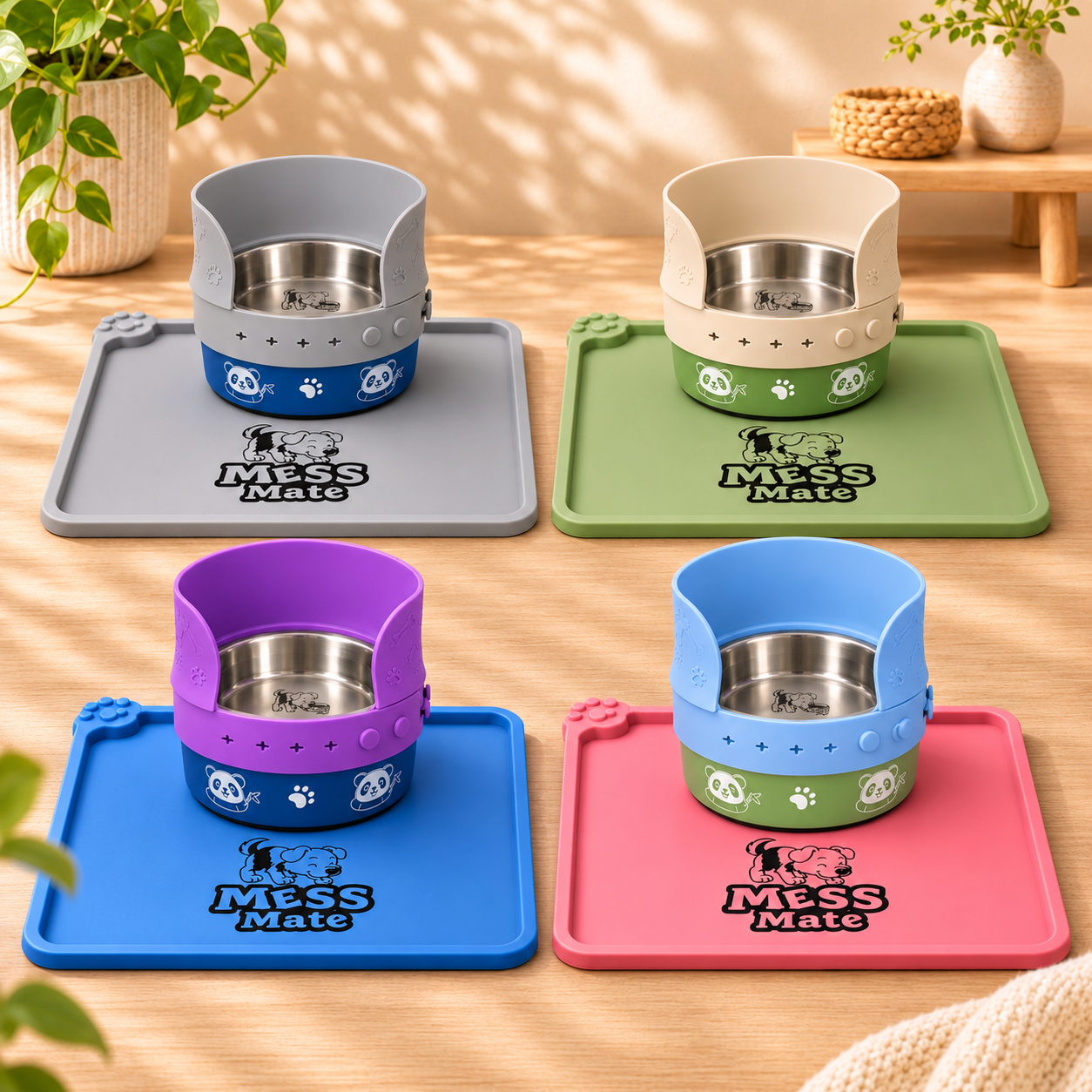
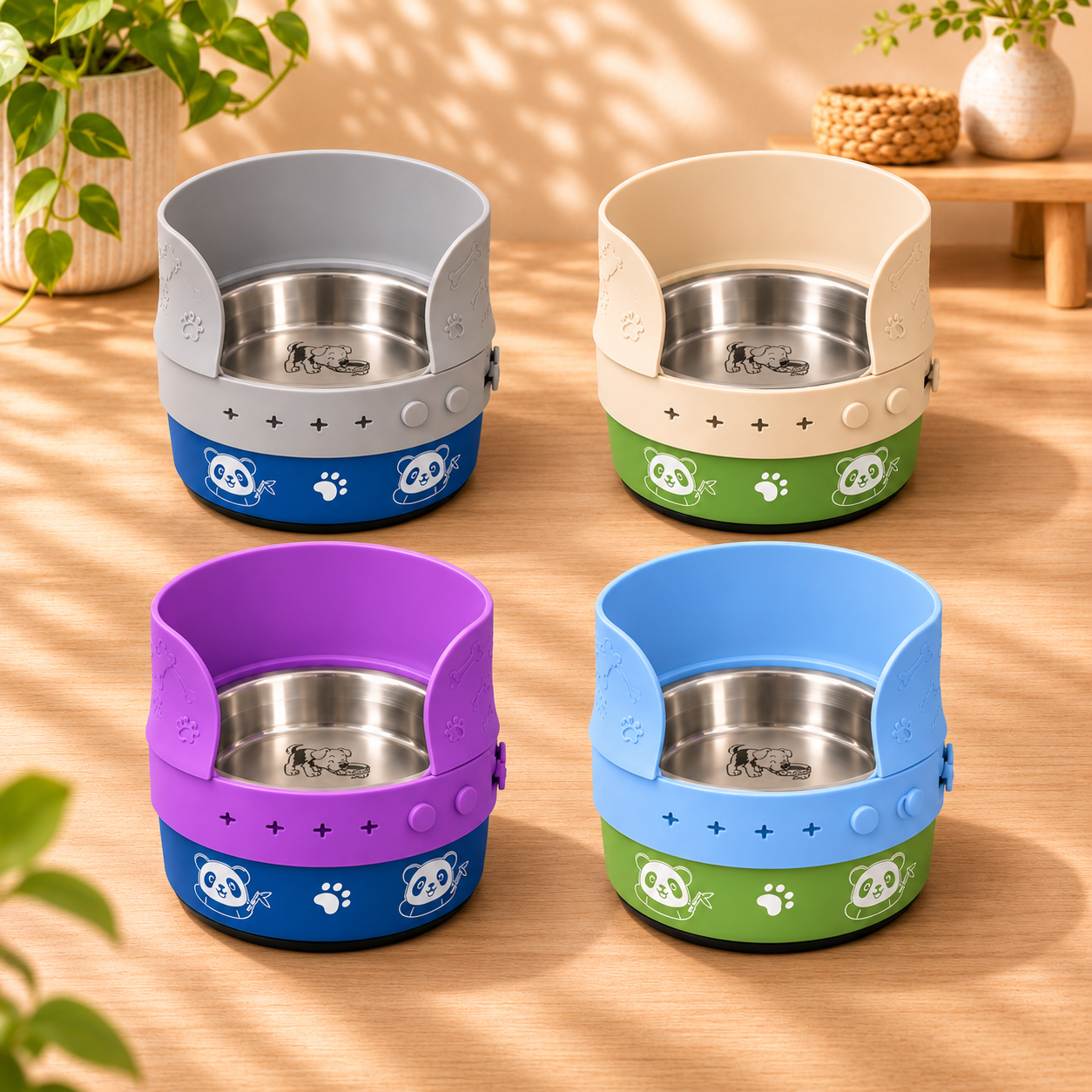
The MessMate splash guard has a 3-inch silicone wall and clips around the outside of the bowl with its strap. It fits round bowls that measure 7 to 9 inches across the top opening, so measure before you buy. It is made for medium-to-XL dogs and large cats, and it is not suited to bowls under 7 or over 9 inches. The guard sold on its own does not include a bowl.
If you would rather skip the measuring, the splash guard set pairs the guard with a bowl, and the complete mealtime set adds a feeding mat so the whole feeding area is covered. Our fit guide shows how to measure.
To be clear about what a guard does and doesn't do: it helps contain splashes and scattered food. It does not change how fast a dog drinks or eats, and it won't change behavior. It is one tool alongside a sensible fill level and a mat.
A Simple Drinking-Station Checklist
- Choose a bowl wide enough for your dog's muzzle.
- Fill to about two-thirds or three-quarters, then adjust.
- Put a mat underneath so drips land somewhere wipeable.
- Add a splash guard if your dog's bowl fits and the splashing continues.
- Refill little and often.
Small changes to how you fill the bowl cost nothing and often make a visible difference. If the floor is still wet after you've tried them, move on to a mat or guard. For more on why dogs splash in the first place, read why dogs splash water out of the bowl. Questions about sizing or care are answered in our FAQ, and every order ships free to U.S. addresses with 30-day returns.