In a home with both a dog and a cat, mealtime can turn into a game of keep-away. The dog hoovers up the cat's food, the cat noses into the dog's kibble, and the floor collects everything in between. Beyond the mess, it is a real nuisance: you lose track of who ate what, and bowls end up scattered around the house. Here are practical ways to set up separate feeding spaces, plus an honest look at what any feeding gear can and can't do.
Why It Happens
Pet food is interesting to other pets. Cat food tends to smell strong and rich, which many dogs find appealing, and dog kibble is simply available food for a curious cat. Neither animal is misbehaving in a way that needs correcting; they are following their noses.
Because the foods are made for different animals, it is worth asking your veterinarian if regular sampling of the other pet's food is a concern for your particular dog or cat, especially if either has a health condition or special diet. This post is about setup and mess, not nutrition advice.
Strategy 1: Separate by Height
Cats can jump; most dogs, especially larger ones, can't reach a counter or sturdy shelf. Feeding the cat on a stable, elevated surface keeps the food out of the dog's reach. Make sure the surface is secure, away from edges and easy for your cat to get to. For older or less agile cats, a high spot may not be comfortable, so consider one of the next strategies instead.
Strategy 2: Separate by Room
A door, baby gate or pet gate with a cat-sized gap is a straightforward solution. Put the cat's bowl in a room the dog can't enter, or feed the dog in a closed-off area while the cat eats in peace. This also removes pressure on a shy eater who rushes meals when a dog is watching.
Strategy 3: Separate by Time
Scheduled meals make this much easier than free feeding. Put food down, give each pet a set window, then pick up whatever remains. When the bowls aren't sitting out all day, there is simply less to steal. If you are weighing the two approaches, free feeding versus scheduled meals covers the pros and cons for mess.
Strategy 4: Give Each Pet a Defined Zone
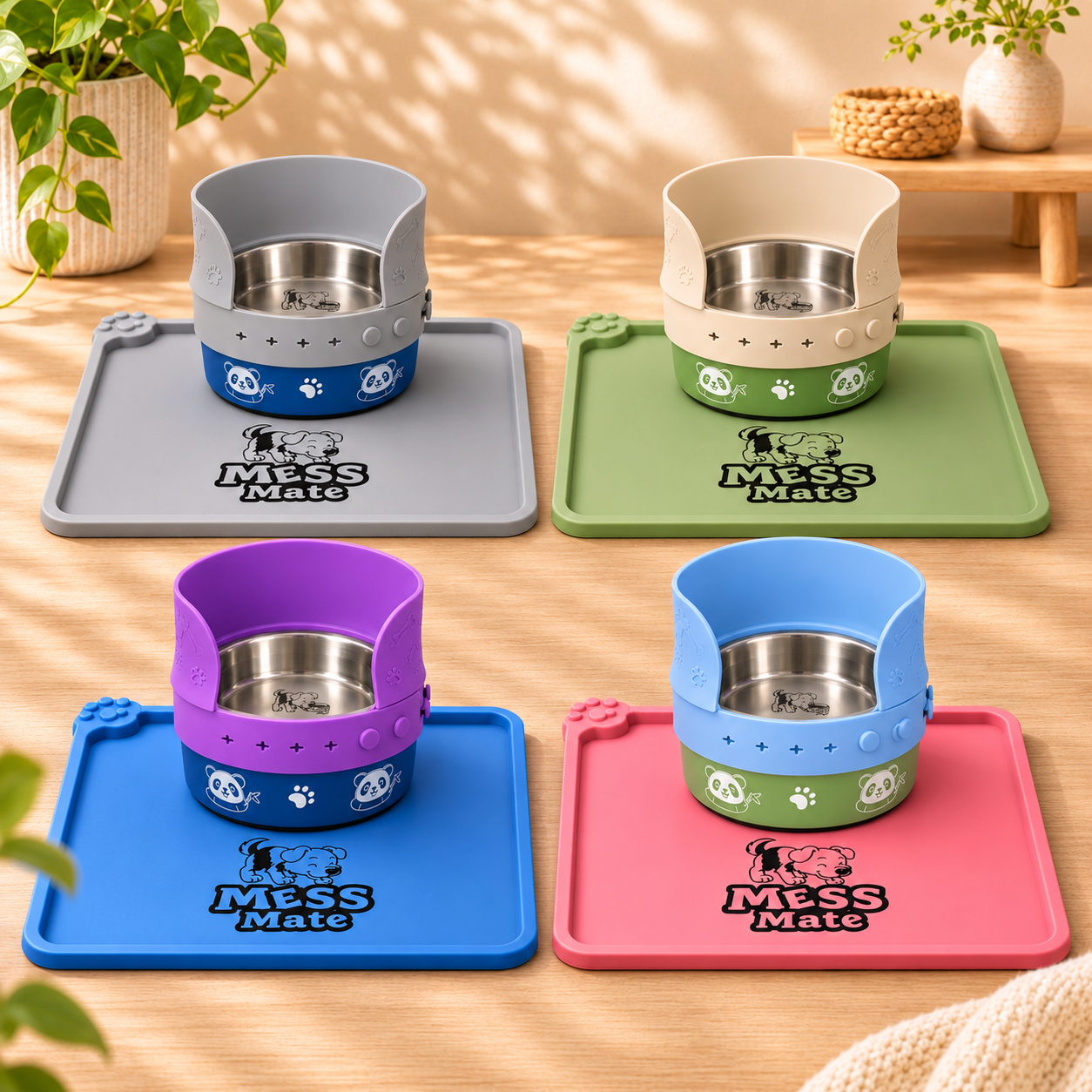
Visual boundaries help. A feeding mat under each pet's bowl marks a clear "this is yours" spot, and it catches the crumbs that otherwise drift toward the other pet's area. Using different colors for each animal also helps you and your family remember whose bowl is whose. Our anti-mess feeding mats come in several colors, and the complete feeding sets let you match a bowl, mat and guard for each pet. For more on this approach, see feeding multiple pets without the mess.
Where a Splash Guard Fits In (and Where It Doesn't)
This is where honesty matters. A splash guard will not stop a dog from reaching a cat's bowl, and it won't stop a cat from sampling kibble. It is a containment tool, not a barrier.
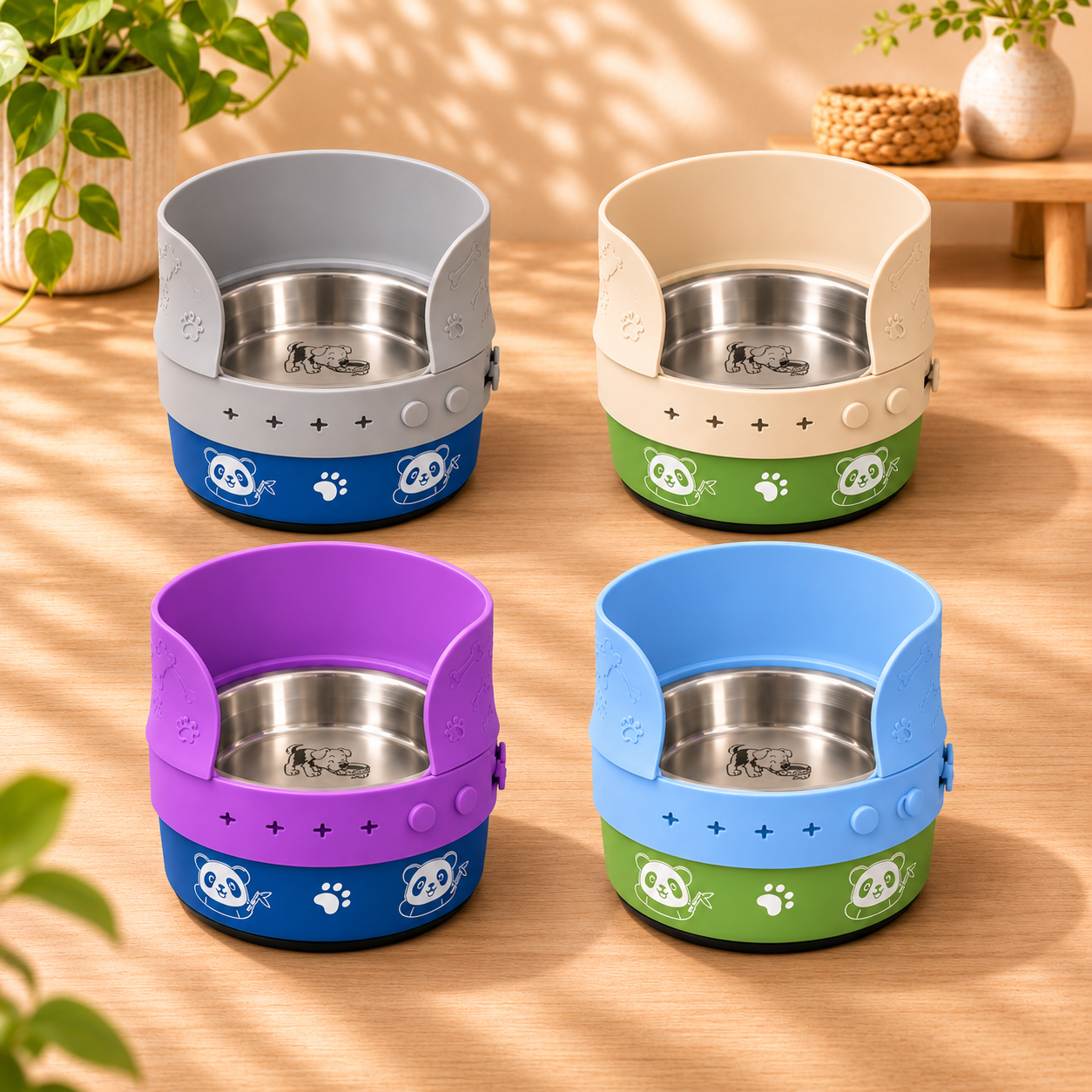
What it can do is reduce scatter and splashing around a large dog's bowl, so there is less food and water on the floor for the other pet to find. The MessMate splash guard has a 3-inch silicone wall, clips around the outside of a round bowl with its strap, and fits bowls that are 7 to 9 inches across the top opening. It is intended for medium-to-XL dogs and large cats, and it is not suited to bowls under 7 or over 9 inches. The guard sold alone does not include a bowl.
If you are setting up fresh, the complete mealtime set gives your dog a bowl, guard and mat that work together, and you can keep the cat's station completely separate. Not sure what fits? Our fit guide explains how to measure.
Handling Water Bowls
Water is usually less of a concern than food, and sharing a water source is common. If you would rather separate them, place a water bowl in each pet's area. Cats sometimes prefer water set apart from their food, a topic we cover in should you keep your cat's water away from food.
Training Helps, Gear Supports
For a dog that guards or gobbles, a calm "wait" routine and supervised meals do more than any piece of gear. Our guide on teaching your dog to wait at mealtime is a good place to start. If your dog is intensely food-focused, or your cat is losing weight or skipping meals, speak with your veterinarian or a qualified trainer.
A Quick Setup Plan
- Choose a separation method: height, room, time or a combination.
- Give each pet its own mat and bowl in a clearly separate spot.
- Pick up leftovers after each meal window.
- Sweep or wipe crumbs promptly so there is nothing for the other pet to find.
- Reassess after a week and adjust.
Every home is different, so expect a bit of trial and error. If you have questions about sizing or care for any MessMate piece, the FAQ has answers, and orders ship free to U.S. addresses with 30-day returns. Silicone and stainless steel pieces are food-grade and dishwasher safe on the top rack, which makes the daily reset easy.