Feeding one pet is a small daily task. Feeding a dog and a cat, or two dogs with different appetites, can turn the kitchen floor into a small disaster zone twice a day. Bowls get nudged around, kibble gets stolen, and water ends up wherever it likes. This guide covers practical ways to set up multi-pet mealtimes so they are calmer and a lot easier to clean up.
Why multi-pet mealtimes get messy
Two or more animals sharing a feeding area means more movement, more competition and more bowls on the floor. A dog may finish first and wander over to inspect another bowl. A cat may carry food out of the dish to eat it elsewhere. Even well-mannered pets bump into each other. None of this is a character flaw; it is simply what happens when several animals share limited space.
The goal is not perfection. It is a setup that keeps most of the food and water where it belongs, and makes the leftover mess quick to wipe up.
Give every pet their own station
Separate the bowls
Whenever your space allows, place each bowl a few feet apart. Distance reduces the urge to check out the neighbor's dinner and cuts down on bumping. If you have a dog and a cat, it often helps to feed them in different rooms or at different heights so the dog cannot reach the cat's food. Your veterinarian can tell you whether either pet has dietary needs that make keeping the foods separate especially important.
Use a defined zone for each bowl
A washable mat under each bowl creates a visible "this is your spot" boundary and catches whatever escapes. A non-slip feeding mat also helps stop bowls from skating across the floor when a pet pushes against them. Our silicone pet feeding mat is food-grade silicone and can go on the top rack of the dishwasher, which matters when you are cleaning several stations every day.
Feed on a schedule, not a free-for-all
Leaving food out all day invites grazing, and grazing means crumbs scattered on and off all day. Scheduled meals give you a window where you are present, can supervise, and can pick up bowls afterward. Many households find that offering food for a set period, then removing it, keeps the area tidier. If a pet is on a medical diet or has special feeding instructions, follow your veterinarian's guidance rather than a general routine.
A predictable routine also tends to make animals less anxious around food, which can mean less scrambling. We would not promise it fixes every case of food guarding or rushing, though. If one pet is truly aggressive around food, that is a conversation for a veterinarian or a qualified behavior professional.
Handle the water bowls separately
Water spills are the other half of the mess. In a busy household, water bowls get splashed by enthusiastic drinkers, dripped on by wet muzzles and tipped by passing tails. A heavy stainless steel bowl is harder to tip than a lightweight plastic one, and it is easy to sanitize. You can read more about what to look for in our guide to the best stainless steel bowl for dogs and cats.
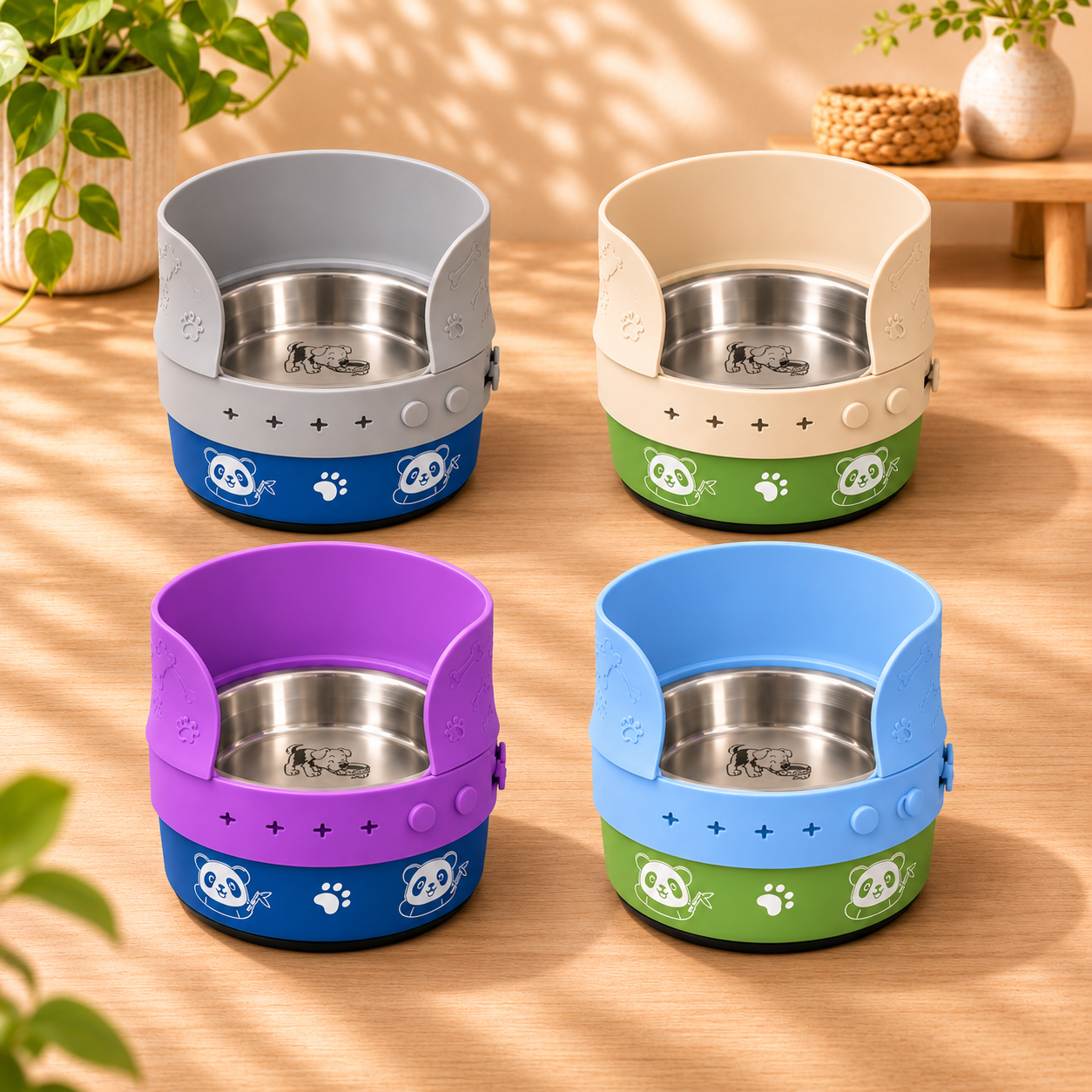
For dogs that splash water or push kibble over the rim, a splash guard adds a silicone wall around the bowl. The MessMate splash guard has a 3-inch silicone wall and fits round bowls with a top opening between 7 and 9 inches across. It is not suited to bowls smaller than 7 inches or larger than 9 inches, so measure first. Our fit guide walks through it, and there is a step-by-step post on how to measure your dog's bowl.
To be clear about what it does and does not do: a splash guard helps contain splashes and flying kibble. It does not change how fast a pet eats, and it will not train a pet to behave differently at mealtime. It also is not designed for the small, shallow dishes many cats prefer if those fall outside the 7 to 9 inch range.
A simple multi-pet setup to try
- Pick one feeding area per pet, a few feet apart or in separate rooms.
- Place a washable mat under each bowl so every pet has a clear spot.
- Use a heavy stainless steel bowl for each pet, and add a splash guard where a dog's bowl fits the 7 to 9 inch range.
- Feed at set times, supervise, and pick up bowls when meals end, unless your vet advises otherwise.
- Keep water bowls in a spot that is easy to wipe down.
If you would rather not mix and match pieces, the complete feeding sets combine bowl, guard and mat in one purchase. The complete mealtime set is a convenient place to start for a single pet, and you can add a second set for another.
Cleaning when you have more than one pet
More pets means more dishes, so make cleanup easy. Silicone and stainless steel pieces from MessMate are food-grade and dishwasher safe on the top rack, so one load can handle several bowls, guards and mats. For a routine you can stick to, see our post on how often to clean your dog's bowl. Wash each pet's gear regularly, and if a pet is unwell or on a special diet, ask your vet whether anything needs to be washed or kept separate more carefully.
What to expect
A multi-pet household will probably never be spotless at mealtime, and that is okay. A little planning gets you most of the way: separate stations, mats that mark each spot, bowls that are stable, and a regular schedule. If you run into trouble, our FAQ answers common questions about sizing, cleaning and returns. Orders ship free within the U.S., returns are accepted within 30 days, and WELCOME10 takes 10% off a first order. A portion of every sale goes to rescue organizations in memory of Spud, so your tidier kitchen helps animals in need too.