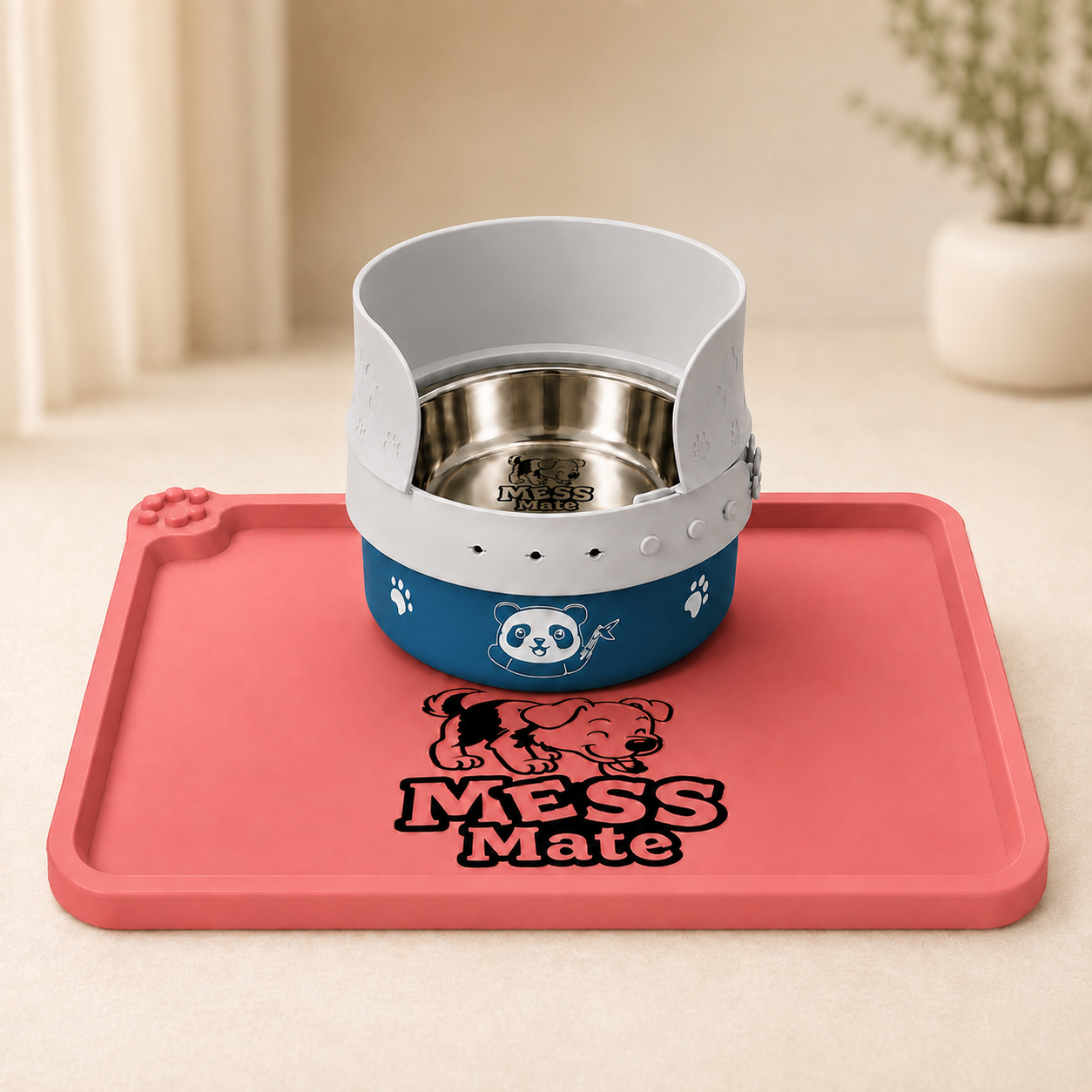
Dog bowls collect more than food. Saliva, leftover kibble, oils and moisture build up quickly, and a bowl that looks fine can still carry a slimy film. A simple routine keeps things clean without taking over your evening.
How often to wash
- Food bowl: wash after meals, or at least once a day. Food-safety guidance for pet owners generally recommends washing bowls and scoops with soap and hot water after use.
- Water bowl: empty, wash and refill at least daily. Water sitting out collects saliva and dust, and the slick film that forms on the inside is a sign it is overdue.
- Splash guard and mat: rinse daily if they get splashed, and give them a full wash every few days, or sooner after a wet-food meal.
Dogs with health concerns, puppies and households with young children or someone with a weakened immune system may want to be stricter. If you are unsure, ask your veterinarian.
A quick daily wash
- Dump leftover food and water.
- Scrub the bowl with warm water and dish soap, using a dedicated sponge or brush.
- Rinse until there is no soap smell.
- Dry it, or let it air dry fully before the next meal.
The weekly deep clean
Once a week, give everything a more thorough wash. Remove the guard from the bowl and wash both pieces separately so nothing hides under the rim. A bottle brush reaches the inside of the guard's wall. Run what is dishwasher safe through the top rack, and check the manufacturer's care instructions first. Our instructions and care page covers MessMate pieces specifically.
Why material matters
Scratched plastic holds bacteria in grooves that are hard to scrub clean. Stainless steel resists scratching and wipes clean easily, which is why we recommend it. See the best stainless steel bowl guide for more on what to look for.
Do not forget the mat
Feeding mats catch spilled food and water, and they can hold moisture underneath if left damp. Lift it, wipe both sides, and let it dry. We cover this in is your dog's feeding mat a bacteria trap? A silicone feeding mat is non-porous and easy to rinse.
Signs a bowl needs attention now
- A slimy or cloudy film inside
- A sour or stale smell
- Pitting, deep scratches or cracks
- Your dog suddenly refuses to eat or drink from it
Replace any bowl that is cracked or deeply scratched. And if your dog has ongoing stomach upset, check with your veterinarian rather than assuming the bowl is the cause.
Make it easier
The less food and water that escapes, the less there is to clean around the bowl. A splash guard keeps the mess in one place, and a complete set keeps every piece in one easy-to-wash group. Check that your bowl is a round 7 to 9 inches across the top before you order a guard on its own, using our fit checker.