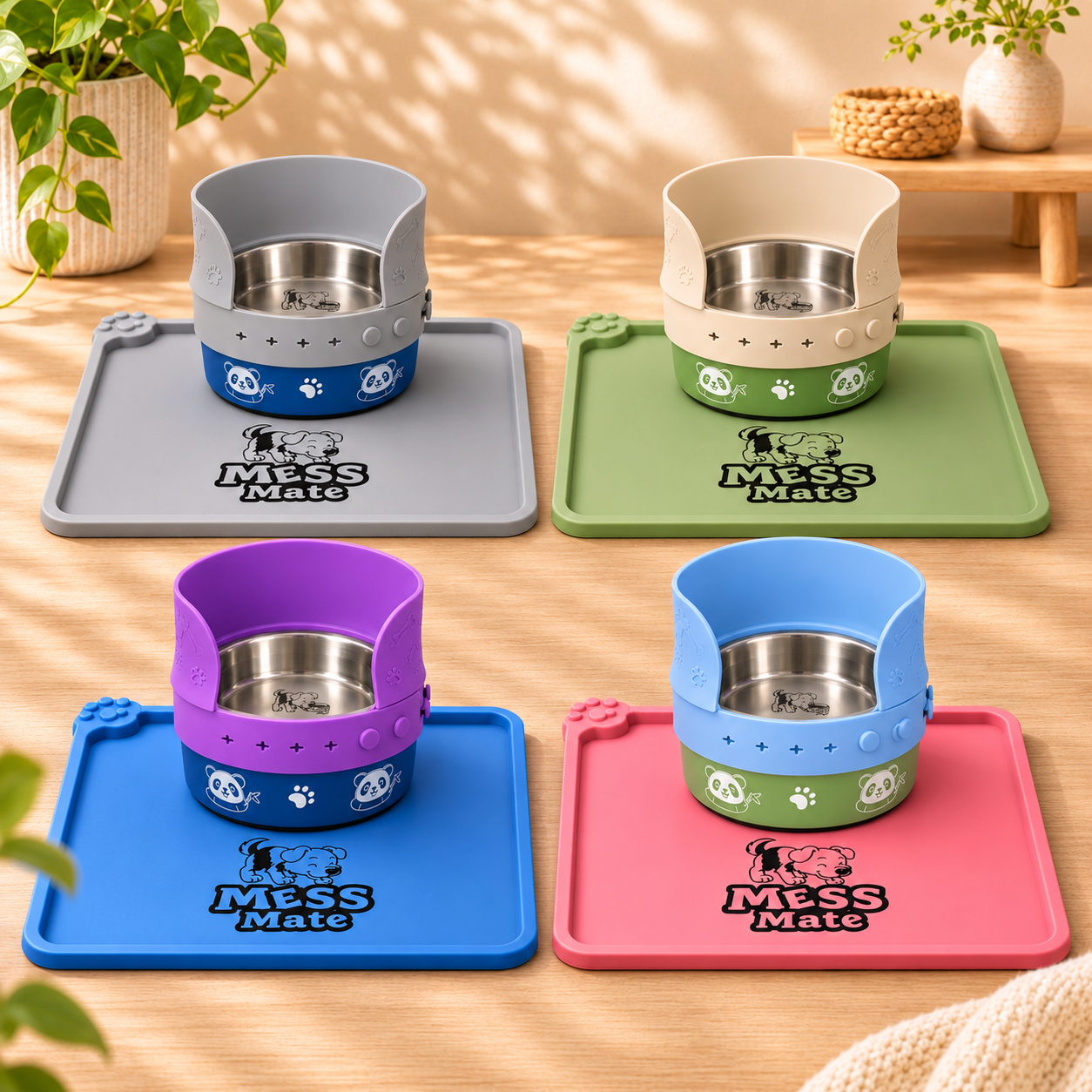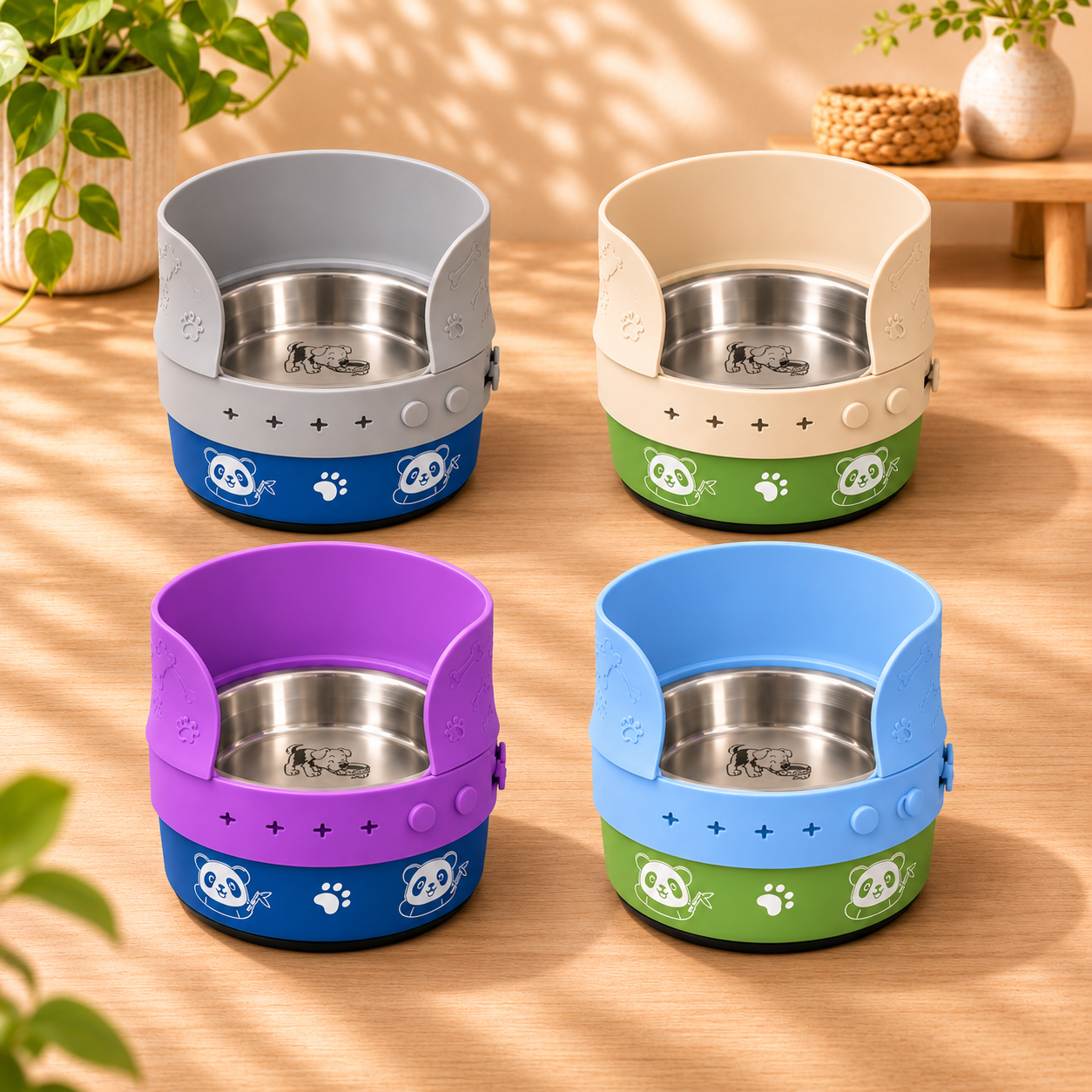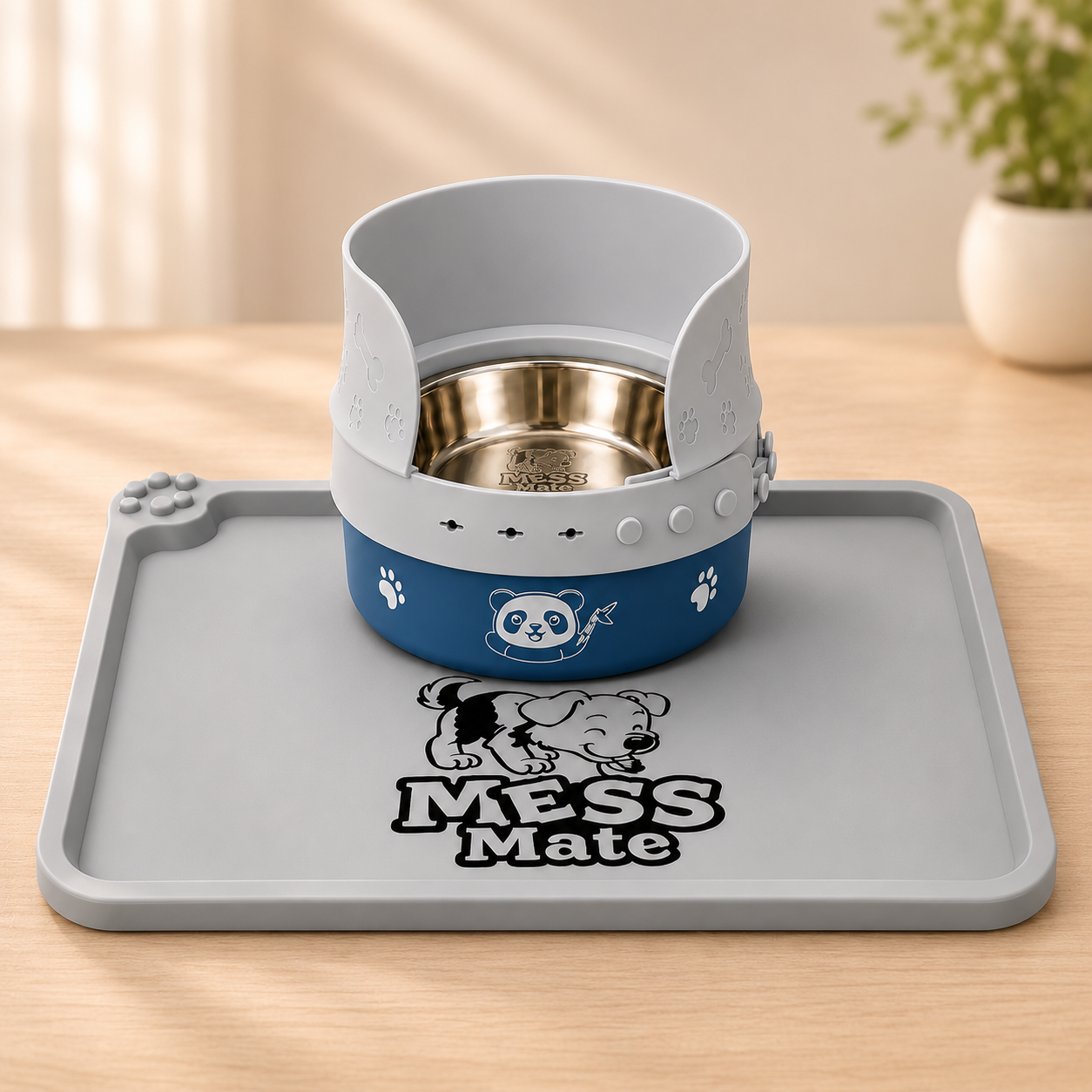
Some households leave a bowl of food out all day. Others serve set meals at set times. Beyond questions of health and routine, the two approaches create very different kinds of mess. If you are trying to keep your floors and counters tidier, it helps to understand how each method plays out in practice. This post compares them from the mess angle only. For decisions about how much to feed and how often, your veterinarian is the right person to ask.
What free feeding looks like
With free feeding, food stays in the bowl and your pet eats when they feel like it. It is convenient, especially for people with unpredictable schedules, and some pets do fine with it. Others eat more than they need to, and many veterinarians discuss portion control with owners for that reason. Whatever you choose, a vet can tell you what suits your pet's age, size and health.
Mess patterns with free feeding
- Crumbs build up. A bowl that is topped off rather than emptied collects kibble dust at the bottom and old food around the rim.
- Water and food mix. Pets that drink between nibbles carry food bits into the water bowl, which means more frequent washing.
- Scatter happens at all hours. Because eating is spread through the day, spills and flung pieces turn up at random times and are harder to catch.
- Pests and spoilage. Wet food should not sit out for long, and dry food that sits for days can go stale. Ants and other bugs can find an open bowl.
What scheduled meals look like
With scheduled meals, you serve a measured portion at set times, then pick up the bowl after a reasonable window. Many owners like the routine because it makes it easier to notice when a pet is not eating normally. It also gives you a natural moment to wipe down the feeding area.
Mess patterns with scheduled meals
- The mess is concentrated. Eating happens in short bursts, so any splatter lands at predictable times and you can clean it in one pass.
- Fast eaters can make a bigger scene. A hungry dog may eat quickly, and enthusiastic eating can push kibble out of the bowl. A splash guard can help contain flying food, but it does not change how fast a dog eats.
- Bowls get washed more easily. An empty bowl is simple to rinse and dry after every meal.
Which one is tidier?
In terms of mess alone, scheduled meals tend to be easier to manage, mainly because you control when the bowl is out and when it is not. That said, tidiness is a small part of the decision. A pet's health, age, medical needs and temperament matter far more, and some pets, such as puppies, seniors or animals with certain conditions, have particular feeding needs. Please check with your veterinarian before changing how or when you feed your pet.
Ways to keep either approach tidy
Use a mat under the bowl
Whichever schedule you follow, a mat marks the feeding area and catches stray pieces. Our silicone pet feeding mat wipes clean and is dishwasher safe on the top rack. If you free feed, a mat makes the daily wipe-down quicker because the mess stays in one place.
Contain the splash zone
If your pet pushes food or flicks water out of the bowl, a splash guard may help. The MessMate guard has a 3-inch silicone wall and fits round bowls 7 to 9 inches across the top opening. It does not suit bowls smaller than 7 inches or larger than 9 inches, so measure before you order using our fit guide. The complete mealtime set bundles pieces that are designed to work together. We want to be clear that a guard contains spills. It does not slow down eating or change feeding behavior.
Wash on a routine
Free-fed bowls need more regular cleaning because food sits longer. Whether you feed on a schedule or not, a simple routine keeps things fresh. We outline one in how often should you clean your dog's bowl.
Pick a good spot
The feeding area should be easy to clean and away from busy foot traffic. For ideas, see where to put your dog's food bowl.
If you are thinking of switching
If you want to move from free feeding to scheduled meals, or the other way around, talk to your veterinarian first. They can help with portion sizes and timing, and they can tell you whether your pet is a good candidate for the change. In general, here are a few mess-related things to keep in mind during a transition:
- Expect some extra begging, bowl nudging or licking in the first few days.
- Pick up the bowl at the same time each day so your pet learns the routine.
- Wash the bowl after every meal in the early days, since you will be establishing a new habit.
- Keep the mat in place so the feeding spot stays familiar.
What about multiple pets?
If you have more than one animal, free feeding can create extra mess, since pets may share bowls or eat from each other's. Scheduled meals with separate spots are often simpler. Our guide to feeding multiple pets without the mess goes into setups for shared homes.
The takeaway
Scheduled meals usually produce a smaller, more predictable mess, while free feeding spreads the mess across the whole day. The right choice for your pet is a health and lifestyle decision, so ask your vet. Whichever you pick, a mat, a clean bowl and a splash guard that fits can keep the area around the bowl tidier. Shipping within the U.S. is free, and returns are accepted within 30 days. Use LOYAL15 for 15% off your order.