Plenty of cat owners know the scene: your cat sits beside the water bowl, dips a paw in, flicks the water around, and leaves a puddle on the floor. Sometimes the cat drinks afterward, and sometimes the whole thing seems to be a game. If you are mopping around the bowl every day, this guide covers the common reasons cats do it and practical ways to keep the area drier.
Why cats paw at water
Nobody can read a cat's mind, but there are several explanations that behaviorists and veterinarians commonly mention. Your cat may be doing one or more of these.
Curiosity and play
Moving water is interesting. A paw dipped in a bowl makes ripples, and ripples are fun to watch and bat at. Cats with a lot of energy and not much to do often turn the water bowl into a toy.
Checking the water
Some cats seem to test the surface before drinking, especially if the bowl is deep and narrow. Whiskers can touch the sides of a small bowl, and some cats appear to dislike that. Pawing may be a way of scooping water up instead of dipping the face in.
Instinct
Cats are often described as preferring moving water in the wild, since standing water can be less fresh. A paw splash may be an attempt to get things moving. This is a general idea, not something we can confirm for any one cat.
Attention
If splashing gets a reaction from you, even a sigh and a towel, a clever cat may repeat it. Staying calm and matter-of-fact can help.
A health note
If your cat suddenly drinks far more than usual, starts pawing at the bowl in a new way, or seems to have trouble drinking, call your veterinarian. Changes in thirst and drinking habits are worth a professional look, and we cannot tell you what is behind them.
Setup changes that can reduce the puddles
Try a wider, shallower bowl
If whiskers seem to bother your cat, a wide, shallow bowl may be more comfortable. A cat that does not have to reach deep into the bowl may be less likely to paw at it. Stainless steel is a popular material for pet bowls because it is easy to wash. You can compare options in our stainless steel bowls collection.
Put a mat under the bowl
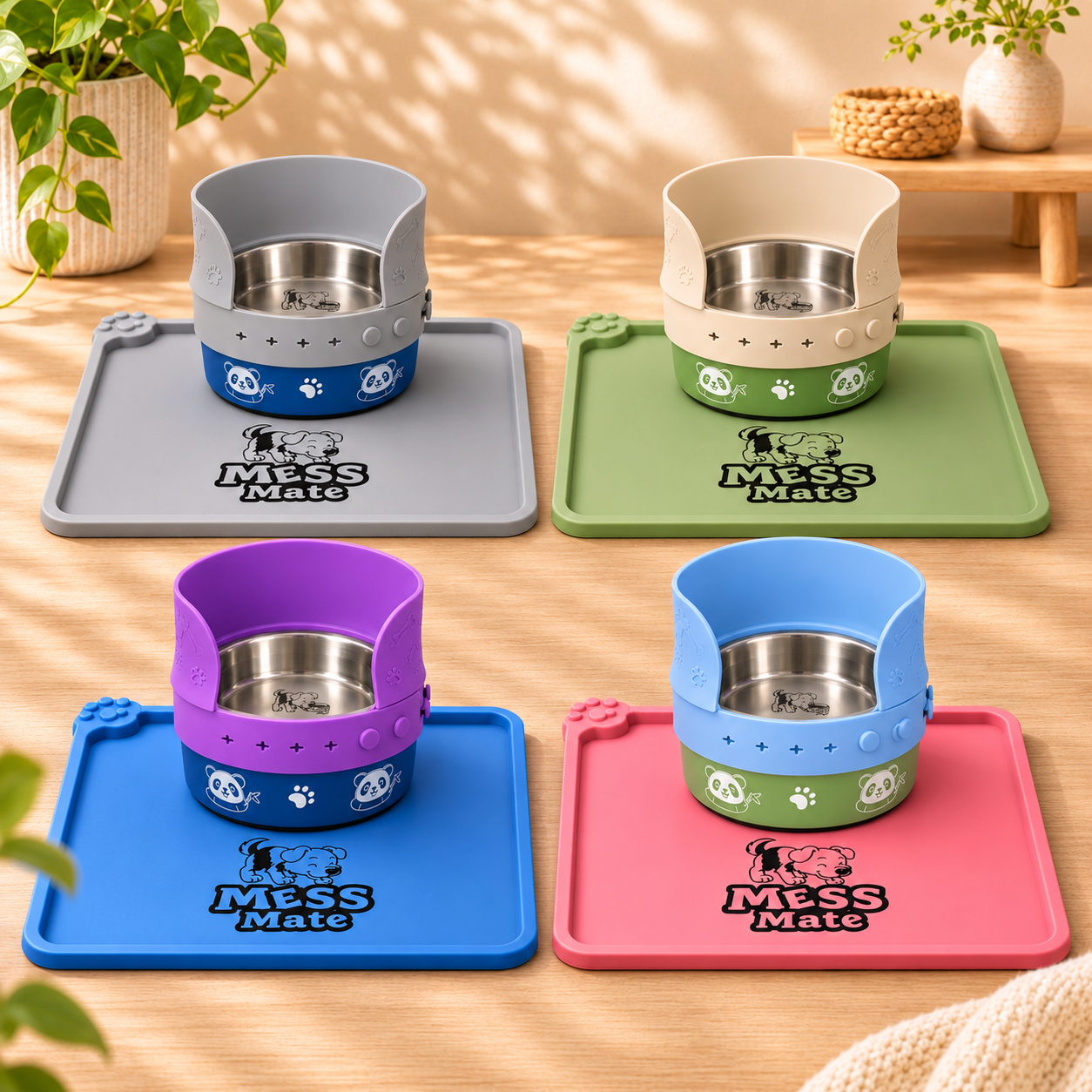
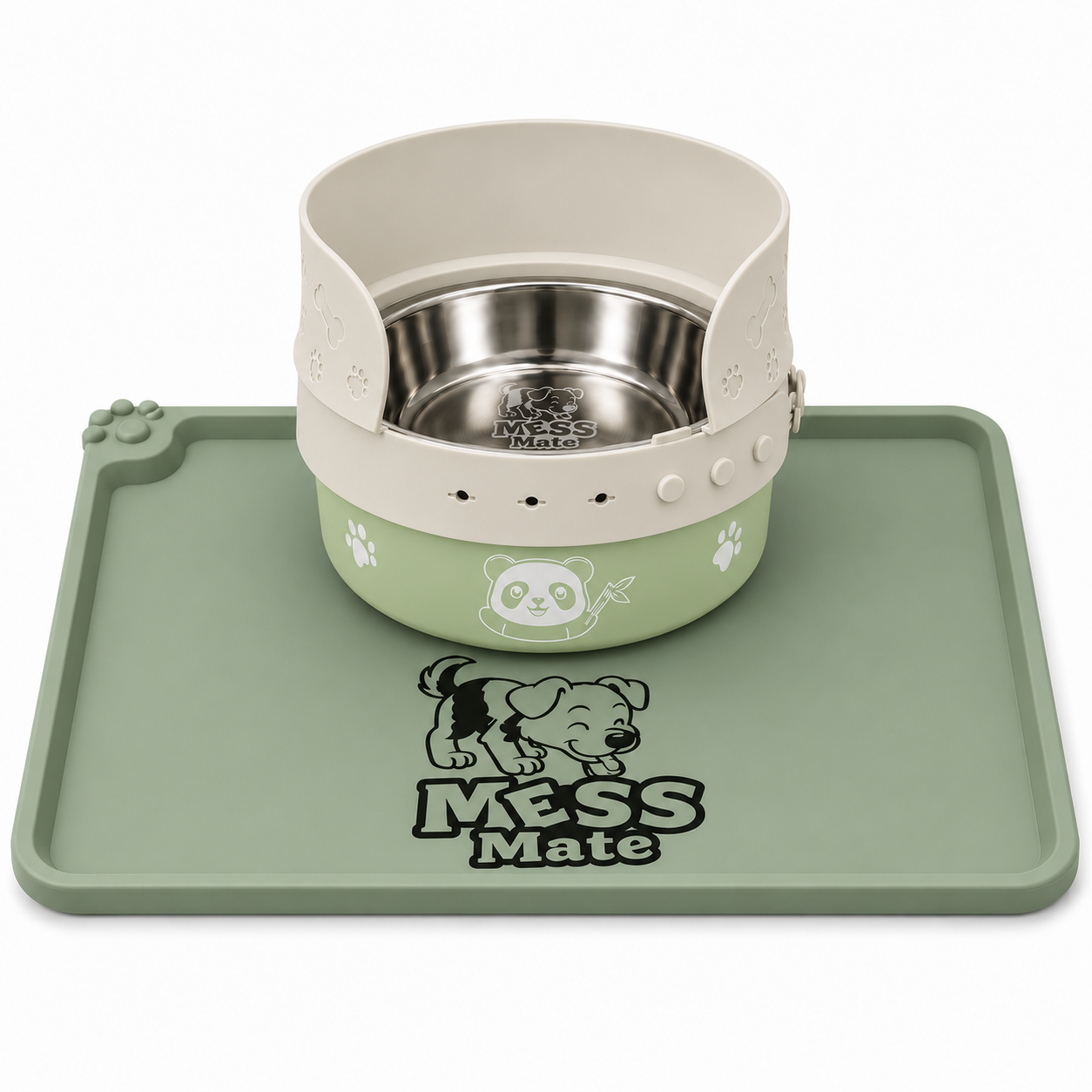
No setup will stop a determined cat, but a mat gives drips and splashes somewhere to land that is not your floor. The MessMate silicone feeding mat is food-grade silicone, wipes clean, and is dishwasher safe on the top rack. Mats also make it obvious where the bowl belongs, which is useful in a multi-pet home.
Add a splash guard if your bowl fits
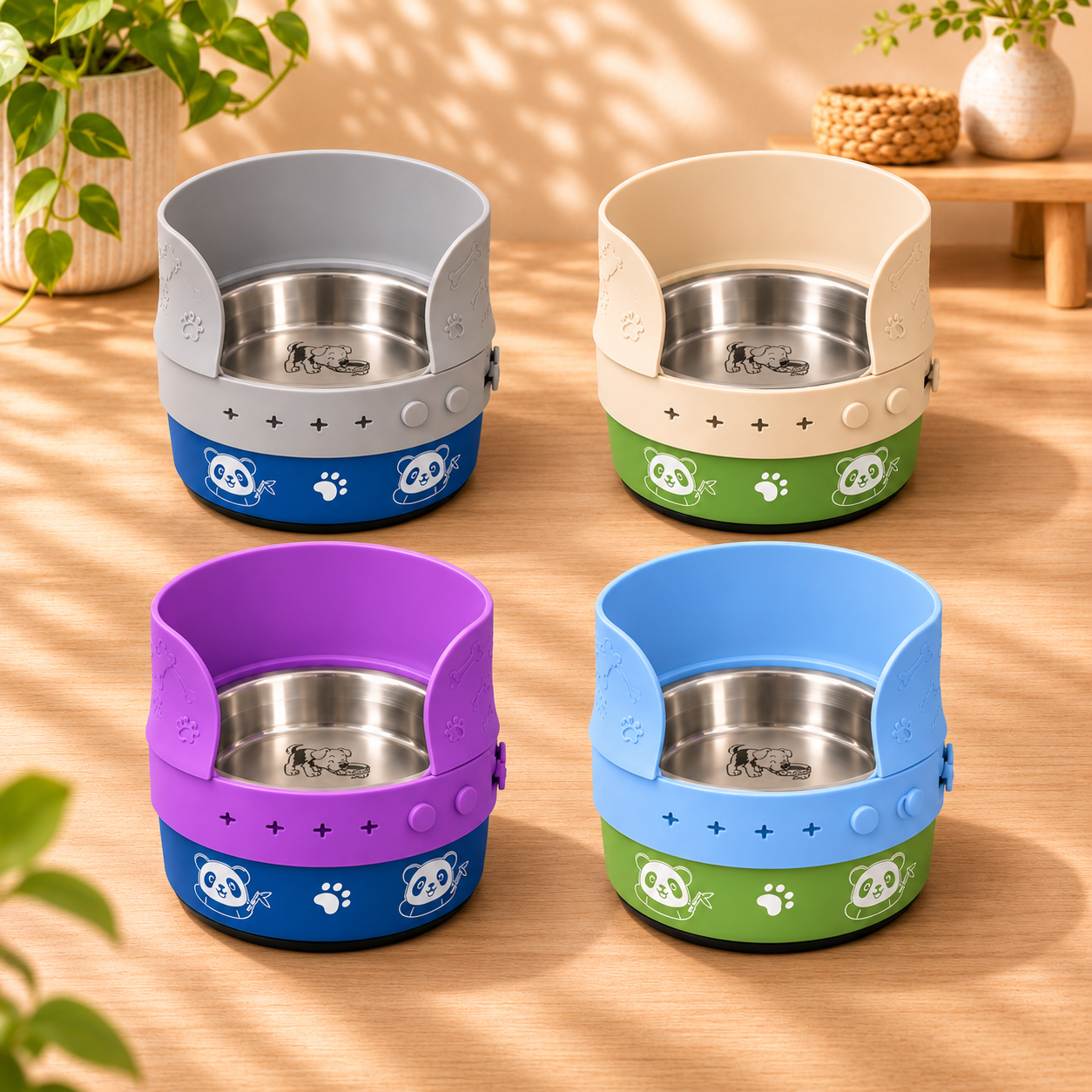
Our splash guard has a 3-inch silicone wall that helps keep water and food from flying out of the sides of the bowl. It fits round bowls 7 to 9 inches across the top opening, so check your bowl first. It is not suited to bowls under 7 inches or over 9 inches. Many cat water bowls are smaller than 7 inches, so the fit guide is the place to start. If your bowl is the right size, the bowls and splash guards page shows the options. To be honest about the limits: a guard contains splashes, but it does not stop a cat from pawing at the water and it will not change the behavior.
Move the bowl
Cats often prefer water that is away from their food. Try placing the bowl in a quieter spot on a surface that is easy to wipe, such as a tiled area or a mat. A bowl in a corner is also harder to bat around.
Refresh the water often
Stale water may be less appealing, and a bowl with a film on it is not pleasant for anyone. Our guide on how often to clean pet bowls is written for dog bowls, but the routine works the same way for cats.
What to do about the play factor
If your cat treats the bowl like a toy, redirect the energy. A few minutes of play with a wand toy before meals can burn off some of the extra energy. Offer other things to bat at, such as a ball or a crinkle toy, and keep them away from the bowl. Praise or treat your cat for drinking calmly, and avoid reacting loudly to splashes.
Feeding and drinking areas for cats
Cats can also be messy eaters. If food is ending up on the floor as well, take a look at why cats scoop food out of the bowl. The same mat and bowl choices that help with water often help with food.
Cleaning up after a splasher
Wipe the floor around the bowl daily and wash the mat and bowl regularly. Both silicone and stainless steel pieces from MessMate can go on the top rack of the dishwasher. Standing water can leave marks on floors, so a quick wipe is worth the effort.
Quick recap
- Pawing at water is common, and the reasons vary from cat to cat.
- Wider, shallower bowls may be more comfortable for some cats.
- A mat catches drips, and a splash guard can contain splashes if your bowl is 7 to 9 inches across.
- Ask your veterinarian if drinking habits change suddenly.
Shipping is free in the U.S., and returns are accepted within 30 days. Use LOYAL15 for 15% off your order. MessMate donates to animal-rescue groups in memory of Spud.