For many dogs, the minute the scoop hits the kibble bag is the most exciting moment of the day. Dancing, jumping, bumping your legs, and diving at the bowl before it even touches the floor can turn a simple task into a spilled-food scramble. A calm "wait" routine will not solve every mealtime problem, but many owners find it makes feeding more predictable and a bit tidier. This guide walks through a gentle approach.
Why a wait routine helps with mess
A lot of mealtime mess happens in the first ten seconds. A dog that leaps at your hands knocks the bowl, spills kibble on the way down, and starts eating before the bowl is settled. A short pause gives you a moment to place the bowl properly and gives your dog a clear signal about what happens next.
A calm routine also tends to reduce stress for people and pets. It is worth remembering, though, that behavior takes time and consistency, and every dog learns at a different speed.
What you need
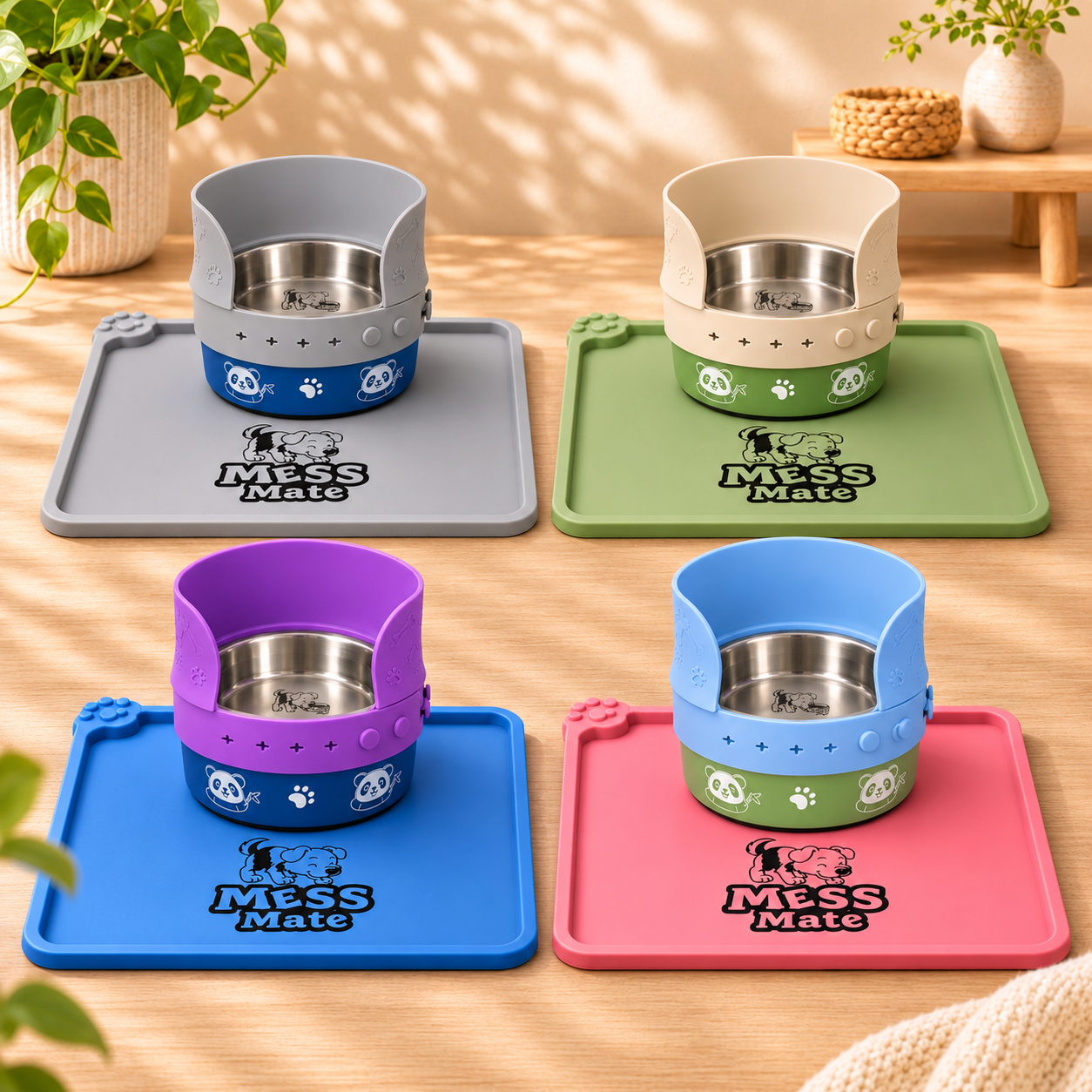
- A bowl on a stable spot, ideally a mat that keeps it from sliding. See tray, mat or splash guard to choose what fits your space.
- A measured meal, ready before you start.
- A few minutes of patience, and a calm voice.
Prepare the food out of your dog's reach if you can. Setting up in advance cuts down on the frenzy.
A simple step-by-step routine
Step 1: Start with a cue your dog already knows
If your dog knows "sit," begin there. If not, practice sit in a quiet moment before attempting it around food. Use small rewards and keep sessions short.
Step 2: Ask for a sit before the bowl goes down
Hold the bowl at a comfortable height. If your dog jumps or lunges, stand still and calmly lower the bowl or lift it away. Do not scold. The goal is for your dog to figure out that sitting calmly makes the bowl go down, and jumping makes it stop.
Step 3: Lower the bowl in stages
Lower it a few inches, and if your dog stays seated, keep lowering. If your dog gets up, raise it back and try again. Some dogs master this in a few days, while others take weeks.
Step 4: Add a brief wait
Once the bowl is on the floor and your dog remains seated, add a pause of one or two seconds before giving a release word such as "okay." Slowly lengthen the wait as your dog gets reliable. Keep it short enough that your dog can succeed.
Step 5: Release and let them eat
Use a consistent release cue, then let your dog eat in peace. Avoid taking the bowl away or interfering while they eat, unless a trainer or veterinarian has advised you otherwise.
Keep the setup consistent
Dogs learn patterns. Feeding at the same spot, in the same order, makes the routine easier. Our article on where to put your dog's food bowl offers ideas for choosing a spot, and free feeding versus scheduled meals explains why set mealtimes make routines easier to build. For a busy household, a quick morning feeding routine can help you fit training into the day.
What gear can and cannot do
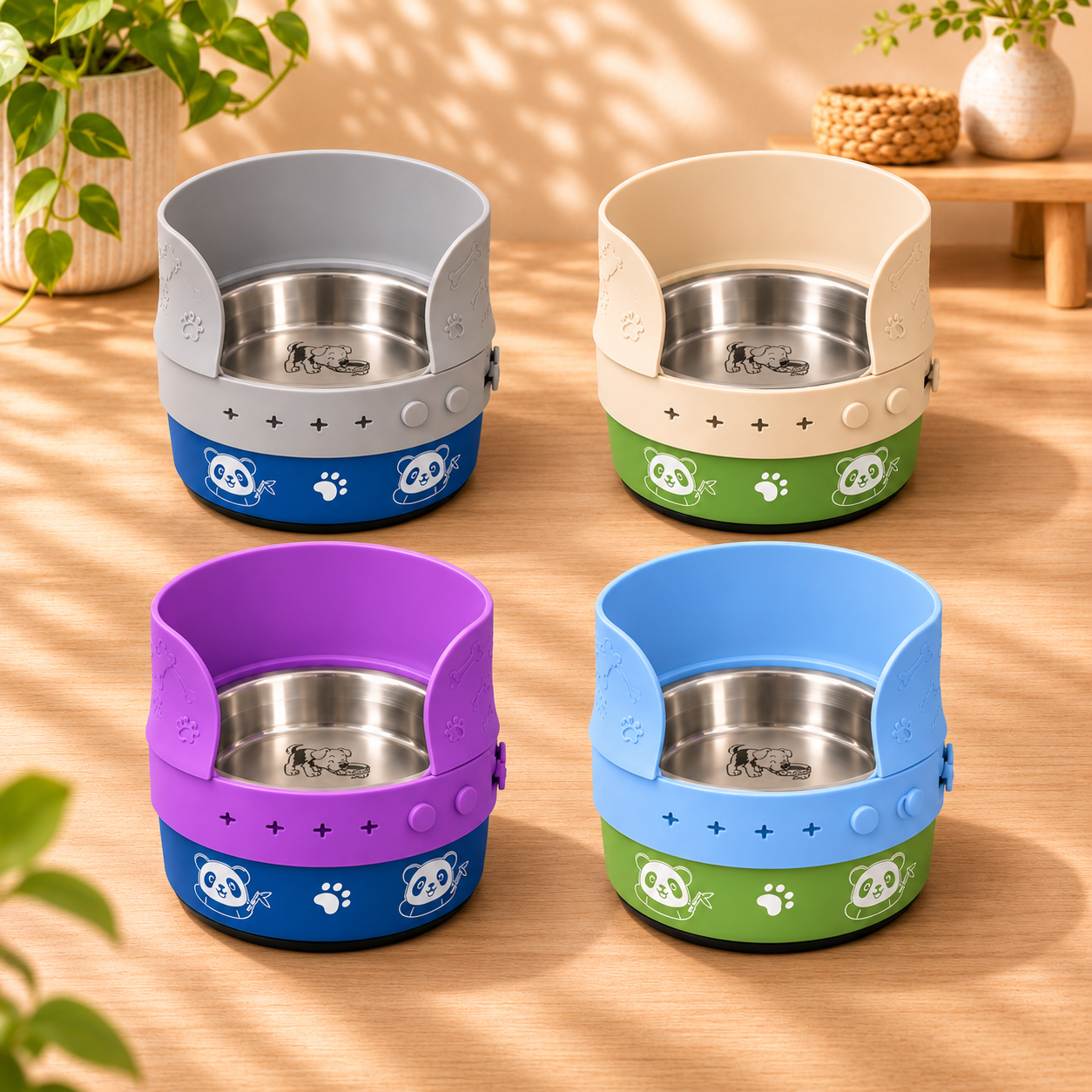
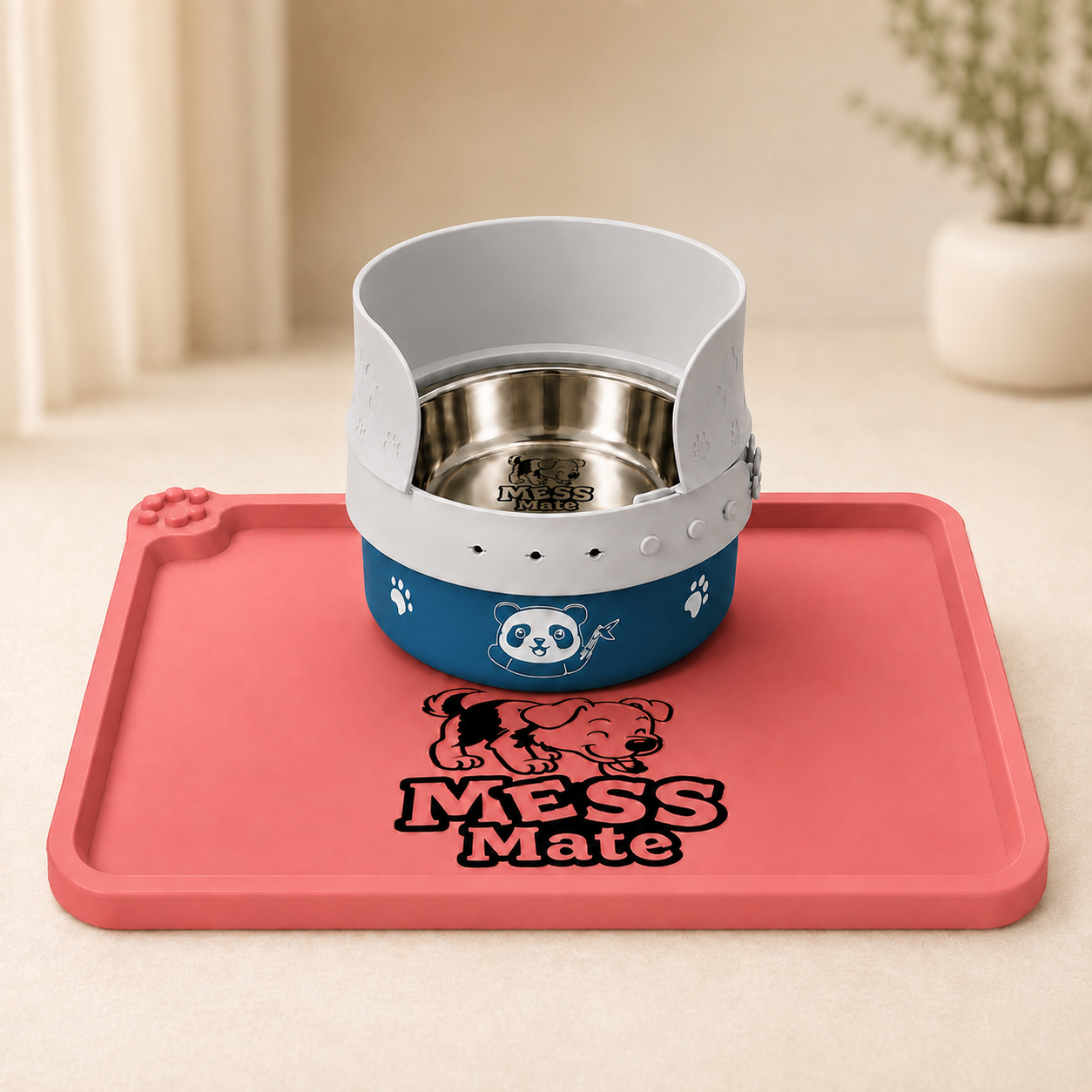
It is worth being honest here. A splash guard or mat is a tool for containing mess, not for teaching manners. The MessMate splash guard clips around the outside of a round bowl that is 7 to 9 inches across the top and has a 3-inch silicone wall. It is made for medium to extra-large dogs and large cats, and it can catch kibble or water that gets pushed or flicked outward. It does not slow eating, teach patience or change behavior. Training does that.
What gear can do is make practice sessions less stressful, because a bowl that stays put and a mat that catches stray pieces take some of the cleanup pressure off. If you want a ready-made setup, the complete mealtime set includes a bowl, splash guard and mat. If you already own a bowl, check the fit guide first.
Troubleshooting common problems
My dog will not stay seated
Shorten the goal. Ask for just one second of calm, reward that, and build up. If your dog is extremely wound up, a short walk or play session before the meal can help some dogs settle.
My dog gets anxious or guards food
If your dog growls, stiffens, snaps or guards the bowl, stop and speak with a qualified trainer or your veterinarian before continuing. Food guarding can be serious, and it needs individual guidance. A new home can also change mealtime behavior; see bringing home a rescue dog for a gentler setup.
My dog eats very fast
A wait routine adds a pause at the start but does not control speed during the meal. If fast eating worries you, ask your veterinarian for advice. For how slow feeders compare with splash guards, read slow feeder bowl versus splash guard.
Other pets or kids are in the way
Give each pet its own space during training, and keep children from reaching into bowls. Our guides to feeding multiple pets and toddlers and pet bowls cover setups for busy homes.
Keep it positive
Use a calm voice, small steps and plenty of praise. If your dog fails a step, simply reset and try again later. Short, consistent sessions work better than long, frustrating ones.
Summary
A wait routine will not stop every spill, but it gives mealtime a calmer beginning and often a tidier one. Pair patient practice with a stable bowl, a mat and, where it fits, a splash guard, and you may find that the daily feeding scramble turns into a calm routine for both of you.