If you have a toddler and a pet, you already know the pattern. A small person crawls toward the dog's water bowl, a dog nudges a child's snack off a high chair tray, and somewhere between the two there is a puddle. Pet bowls are irresistible to curious little hands: they have water to splash, food to grab, and a pet to copy.
This guide offers practical ways to set up feeding areas so toddlers and pets are less likely to meddle with each other's meals. It covers layout, routines and cleanup. It is general household advice, not child-safety or medical guidance, so talk to your pediatrician or veterinarian about anything specific, such as what to do if a child eats pet food or if your pet is protective around food.
Why pet bowls attract toddlers
Toddlers explore by touching, tasting and splashing. A water bowl is a bath toy to them. A bowl of kibble looks like a snack. And pets, for their part, may see a dropped cracker or a sippy cup as fair game. The mix is messy and, at times, risky, so it helps to create some distance and some structure.
Choose where the pet eats
Go for a spot that is hard for toddlers to reach
Some families feed on a washable surface in a laundry room, mudroom or a corner behind a baby gate. Others feed in the kitchen but only at set times. Our article on where to put your dog's food bowl goes through the trade-offs.
Avoid high-traffic paths
A bowl in the middle of a doorway is a hazard for walkers and crawlers alike. Pick a spot out of the way, away from the route to the bathroom or the stairs.
Think about pet comfort too
Pets can be protective of food, and some become anxious when a child approaches. If you notice stiffness, growling or hovering around the bowl, separate them at mealtimes and speak with your vet or a qualified trainer. Never leave a young child alone with a pet that is eating.
Routines that reduce the chaos
- Feed on a schedule. Picking up the bowl after a set time means there is no all-day grazing area to guard.
- Time the meals apart. Feed the pet before or after your child eats, when you can focus on both.
- Use a barrier. A baby gate or playpen can create a pet-feeding zone that little ones cannot enter.
- Teach a "look, don't touch" habit early. Children learn quickly if you repeat the same simple rule at every meal.
Contain the water
The water bowl is the biggest target. A few ideas:
- Keep it in the same restricted area as the food, or up on a stable surface where your pet can still reach it comfortably.
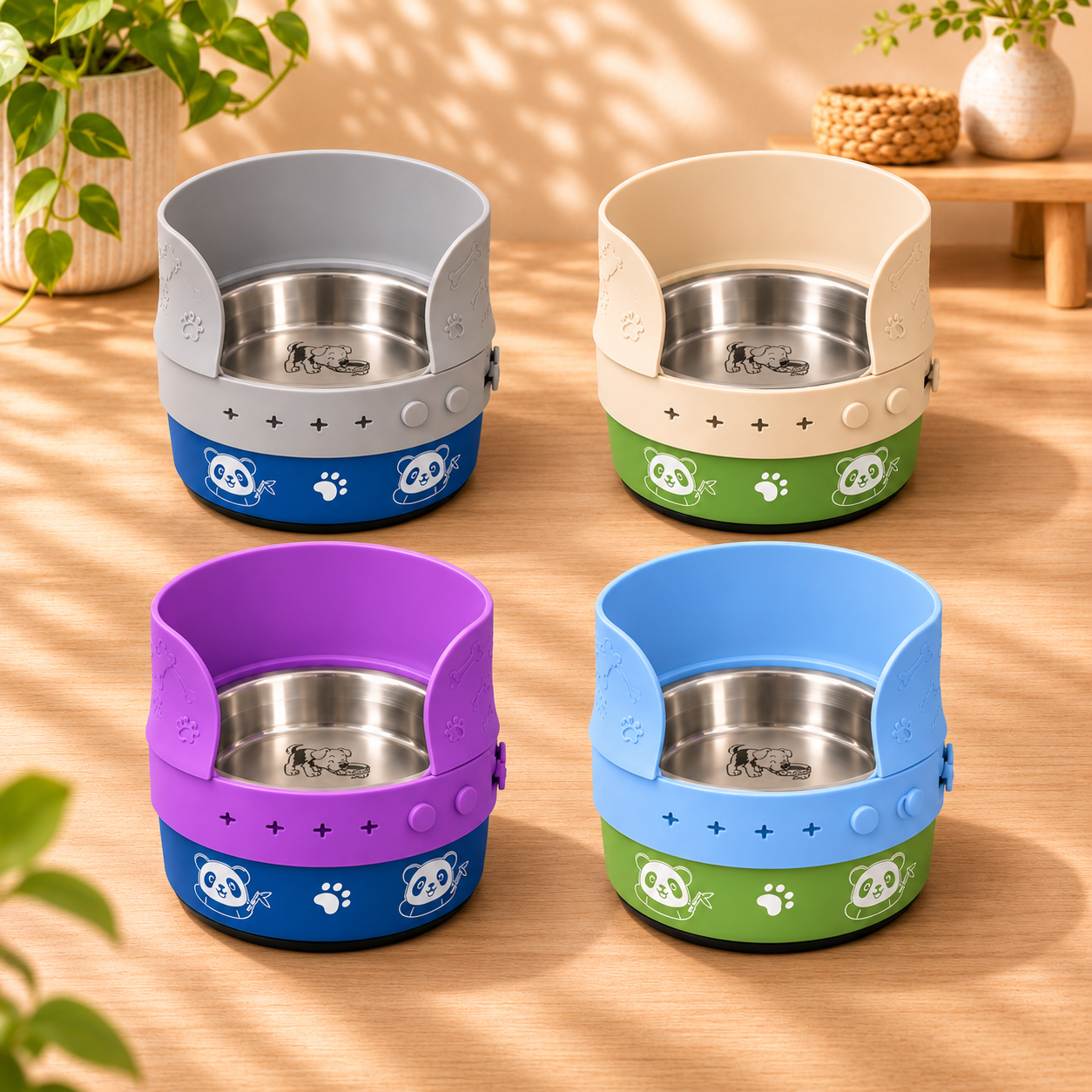
- Use a heavy, stable bowl that is harder to tip. Stainless steel bowls have some weight and wipe clean easily.
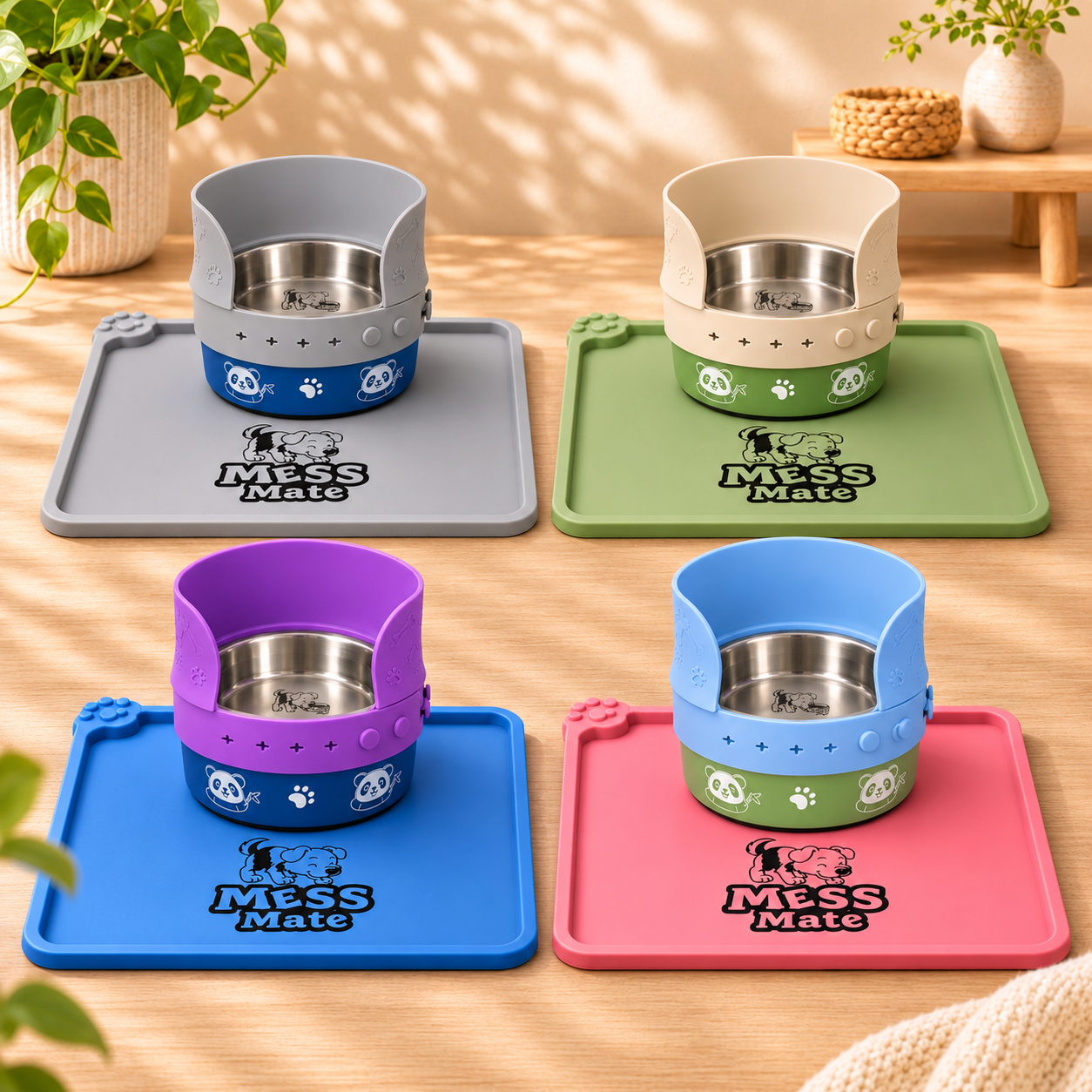
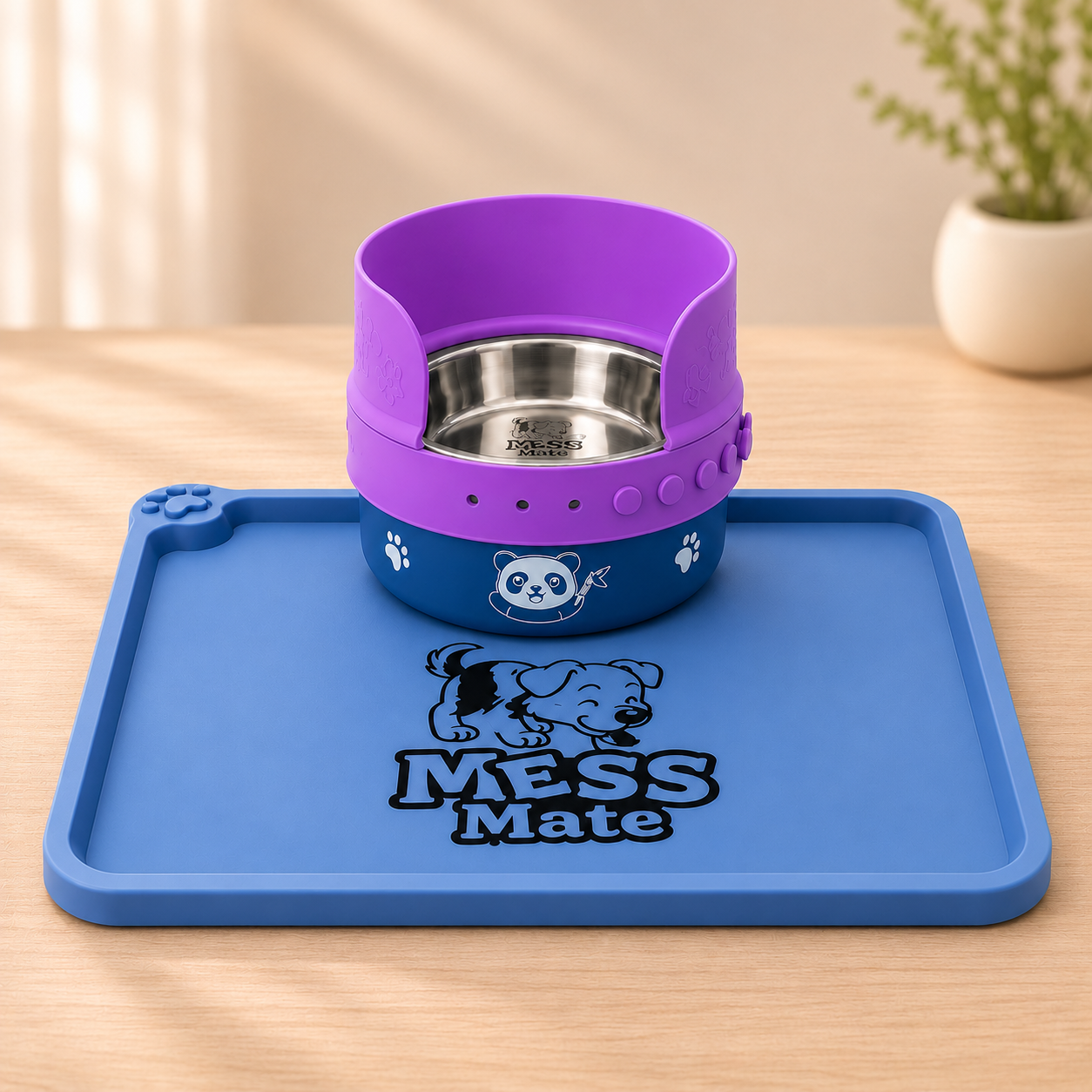
- Put a mat underneath so splashes land somewhere easy to dry. A silicone feeding mat has a raised edge that helps hold small spills.
No bowl is toddler-proof, and none of these pieces replace supervision. They simply make the area easier to manage.
Where a splash guard may help
For a dog who splashes or flicks food out of the bowl, a splash guard can keep more water and kibble inside. The MessMate splash guard clips around the outside of a round bowl with its strap and adds a 3-inch silicone wall. It fits round bowls 7 to 9 inches across the top opening and is made for medium to extra-large dogs and large cats. It is not suited to bowls under 7 or over 9 inches, and the guard sold alone does not include a bowl.
To be clear about what it does not do: it will not keep a determined toddler out of the bowl, and it will not change your pet's eating habits. It is a spill-reduction tool, not a safety device. If you want a ready-to-go option, see the bowl and splash guard set, or check the fit guide first.
Cleaning when kids are around
Bowls that little hands have touched need regular washing, and so do mats and floors. A simple routine:
- Pick up the food bowl after the meal.
- Wipe the mat and the floor around it.
- Wash bowls daily. MessMate silicone and stainless steel pieces are food-grade and dishwasher safe on the top rack.
- Wash your child's hands after contact with pet bowls or pet food.
If you want a deeper look at schedules, read how often to clean your dog's bowl.
What if my toddler eats pet food?
It happens more often than parents admit. A taste of kibble is not usually an emergency, but pet food is not formulated for children, and it can carry germs. If your child eats a significant amount, or if you are worried, call your pediatrician or a poison control line for advice. Moving the food out of reach is the best long-term fix.
Plan for different ages
- Crawlers: everything at floor level is reachable, so use gates and raised surfaces where your pet can still comfortably eat.
- Walkers and climbers: they can reach counters and open doors. Choose a spot that is truly out of range.
- Preschoolers: they can learn to help with feeding, under supervision, which turns the bowl into a responsibility rather than a toy.
The takeaway
You do not need a perfect system, only a predictable one. Pick a feeding spot kids cannot easily reach, set regular mealtimes, contain the water, and keep cleaning on a simple schedule. MessMate also offers free U.S. shipping (U.S. addresses only) and 30-day returns.