If your dog's dinner sounds like a drum solo, you are not alone. Stainless steel bowls are popular because they are durable and easy to clean, but on a hard floor they can rattle, scrape and clang with every mouthful. At 6 a.m. or during a video call, that noise gets old fast.
This guide explains why bowls get loud, what actually helps, and what will not. We sell feeding gear, so we will mention it where it fits, but the goal is a quieter kitchen however you get there.
Why a Dog Bowl Gets So Loud
Noise at mealtime usually comes from three things happening at once.
Metal meeting a hard floor
A steel bowl sitting directly on tile, hardwood or laminate acts a bit like a small drum. Every nudge of the nose makes the base tap or scrape against the surface, and the bowl's walls ring.
Sliding and chasing the bowl
Many dogs push the bowl around while they eat, especially as it empties and they chase the last pieces. If you want to dig into that behavior, our post on why a dog's bowl slides across the floor covers the common reasons.
Kibble hitting bare metal
Dry food dropping into an empty steel bowl, and then being scooped around it, has its own clatter. Tags on a collar tapping the rim add to it.
Fixes That Tend to Help
Put something soft under the bowl
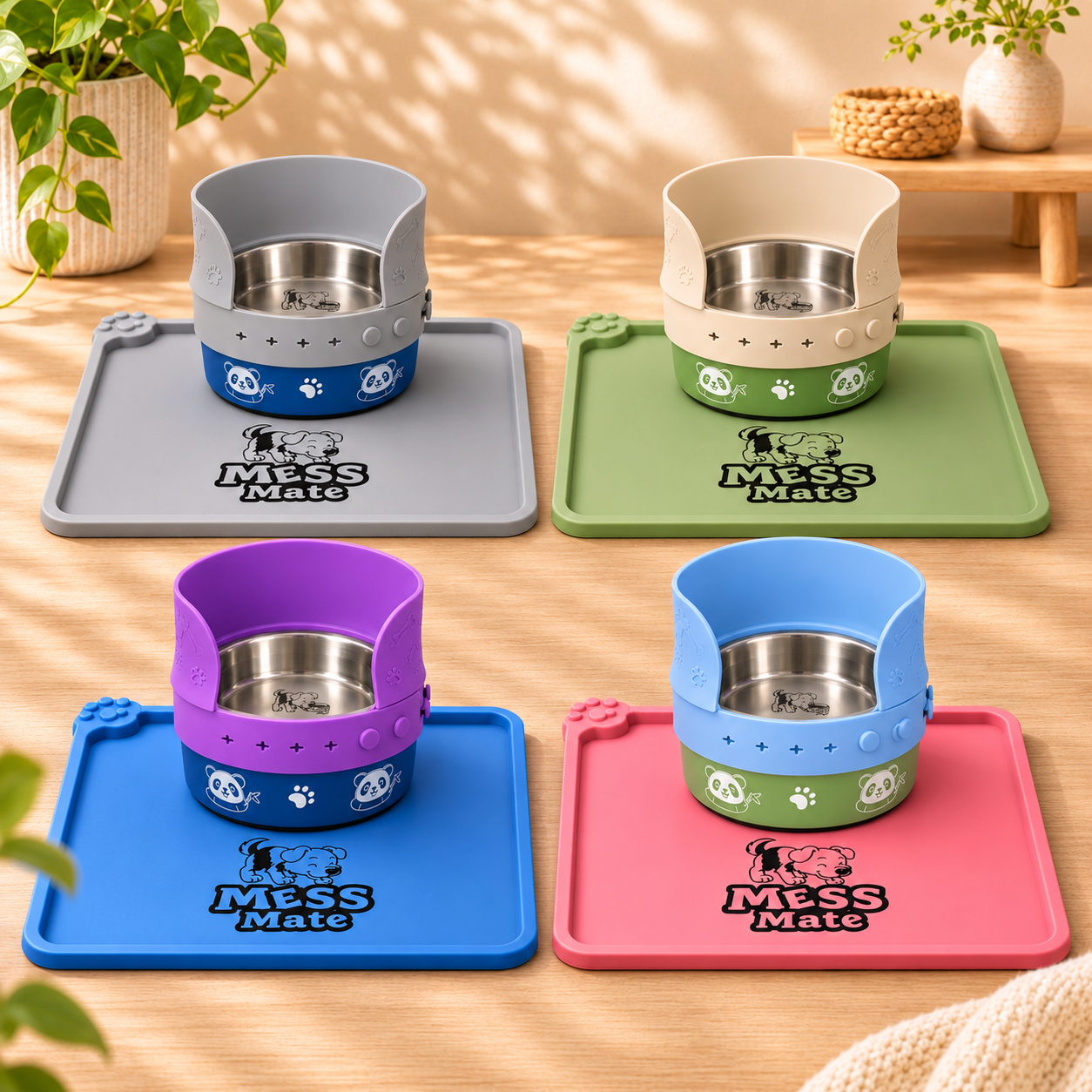
The simplest change is a cushioning layer between the bowl and the floor. A silicone feeding mat gives the base something to sit on instead of bare tile, which usually takes the sharp scrape and rattle down a notch. It also catches the drips and crumbs that land around the bowl. You can look at the MessMate silicone pet feeding mat or browse the anti-mess feeding mats category for sizes.
To be clear about what a mat does: it softens contact noise and can add some friction, but it will not make a bowl silent, and a very determined pusher may still move the bowl and the mat around. Results depend on your floor and your dog.
Choose a bowl with some weight and a steady base
A bowl that wobbles will rattle. A stable, flat base is quieter than a light bowl that rocks on its edge. When you compare options, look at how the bowl sits on a flat surface before you worry about anything else. Our guide to stainless steel, plastic and ceramic bowls goes through the trade-offs of each material, including that ceramic can be quiet but chips and breaks more easily.
Move the feeding spot
Sometimes the fix is where you feed. A bowl on a rug-covered section of floor, or on a corner of the room away from sleeping people, can be enough. If you are rethinking the location anyway, where to put your dog's food bowl has ideas for tidier and calmer spots.
Mind the collar tags
If the clinking is metal tags hitting the rim, a quiet tag cover or taking the collar off during meals (where that is safe and practical for your household) removes a surprising amount of the sound.
What About a Splash Guard?
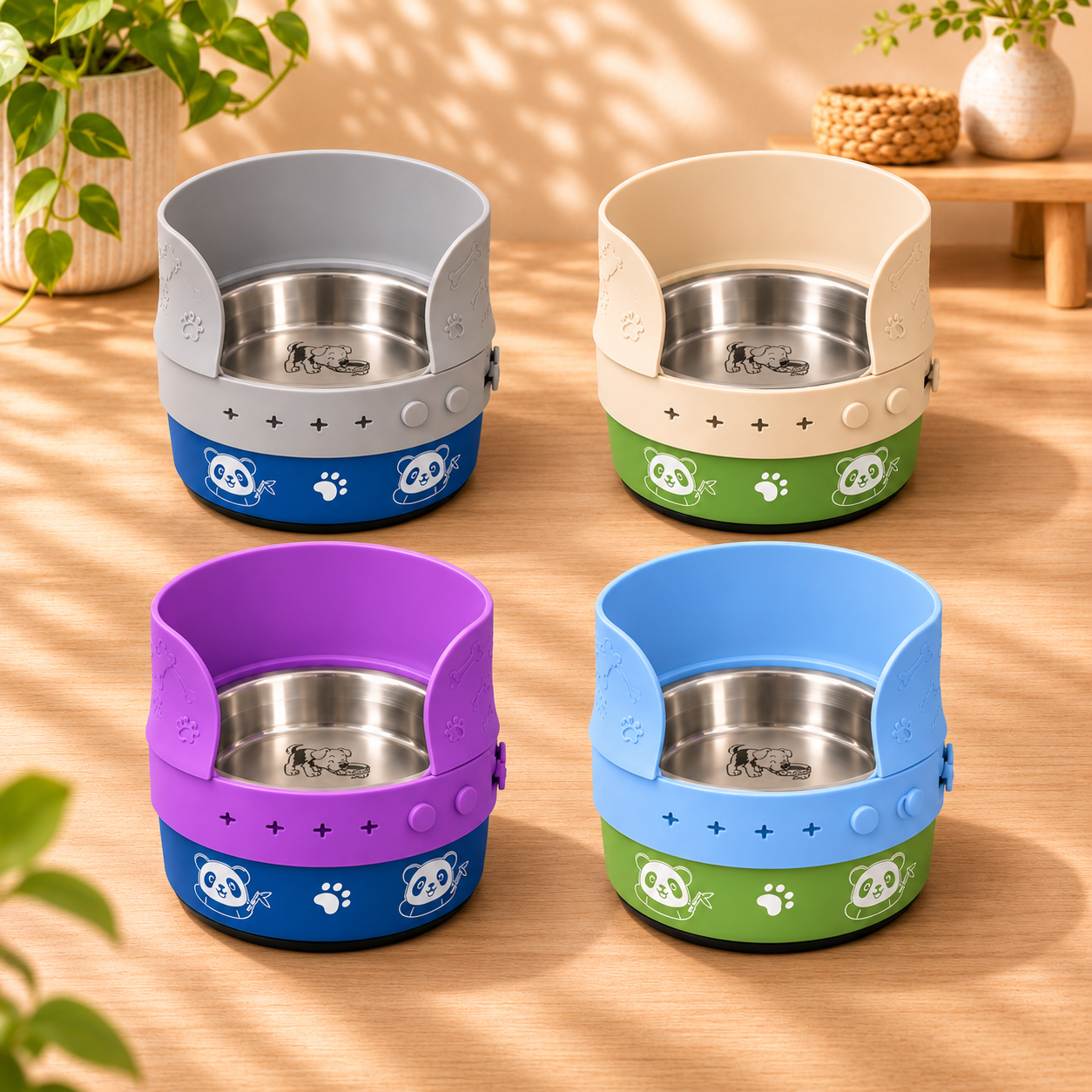
A splash guard is built for a different job: keeping water and food from flying out of a bowl. The MessMate splash guard fits round bowls from 7 to 9 inches across the top opening and has a 3-inch silicone wall that clips around the outside of the bowl with its strap. It is made for medium to XL dogs and large cats, and it is not suited to bowls smaller than 7 or larger than 9 inches.
It is not a noise-reduction product, and we do not claim it is. That said, the silicone wall around the outside of a steel bowl may take the edge off some rim tapping, and you get the anti-splash benefit at the same time. If you want to check your bowl, the fit guide shows how to measure. Note that the guard sold alone does not include a bowl.
If you would rather not measure at all, the splash guard and bowl set pairs a bowl with a guard, and the complete mealtime set adds a feeding mat so the bowl, guard and floor protection all come together.
A Quick Quiet-Mealtime Checklist
- Check whether the bowl rocks on a flat surface; replace or rebalance it if it does.
- Add a silicone mat under the bowl to cushion the base.
- Try feeding on a quieter section of floor or a low-pile rug.
- Cover or remove noisy collar tags at mealtime if that is safe for your dog.
- Pick up the bowl once your dog is done so there is nothing to nudge around afterward.
When Noise Is a Clue
Most mealtime clatter is just physics, but a few patterns are worth noticing. If your dog suddenly starts pushing the bowl around much more than usual, or seems to struggle to eat from it, something may have changed in how they feel. Dental discomfort or other physical issues can alter eating behavior, and your veterinarian is the right person to ask. A bowl change will not fix a health problem, so treat noise as a nuisance first and a signal only if the behavior is new.
Cleaning Quiet Gear
Adding a mat or silicone pieces means a few more items to wash. The good news is that the MessMate silicone and stainless steel pieces are food-grade and dishwasher safe on the top rack. If you do your own scrubbing instead, our notes on cleaning silicone pet gear cover greasy residue and odors.
The Bottom Line
A loud bowl is usually a hard-floor problem. Cushion the base, keep the bowl steady, and be realistic: you can make mealtime noticeably quieter, but you probably will not make it silent. Start with the cheapest change, a mat under the bowl, and add from there only if you still need it.
Questions about sizing or what is in each set? The FAQ has answers, and every order ships free to U.S. addresses with a 30-day return window.