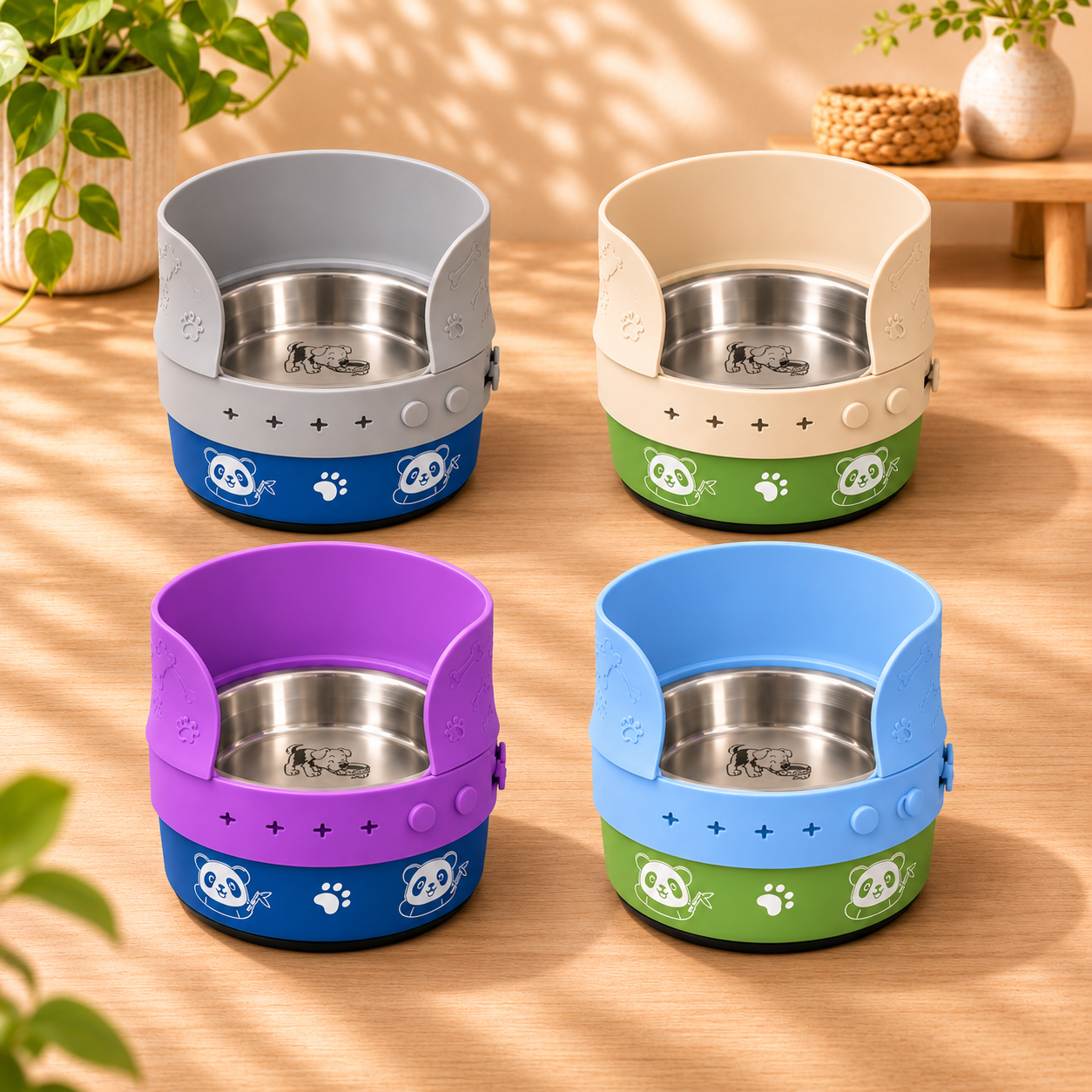
Walk down any pet aisle and you will find bowls in stainless steel, plastic, ceramic and silicone, often at very different prices. The material matters more than most people expect. It changes how easy the bowl is to clean, whether it slides across the floor, how long it lasts, and how it copes with a dog who chews or a cat who dislikes the sides touching her whiskers. This guide compares the three most common hard materials honestly, including where each one falls short.
What to weigh before you choose
Before comparing materials, think about your own household. A few questions help narrow things down:
- How will you clean it? If you rely on the dishwasher, check that the bowl is rated for it.
- Does your pet push, paw or flip the bowl? Weight and a stable base matter here.
- What is your floor like? Smooth tile and hardwood let light bowls travel and can make a lot of noise.
- Does your pet chew? Some materials hold up to teeth better than others.
No material is perfect. You are trading off weight, durability, cleaning effort and cost, so the best bowl is the one that fits your routine.
Stainless steel
What it does well
Stainless steel is popular because it is durable and generally easy to wash. It does not chip the way ceramic can, and a dropped steel bowl usually picks up a dent rather than a crack. A smooth steel surface also tends not to hold onto odors the way a scratched plastic bowl can. Most steel bowls are dishwasher friendly, although you should always follow the maker's instructions.
Where it falls short
Steel bowls can be light, so a pushy eater may send one sliding across the kitchen. Some ring loudly against tile. Quality also varies: very thin bargain bowls dent easily, and the finish matters. If a bowl has a rubber ring or a hollow base, make sure you can dry it completely so water does not get trapped. Our guide to what to look for in a stainless steel bowl goes into more detail, and you can browse our stainless steel bowls if you want to see what we offer.
Plastic
Plastic bowls are cheap, light and come in plenty of colors. They are also the material most likely to pick up scratches over time. Scratches can be harder to clean thoroughly, and some owners find that plastic hangs onto the smell of oily food. Determined chewers can also damage the rim.
Some pets develop redness or small bumps on the chin, and plastic bowls are sometimes blamed. The real causes can be varied, so if you notice skin changes, ask your veterinarian instead of guessing that the bowl is the culprit.
Plastic can still make sense for short-term situations, such as a travel bowl or a puppy who will quickly outgrow things. Just inspect it regularly and replace it once it is scratched, cracked or chewed.
Ceramic and stoneware
Ceramic bowls are heavy, which is their main selling point. A heavy bowl is harder to shove across the floor, and many are genuinely attractive. The trade-offs are practical ones:
- They can chip or crack if dropped, and a chipped bowl should be retired.
- Glazes vary, so buy from a maker that states the bowl is food-safe.
- They are bulky to pack and awkward to wash by hand.
If the glaze looks crazed, cracked or worn, stop using the bowl. When in doubt, ask the manufacturer or your veterinarian.
Which material for which pet
Fast eaters and food pushers
No material changes how quickly a pet eats. If speed is the concern, a slow feeder is a separate tool, and our comparison of slow feeder bowls and splash guards explains the difference.
Cats
Many cats prefer a wide, shallow bowl. Steel and ceramic are both common choices, and the right one is simply the one your cat will eat from comfortably. If your cat suddenly changes how she eats, mention it to your veterinarian.
Chewers
A determined chewer can wreck plastic quickly. Steel or heavy ceramic usually lasts longer, but check any bowl for damage before every meal.
Seniors and puppies
Both groups can be messy for different reasons. Stable, non-slip bowls help, and our posts on feeding a puppy and feeding a senior dog cover the routines in more depth.
Material is only half the mess story
Even the perfect bowl will not stop splashing or kibble flicking on its own. That is where accessories come in. The MessMate splash guard has a 3-inch silicone wall and fits round bowls that are 7 to 9 inches across the top opening. It is not suited to bowls smaller than 7 inches or larger than 9 inches, so measure your bowl first with our fit guide. If you would rather skip the measuring, the bowl and splash guard set is built to go together.
To be clear about what a guard does: it gives water and food a wall to stay behind. It will not slow down a fast eater or change your pet's behavior. The silicone and stainless steel pieces are food-grade and dishwasher safe on the top rack, shipping within the U.S. is free, and you have 30 days to return anything that does not work out. First-time customers can use code WELCOME10 for 10% off, and a portion of every sale goes to rescue organizations in memory of Spud.
Questions about sizing or materials? Our FAQ page covers the common ones.