As dogs get older, mealtimes often change. Some move more slowly, some drink more or less than before, and some become less steady on their feet. Many owners also notice more spills and drips. If you are looking for ways to make an older dog's meals more comfortable and tidier, a few small adjustments can help. Nothing here replaces advice from your veterinarian, who knows your dog's health and can tell you what is right for them.
Start with a vet check if anything changes
A change in how your dog eats or drinks is worth mentioning to your vet. Dropping food, struggling to reach the bowl, drinking much more than usual or losing interest in meals can all have different causes, some of them medical. A mess that appears suddenly is not always "just old age." Ask your veterinarian whether anything needs to be investigated before assuming it is a cosmetic problem.
Make the bowl easier to reach
Consider bowl height
Some older dogs seem more comfortable eating from a raised bowl, especially if they are stiff in the neck or joints. Others do fine on the floor. The right height depends on the individual dog, and there is ongoing discussion about raised feeders for certain breeds, so ask your vet before changing the setup rather than guessing.
Choose stable, easy-to-clean bowls
A wobbly bowl is frustrating for a dog with weaker legs. Stainless steel bowls have some weight to them and are easy to sanitize. Our post on the best stainless steel bowl for dogs and cats lists what to look for in size, finish and stability.
Give them a steady place to stand
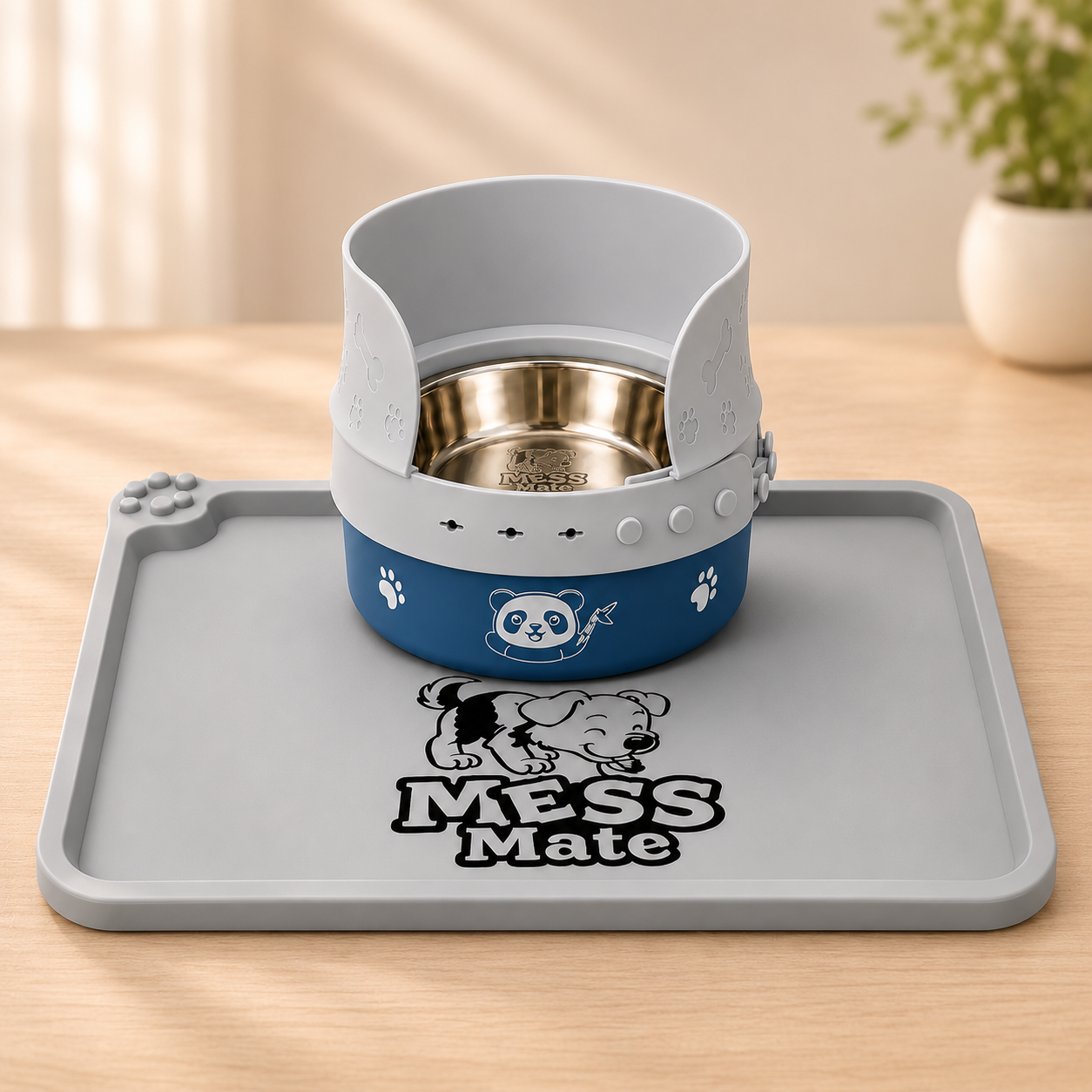
Slippery floors are harder for older dogs. A mat under the bowl gives the bowl something to grip, and it gives the dog a slightly more secure spot to stand while eating or drinking. A silicone mat is a good option because spills wipe off quickly and it can go on the top rack of the dishwasher. Take a look at the silicone pet feeding mat or browse the anti-mess feeding mats. Keep in mind it is a feeding mat, not a replacement for non-slip rugs or flooring changes if your dog slips around the house. Ask your vet about mobility support if you are concerned.
Reduce water drips and dribbles
Older dogs sometimes drip more when they drink, whether from slower lapping, a looser lip or simply a bigger drink. A mat underneath catches the worst of it. A wall protector or mat extending up the wall can help if your dog's water bowl sits against a baseboard; see how to protect the wall behind your dog's water bowl.
If your dog's bowl is a round one measuring 7 to 9 inches across the top opening, a MessMate splash guard adds a 3-inch silicone wall that helps keep splashes and flicked kibble in place. It may not suit every senior dog. A tall wall can be awkward for a dog with a shorter neck or limited mobility, or for one that needs to see into the bowl easily, so watch how your dog adapts. It does not change how quickly a dog eats, and it does not address medical reasons behind spilling. Check the fit guide to confirm your bowl fits, as the guard is not suited to bowls under 7 or over 9 inches.
Adjust portion size and timing with your vet
Older dogs sometimes do better with smaller, more frequent meals, but that is a decision for you and your vet, especially if there is a health condition or prescription diet involved. Whatever the plan, keep the feeding spot consistent. Dogs, particularly those with declining vision or cognition, are often more comfortable when the bowl is always in the same place. If you are still choosing a spot, our post on where to put your dog's food bowl has some ideas.
Keep cleaning simple and regular
Older dogs may have more sensitive stomachs or dental issues, so clean bowls matter. Wash food and water bowls regularly with soap and hot water or in the dishwasher. MessMate's silicone and stainless steel pieces are food-grade and dishwasher safe on the top rack, which takes some effort out of the routine. See how often to clean your dog's bowl for a straightforward schedule. If your dog has had dental work or has a weakened immune system, ask your vet whether extra care is warranted.
Small checklist for a senior-friendly feeding spot
- A stable bowl that does not slide or tip.
- A non-slip mat that is easy to wipe or wash.
- A bowl height your vet is comfortable with.
- A quiet, consistent location with good lighting.
- Fresh water always within easy reach.
When mess means something else
If your senior dog is suddenly dropping food, coughing around meals, or refusing to eat, these are signs to call your veterinarian rather than reach for a different bowl. Products can tidy up the floor, but they cannot fix an underlying issue.
If you want a matched set that covers the basics, the complete feeding sets pair a bowl, splash guard and mat. Shipping is free in the U.S., returns are accepted within 30 days, and WELCOME10 takes 10% off a first order. A portion of sales supports rescue organizations in memory of Spud, a good thing to remember on days when your own older companion is snoozing nearby.