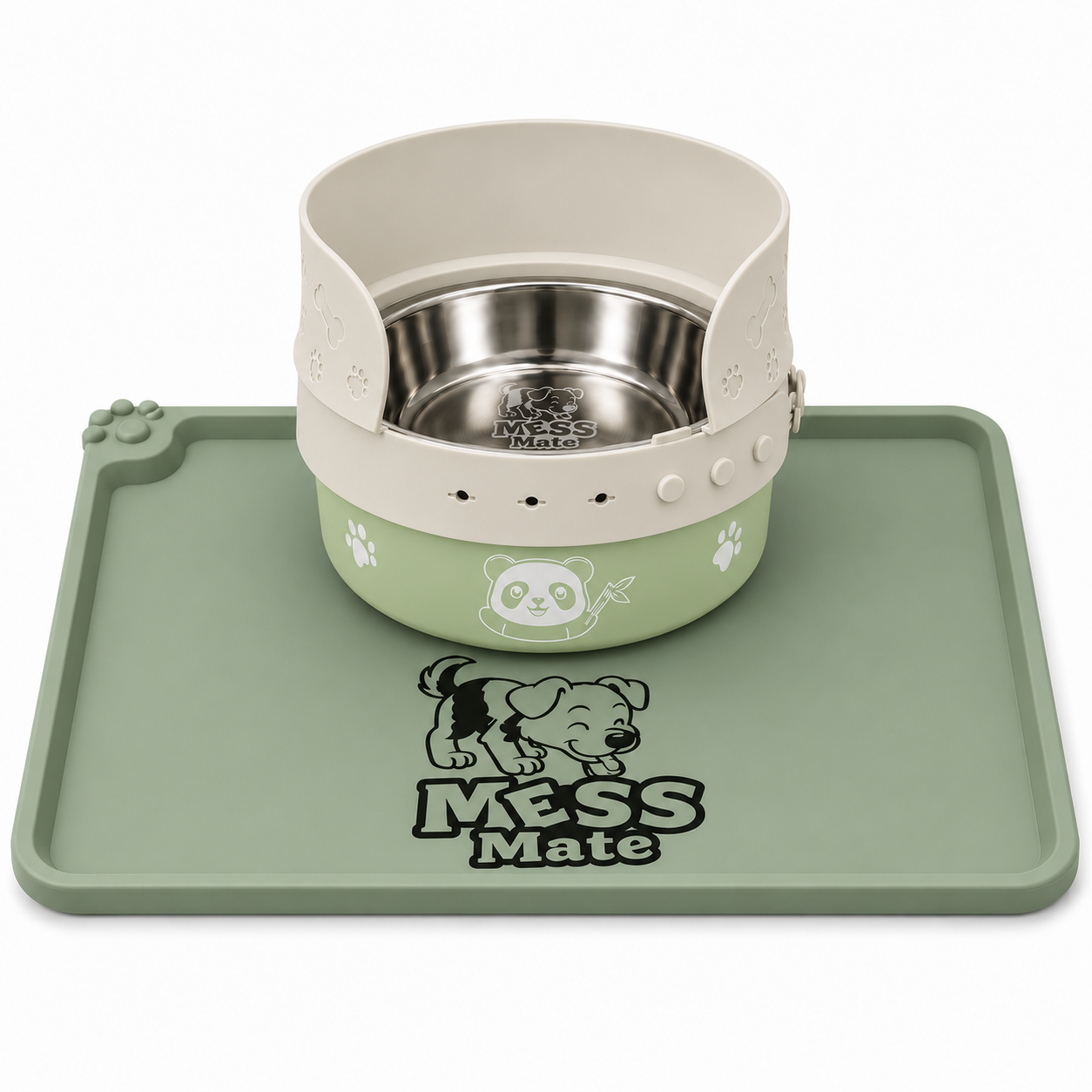
Puppies are wonderful and also, at mealtime, a bit of a tornado. They paw at bowls, carry kibble across the room, step in their water and treat dinner like a contact sport. If you are searching for how to feed a puppy without the mess, the honest answer is that some chaos comes with the territory. But a few thoughtful setup choices can keep most of it contained.
Why puppies make so much mess
Puppies are learning how their bodies work. They are curious, clumsy, and still working out what a bowl is for. Chewing on the rim, stepping into the dish, flipping it over or dribbling water are all common. Most puppies grow out of at least some of it as coordination improves, so think of the messy phase as temporary and plan for it rather than fighting it.
Start with the right bowl
Size and stability
A bowl that suits a puppy's size makes eating easier. A bowl that is too deep can be awkward for a very small puppy, while a very light bowl slides and tips. Stainless steel is a popular choice because it is sturdy, does not absorb odors the way some plastics can, and is easy to wash. Our guide to choosing a stainless steel bowl covers what to look for.
Think ahead to growth
Puppies grow quickly, and bowl needs change with them. Ask your veterinarian about expected adult size and feeding amounts for your breed, then replace bowls as needed. If you plan to use a splash guard, remember that it fits round bowls with a top opening of 7 to 9 inches across. A very small puppy's bowl may fall under 7 inches, and a large-breed puppy's may eventually exceed 9. Check our fit guide before ordering, and see how to measure your dog's bowl if you are unsure.
Give the bowl a landing zone
Put a mat under the bowl. It catches dropped kibble and water, protects the floor, and gives the bowl a bit of grip. A silicone mat is easy to rinse or place on the top rack of the dishwasher, which is helpful because puppy-stage mats get a lot of use. Browse the anti-mess feeding mats or look at the silicone pet feeding mat directly. For other ideas on where to put everything, our post on setting up a clean pet feeding station is a good companion.
Where a splash guard helps and where it does not
Once a puppy is using a bowl that fits the range, a splash guard can help. The MessMate guard has a 3-inch silicone wall around a round bowl, which helps stop water from splashing out and kibble from being pushed or flicked over the edge. That is the extent of the claim. It will not slow a puppy who inhales dinner, it will not stop chewing, and it will not teach manners. If you are worried about how fast your puppy eats, ask your veterinarian; a slow feeder bowl may be worth discussing, and our comparison of a slow feeder bowl versus a splash guard explains the difference.
Practical mealtime routines for puppies
- Feed at consistent times. Your vet will recommend how many meals a day suit your puppy's age. A routine makes mealtimes more predictable and cleanup easier.
- Stay nearby. Supervising lets you catch bowl flipping or wandering with food early.
- Pick up the bowl after the meal unless your veterinarian says otherwise, so there is less to knock over later.
- Keep water in a stable bowl. A heavier bowl is harder to tip, and a mat underneath catches drips.
- Wipe up promptly. Wet kibble is harder to clean once it dries.
Keep up with cleaning
Puppy mouths are messy, so bowls get dirty quickly. Wash food and water bowls regularly. Silicone and stainless steel pieces from MessMate are food-grade and dishwasher safe on the top rack, which makes it easy to keep a rotation going. We cover a sensible schedule in how often to clean your dog's bowl. If your puppy has digestive issues or a special diet, ask your vet whether you need to adjust how often you clean.
Tips for water time
Many puppies splash, paddle or dunk their paws in the water bowl. That is common and usually harmless, though it leaves puddles. A weighted stainless steel bowl, a mat underneath and, where it fits, a splash guard will all reduce the puddle problem. For more on why this happens, read why dogs splash water out of the bowl. Make sure fresh water is always available unless your vet tells you otherwise.
Plan for the next stage
A puppy's mess will change as they grow. The chewing phase passes, coordination improves, and appetite shifts. Keep an eye on whether your bowl and guard still fit, and adjust. If you would rather buy a matched set, the complete feeding sets include a bowl, guard and mat in one purchase, though you should still check that the bowl size suits your dog.
Shipping is free within the U.S., returns are accepted within 30 days, and WELCOME10 gives 10% off a first order. A portion of sales goes to rescue organizations in memory of Spud, which feels especially fitting when you are raising a puppy of your own.