When the weather turns wet, cold or snowy, your dog's feeding area picks up extra jobs. Muddy paws, damp coats and slushy boots all find their way to the bowls. If your kitchen or mudroom looks worse every November, this guide offers practical ways to keep the feeding area tidy through the wet months without a lot of fuss.
Why winter and wet seasons make mealtime messier
In wet weather, dogs come inside carrying water, dirt, salt or sand on their paws and fur. They often go straight for the water bowl, shaking off on the way. That means puddles near the bowl, tracked-in grit in the food and a floor that never quite dries. None of this is unusual, and a few simple habits can contain it.
Choose the feeding location carefully
If you can, move the bowls away from the main entrance but not too far from where your dog usually settles. A spot that is a few steps inside the door lets you towel off paws first, then let your dog eat in a drier area. Our post on where to put your dog's food bowl offers more thoughts on locations. Avoid placing bowls right where wet boots and shoes land, since they get splashed and kicked.
Use a mat that handles water
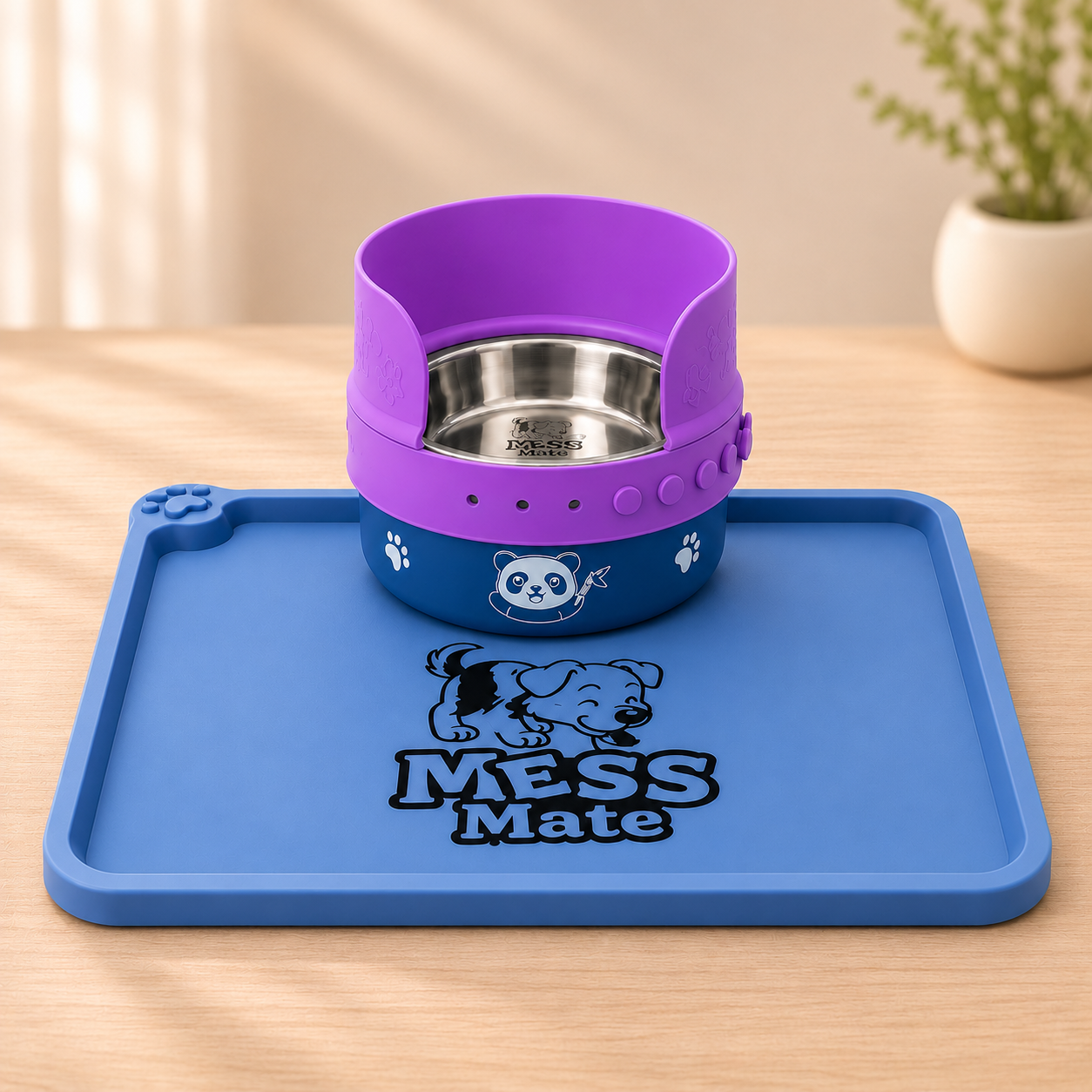
A mat under the bowl is the single most useful addition in wet months. It catches drips from wet muzzles, keeps bowls from sliding on damp floors and is simple to wipe or rinse. A silicone mat does not soak up water the way fabric does, and it is easy to clean. The silicone pet feeding mat is food-grade silicone and dishwasher safe on the top rack. You can also read about the waterproof pet feeding mat for more on how mats protect floors.
One honest caution: a feeding mat covers the area under and around the bowl. It will not catch every drop from a dog who shakes in the middle of the room, so a towel station by the door is still worth having.
Do the paw wipe first
A towel or a doormat by the entrance does a lot of work. Wiping paws and drying a wet coat before your dog reaches the bowls cuts down on mud and salt near the food. If you use de-icing salt outdoors, ask your veterinarian about paw care, since some products can irritate paws or upset stomachs if licked. Rinse and dry paws if your vet recommends it.
Keep water bowls under control
Dogs often drink more after a wet walk or when indoor heating dries the air. More drinking means more splashes. A heavy stainless steel bowl is more stable than a lightweight one, and it resists the cracks and scratches that can build up in worn plastic. See the guide to the best stainless steel bowl for more.
If your dog's bowl is round and measures 7 to 9 inches across the top opening, a MessMate splash guard adds a 3-inch silicone wall that helps hold in splashes and stray kibble. It does not suit bowls smaller than 7 inches or larger than 9 inches. It also does not stop a dog from shaking off or tracking water in, and it does not change how fast your dog eats. For a closer look at splashing, read why dogs splash water out of the bowl. Check the fit guide to make sure your bowl is within range.
Protect walls and baseboards
Wet muzzles and shaking can send water onto the wall, which over time can stain paint or swell baseboards. If your dog's water bowl sits against a wall, the post on how to protect the wall behind your dog's water bowl has some options. Wiping the area down at the end of the day also keeps small drips from becoming bigger problems.
Clean bowls more often when it is wet
Mud and grit can end up in bowls, and damp conditions are friendly to bacteria and mold. Wash food and water bowls regularly, and let them dry fully. A dishwasher on the top rack handles MessMate's silicone and stainless steel pieces, which are food-grade and dishwasher safe. For a practical schedule, see how often to clean your dog's bowl. If your dog has had stomach troubles, ask your vet whether you should clean more often.
A simple wet-weather routine
- Keep a towel by the door and wipe paws before meals.
- Place bowls on a silicone mat in a spot away from the muddiest traffic.
- Use a stable stainless steel bowl, with a splash guard if it fits.
- Wipe up spills right away so floors do not stay slick.
- Wash and dry bowls and mats regularly.
Bring it all together
You do not need to overhaul your home to cope with the wet season. A mat, a stable bowl, a towel and a regular wash cover most of it. If you prefer a coordinated option, the complete feeding sets bundle a bowl, guard and mat. Free U.S. shipping and 30-day returns are included, WELCOME10 takes 10% off a first order, and a portion of sales supports rescue organizations in memory of Spud.