Most of us top off the water bowl when it looks low and call it done. That works for a while, but "top off" and "change" are not the same thing, and the difference shows up as a cloudy bowl, floating bits of kibble and a dog who suddenly seems less interested in drinking.
There is no single rule that fits every home, and we are not going to invent a precise schedule or cite numbers we cannot back up. What we can offer is a practical routine that most households can keep up with, plus a few ways to reduce the splashing that makes the water station messy in the first place.
Refilling vs. Changing vs. Washing
These are three different jobs, and mixing them up is where most routines go wrong.
Refilling
Adding fresh water on top of what is already in the bowl. It keeps the bowl from running empty, but it does not remove anything that has built up in the old water.
Changing
Dumping the old water, rinsing, and filling with fresh. This is the habit worth building into your day.
Washing
Scrubbing or running the bowl through the dishwasher to remove the thin film that forms on the inside. Our post on the slimy film in a dog's water bowl explains what that layer is and how to clean it off.
A Routine That Is Easy to Keep
Think in terms of anchors you already have in your day rather than a clock.
- Morning: Dump the water, give the bowl a quick rinse, and refill. Do this while you are already feeding breakfast.
- Evening: Do it again with dinner. If the bowl looks cloudy, smells off or has food in it, change it right away rather than waiting.
- Once a day or so: Wash the bowl properly with soap and water, or run it through the dishwasher.
If you only have time for one thing, make it the daily wash. If you want a general cleaning cadence for the food side too, how often to clean your dog's bowl lays out a simple schedule.
Adjust for your situation. A dog who drools into the bowl, drinks after muddy walks or eats near the water will dirty it faster than one who drinks neatly. Warmer weather and outdoor bowls can also mean more frequent changes. If you are ever unsure how much water your dog should be drinking, or notice a sudden change in how much they drink, that is a question for your veterinarian.
Signs the Water Needs Changing Now
- Cloudy or slimy feel on the inside of the bowl
- Kibble, hair or dirt floating in the water
- A noticeable smell
- Bugs or debris, especially if the bowl is outdoors
- Your dog sniffs the water and walks away
Why Water Bowls Get Messy Between Changes
A big reason people skip the daily change is that the area around the bowl is always wet. Dogs splash, dribble and paw, and soon you are mopping a puddle every time you refill. If that sounds familiar, our guide to why dogs splash water out of the bowl goes through six common reasons, and no-spill dog water bowls covers setups that cut down on it.
Two pieces of gear can make the daily routine less of a chore:
A splash guard
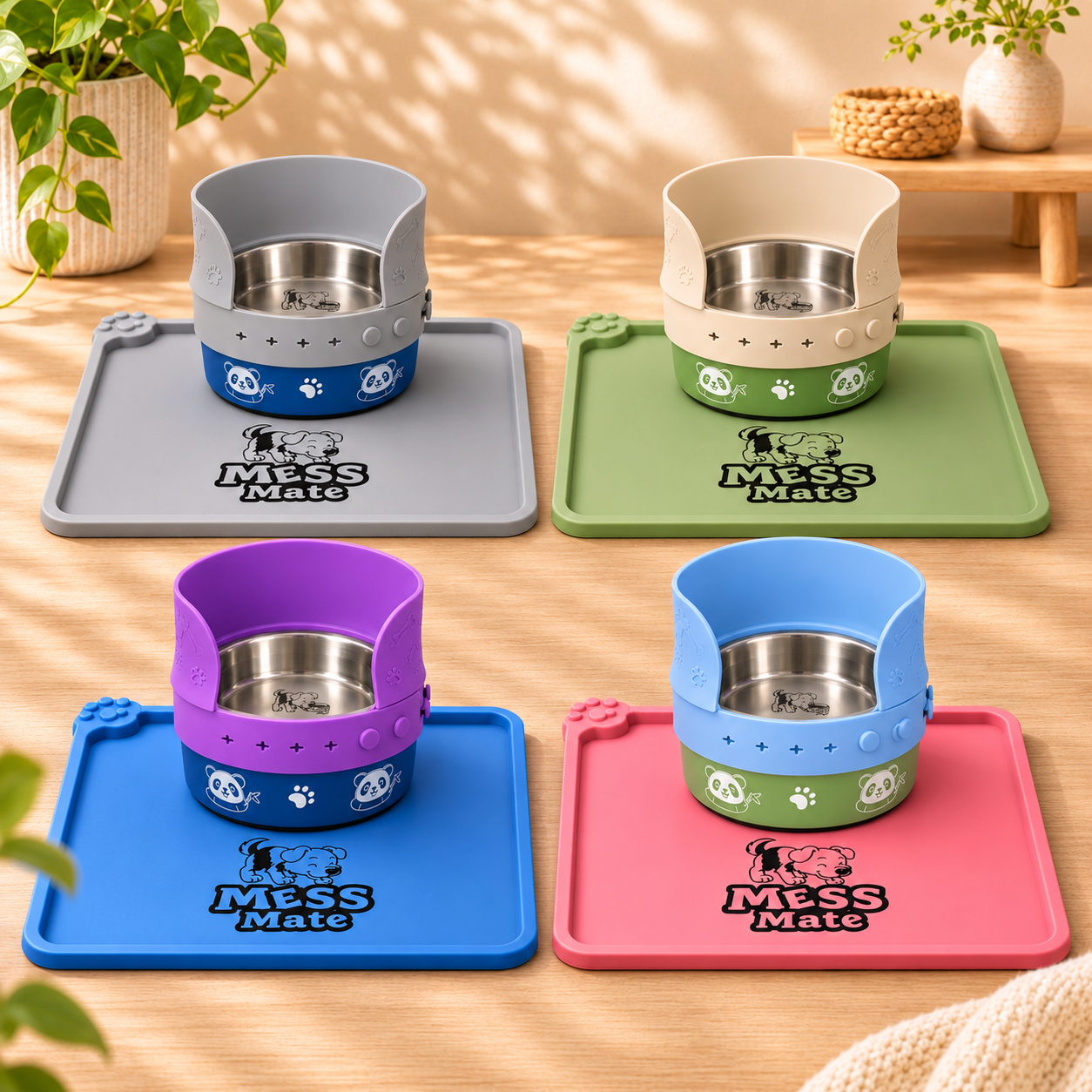
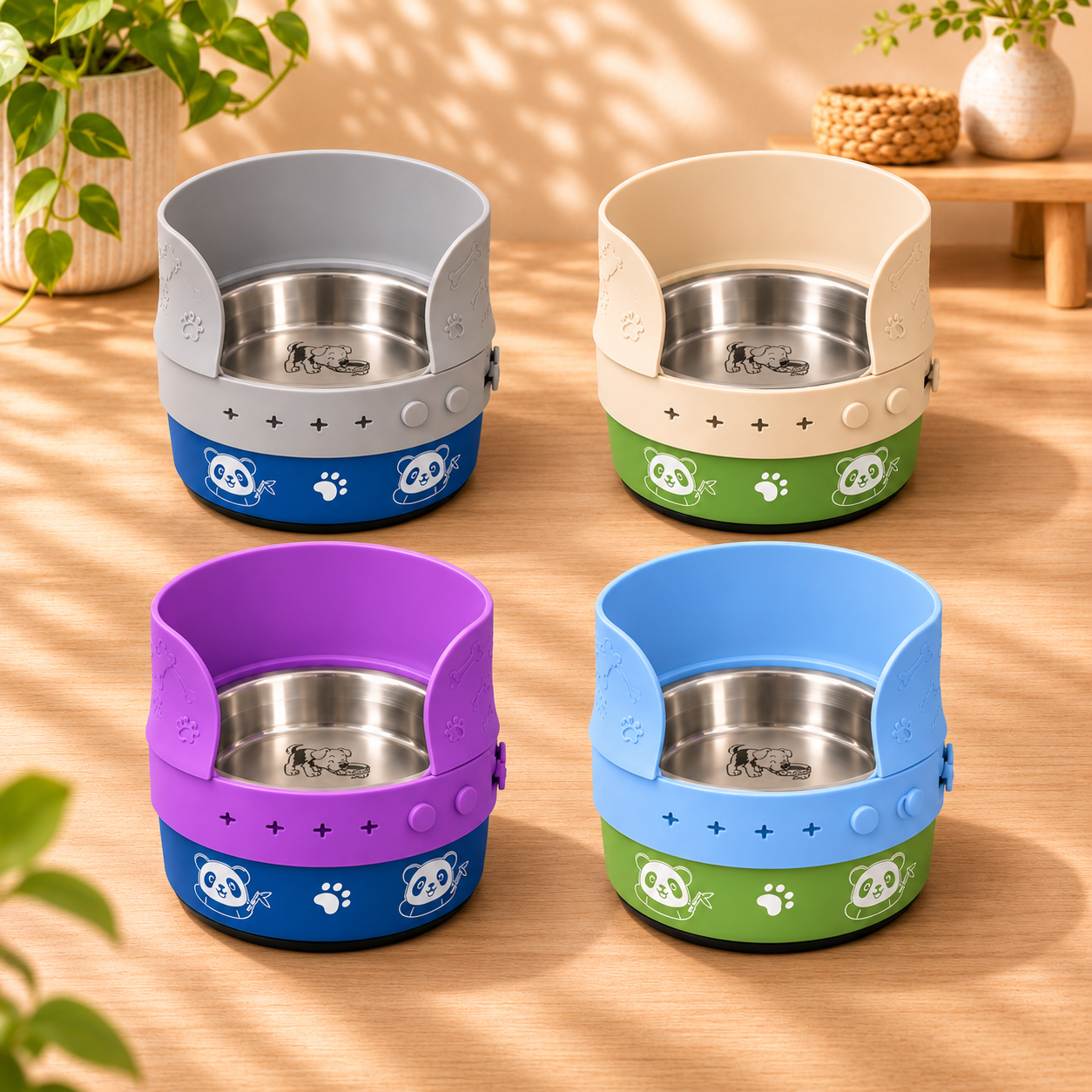
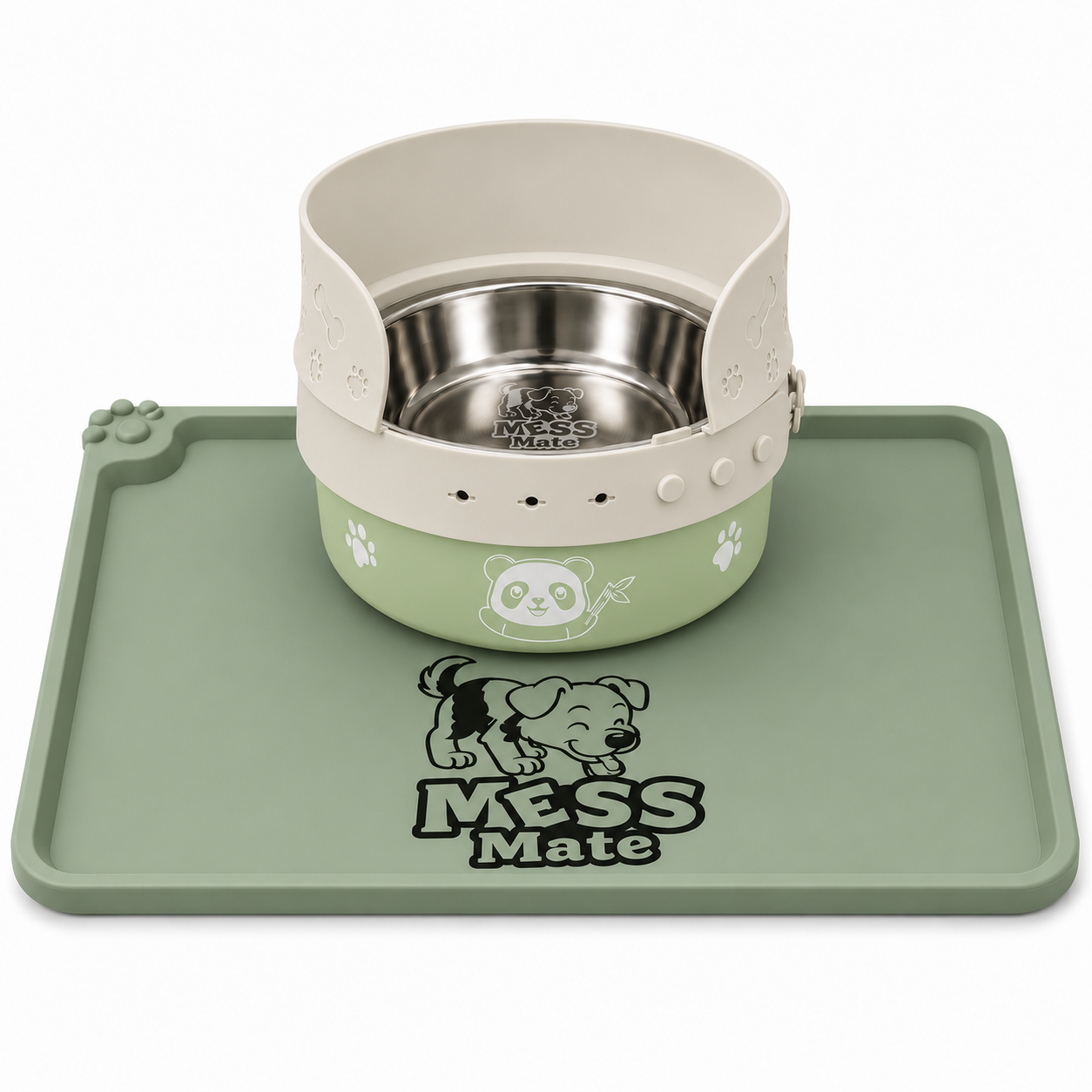
The MessMate splash guard clips around the outside of a round bowl with its strap and adds a 3-inch silicone wall that helps hold water and food in. It fits bowls 7 to 9 inches across the top opening, so measure first using the fit guide. It is made for medium to XL dogs and large cats, and it will not suit bowls under 7 or over 9 inches. It is not a spill-proof guarantee either: a dog who really attacks the water can still get some out. And the guard sold alone does not include a bowl, so if you do not already have a bowl in that size range, the splash guard and bowl set pairs the two. You can also look at the splash guards category.
A mat underneath
A silicone feeding mat catches whatever does get past the bowl, so wiping up takes seconds. For the full setup, the complete mealtime set combines bowl, guard and mat, which is the easiest way to keep the whole routine in one place.
Make Washing Painless
A routine only survives if the washing is quick. The MessMate silicone and stainless steel pieces are food-grade and dishwasher safe on the top rack, so you can load them with the rest of the dishes. Many people find that a second set of bowls makes this even easier, since one set is always clean and ready while the other is washed. We wrote up that approach in why a second set of bowls makes cleaning easier.
Where You Put the Bowl Matters
Water bowls get dirtier faster in some spots. Right next to the food bowl, crumbs and drool end up in the water. Under a sunny window in summer, outdoors under trees, or beside the back door where muddy paws go, the bowl will need more attention. If you have cats as well, the question of separating food and water comes up often, and we covered it in should you keep a cat's water bowl away from their food.
A Few Honest Caveats
- We cannot tell you an exact number of hours that is safe for standing water. Conditions vary, and your veterinarian can advise for your pet.
- A splash guard and mat reduce mess; they do not change how much your dog drinks or clean the bowl for you.
- If your dog suddenly drinks much more or much less than normal, mention it to your vet.
The Short Version
Dump, rinse and refill at least twice a day, wash the bowl daily, and change early whenever the water looks or smells off. Then make the whole thing easier on yourself: a bowl that stays put, a guard that catches splashes and a mat that makes cleanup quick. If you have questions about fit or what is included, the FAQ has the details, and U.S. orders ship free with 30-day returns.