Shopping for a pet feeding mat looks simple until you notice how many materials are on offer. Silicone, rubber, fabric, plastic, bamboo and more all show up in the search results, and each behaves differently once real life, meaning drool, wet food and a determined dog, gets involved.
This post compares the three most common types: silicone, rubber and fabric. We sell a silicone mat, so we are not neutral, but we will be straight about where each material shines and where it falls short. If you are more concerned about size than material, our guide to what size feeding mat you need is a better starting point.
What a Feeding Mat Needs to Do
Before comparing materials, it helps to be clear about the job. A mat under a pet bowl should:
- Catch spills, drips and stray kibble so they do not reach the floor
- Be easy to clean, ideally without fuss, since it will get messy
- Stay reasonably in place while your pet eats
- Hold up to daily use, regular washing and the occasional chewing attempt
Silicone Mats
Where they do well
Silicone is non-porous, so liquids tend to sit on top rather than soak in. That makes wet food and water spills easy to wipe or rinse away. Many silicone mats have a raised lip or edge that holds liquid in so you can carry the mat to the sink without sloshing. They are flexible, and you can rinse them under the tap or, for food-grade silicone like ours, run them through the dishwasher on the top rack.
Where they fall short
Silicone can hold onto greasy residue and smells if it is not washed regularly, especially after fish-based or very oily foods. We covered how to deal with this in how to clean silicone pet bowls, guards and mats. Light-colored silicone can pick up some staining over time. And it is not indestructible: a dog who chews things will chew a mat.
Rubber Mats
Where they do well
Rubber tends to be heavy and grippy, which can help a bowl stay put on slick floors. Some rubber mats are very durable and suit garages, porches and utility areas where you want something rugged.
Where they fall short
Rubber can carry a noticeable smell, particularly when new, and some people find it absorbs odors from food over time. Quality varies a lot between products, and it is not always clear what is in a given rubber mat or whether it is intended for food areas. Textured surfaces can also trap crumbs. If you are considering rubber, read the product details carefully, and check whether the maker says it is suitable for pet feeding.
Fabric Mats
Where they do well
Fabric and absorbent mats are soft, quiet and can look more like a household rug, which appeals if your feeding spot is in a living area. They can soak up small drips instead of letting them spread.
Where they fall short
The same absorbency that hides drips also holds moisture and food residue, so a fabric mat usually has to go in the washing machine regularly and dry fully. A damp fabric mat that sits under a bowl is a candidate for the kind of musty buildup we describe in grime or musty smell under a pet bowl or feeding mat. For messy eaters and wet food, a fabric mat can be more work than it is worth.
Quick Comparison
- Spill containment: Silicone with a raised edge is strongest; rubber varies; fabric absorbs but does not contain.
- Cleaning effort: Silicone is simplest; fabric needs laundering and thorough drying; rubber sits in between.
- Grip: Rubber is often the grippiest; silicone is decent; fabric depends on the backing.
- Odor risk: Any material can hold smells if you skip washing; silicone and fabric are easier to refresh than many rubber mats.
- Looks: Fabric blends in best; silicone comes in colors.
Matching Material to Your Situation
Wet food, water and messy drinkers
Choose a non-porous mat with an edge. Our post on feeding wet food without the splatter goes into this further.
Carpet, hardwood, tile or vinyl
The right mat depends partly on the floor. We break that down in feeding a dog on carpet, tile or vinyl.
Outdoor feeding
Rugged and quick to rinse beats soft. See feeding your dog outside.
Where MessMate Fits
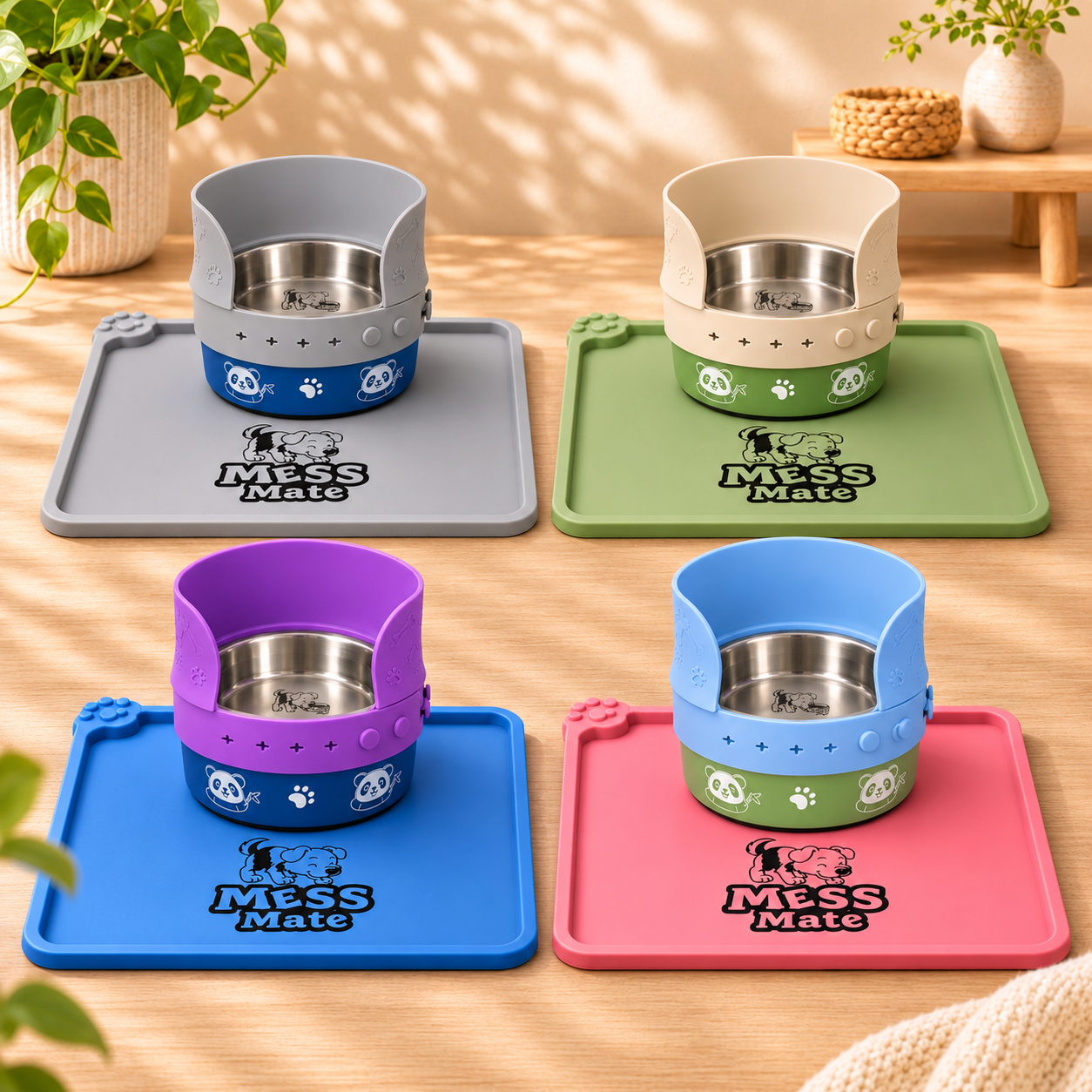
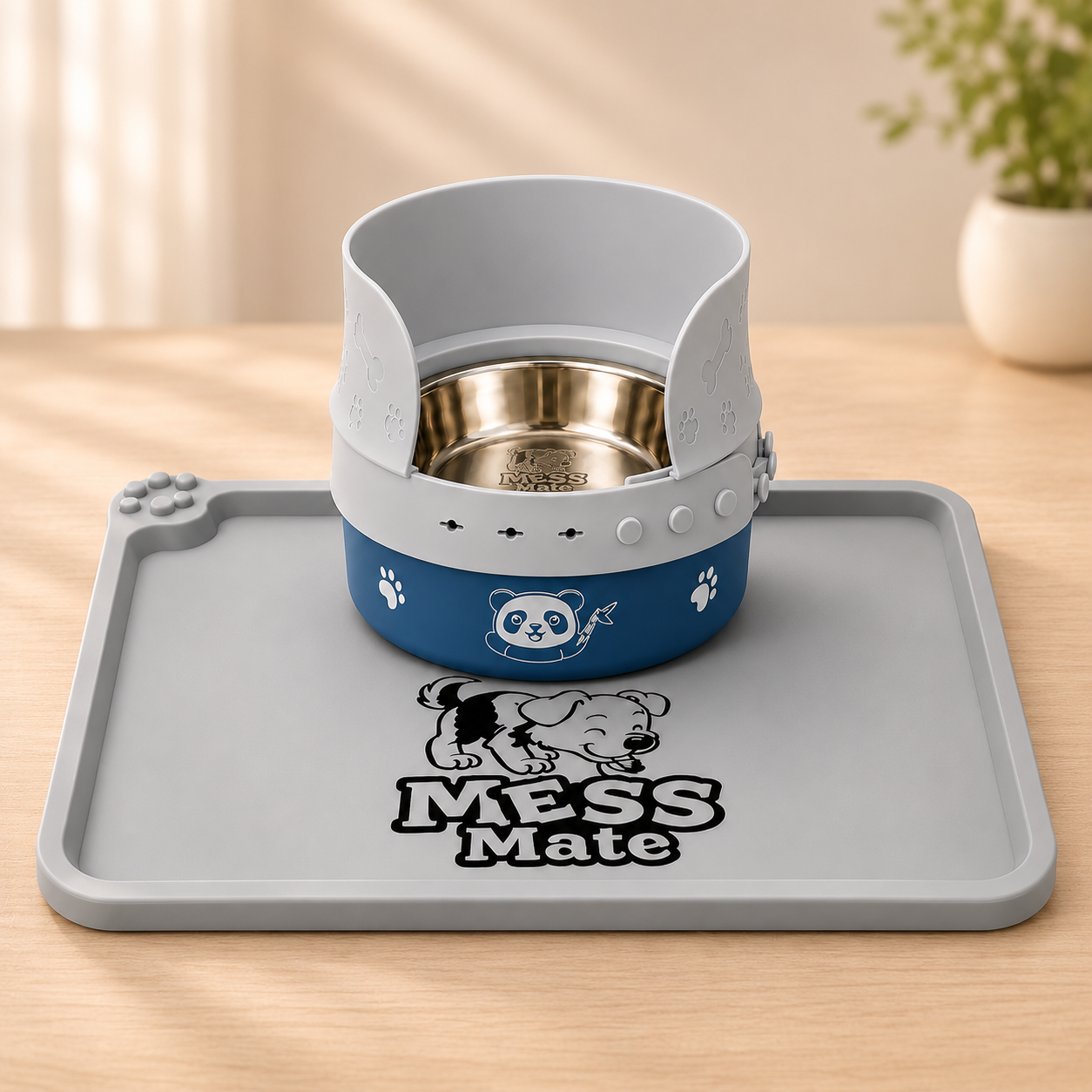
The MessMate silicone pet feeding mat is made of food-grade silicone and is dishwasher safe on the top rack. It is designed to catch spills and keep cleanup simple. It does not stop a dog from pushing a bowl or prevent chewing, so supervise puppies and chewers.
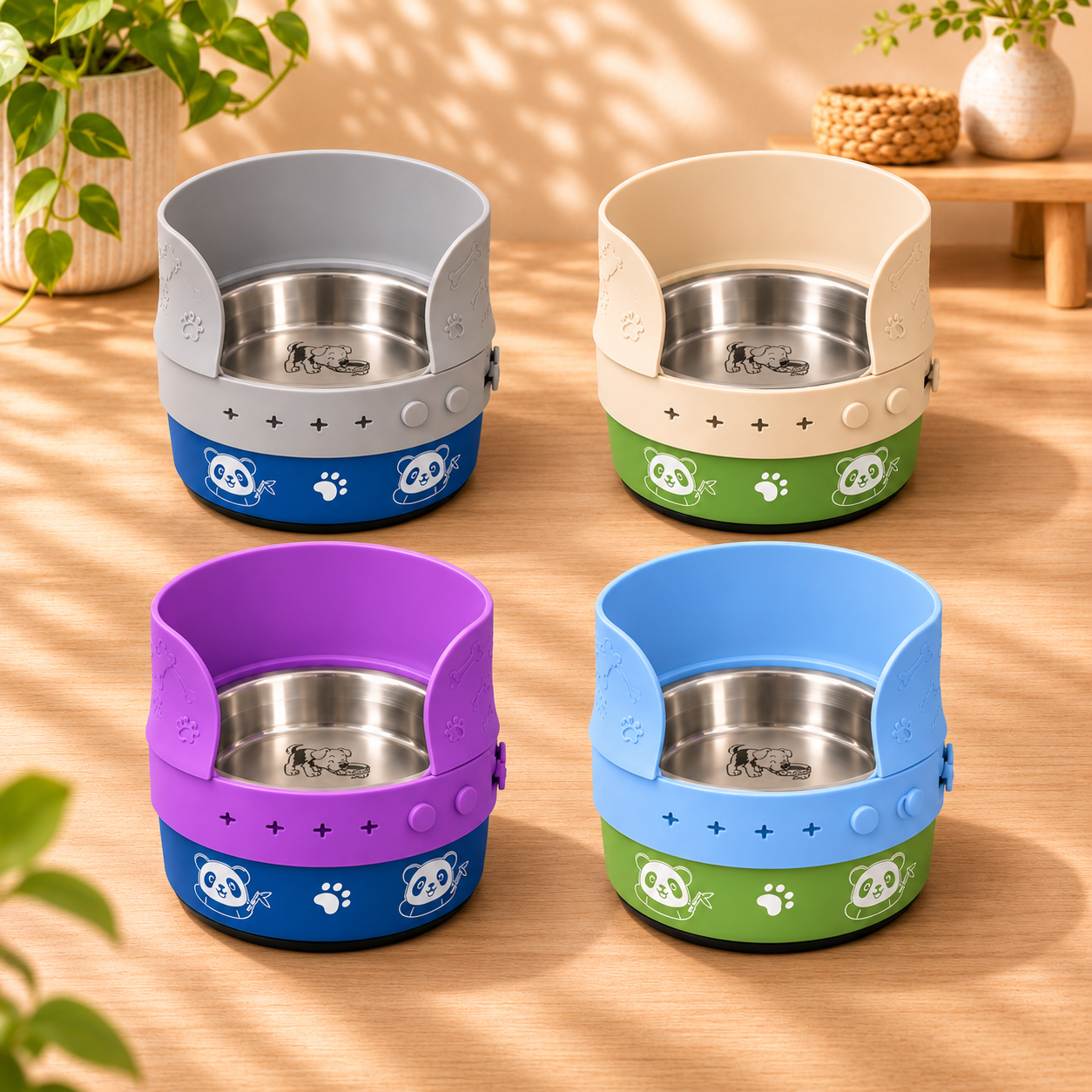
If you want the full setup, our complete mealtime set pairs a bowl, a splash guard and a mat. The splash guard fits round bowls 7 to 9 inches across the top opening, has a 3-inch silicone wall and clips around the outside of the bowl with its strap. It is made for medium to XL dogs and large cats, and sold alone it does not include a bowl. You can compare options in the complete feeding sets category or the anti-mess feeding mats category.
A Note on Safety
Whatever you choose, check the mat regularly for tears, bite marks or loose pieces, and stop using it if your pet is chewing off bits. If your pet has ingested any material, call your veterinarian.
Bottom Line
For most households that deal with water, wet food and daily washing, silicone is the lowest-effort material, with rubber best for rugged spaces and fabric best when looks matter more than mess. Whichever you pick, a mat you will actually clean is better than a nicer one you will not. Free U.S. shipping and a 30-day return window apply to MessMate orders, and the FAQ covers common questions.