Lift up your dog's bowl or feeding mat and you might find something unpleasant: a damp patch, a gray or dark film, or a faint musty smell. It is an easy thing to miss, because the underside of a mat and the floor beneath a bowl are not places most of us look during a normal week. The good news is that it is also easy to prevent once you know what causes it. Here is how to spot trouble early and keep the feeding area fresh.
Why moisture gets trapped under bowls and mats
Water bowls drip. Dogs shake their heads and flick drool and water around. Wet food leaves a film, and kibble dust turns into a paste when it gets damp. Anything flat that sits on top of that, whether a bowl base or a mat, can hold moisture against the floor and slow its drying.
Warm, damp, food-rich spots are exactly the conditions where grime builds up. A feeding area near a dishwasher, a sink, a back door or a humid laundry room can stay damp longer than one in a dry, airy hallway.
Signs worth checking for
- A musty or sour smell when you lift the mat or bowl, even after wiping the surface.
- Dark, slimy or discolored patches on the underside of a mat or on the floor beneath a bowl.
- A film or ring on the base of the bowl that does not rinse off with water alone.
- Warped or stained flooring around a spot that gets wet a lot, especially on hardwood or laminate.
We are not able to tell you exactly what a particular spot is from a description, and not every dark mark is mold. If something looks or smells wrong and does not clear up with a thorough cleaning, treat it with caution, and ask your veterinarian if you are worried about your pet's health after exposure.
A simple routine that keeps things fresh
Daily: wipe and let it dry
After the last meal of the day, lift the bowl and wipe both the mat and the floor underneath with a clean cloth. A few seconds is all it takes, and it stops moisture from sitting overnight. If the mat is damp, stand it up or drape it somewhere airy rather than putting it straight back down.
Weekly: wash and dry properly
Wash the mat and bowl with warm water and dish soap, or put them in the dishwasher. MessMate silicone and stainless steel pieces are food-grade and dishwasher safe on the top rack. Whichever method you use, let everything dry fully before reassembling. For tips on odors and greasy residue, see our guide to cleaning silicone pet bowls, guards and mats, and for placement and cycle questions, can dog bowls go in the dishwasher.
Monthly: clean the floor beneath
Once a month, move the whole feeding area and clean the floor properly with a cleaner that is suitable for that surface. On wood or laminate, wipe up water promptly and avoid leaving damp mats sitting on the floor for long periods.
Design choices that help
Use a mat that is easy to lift and wash
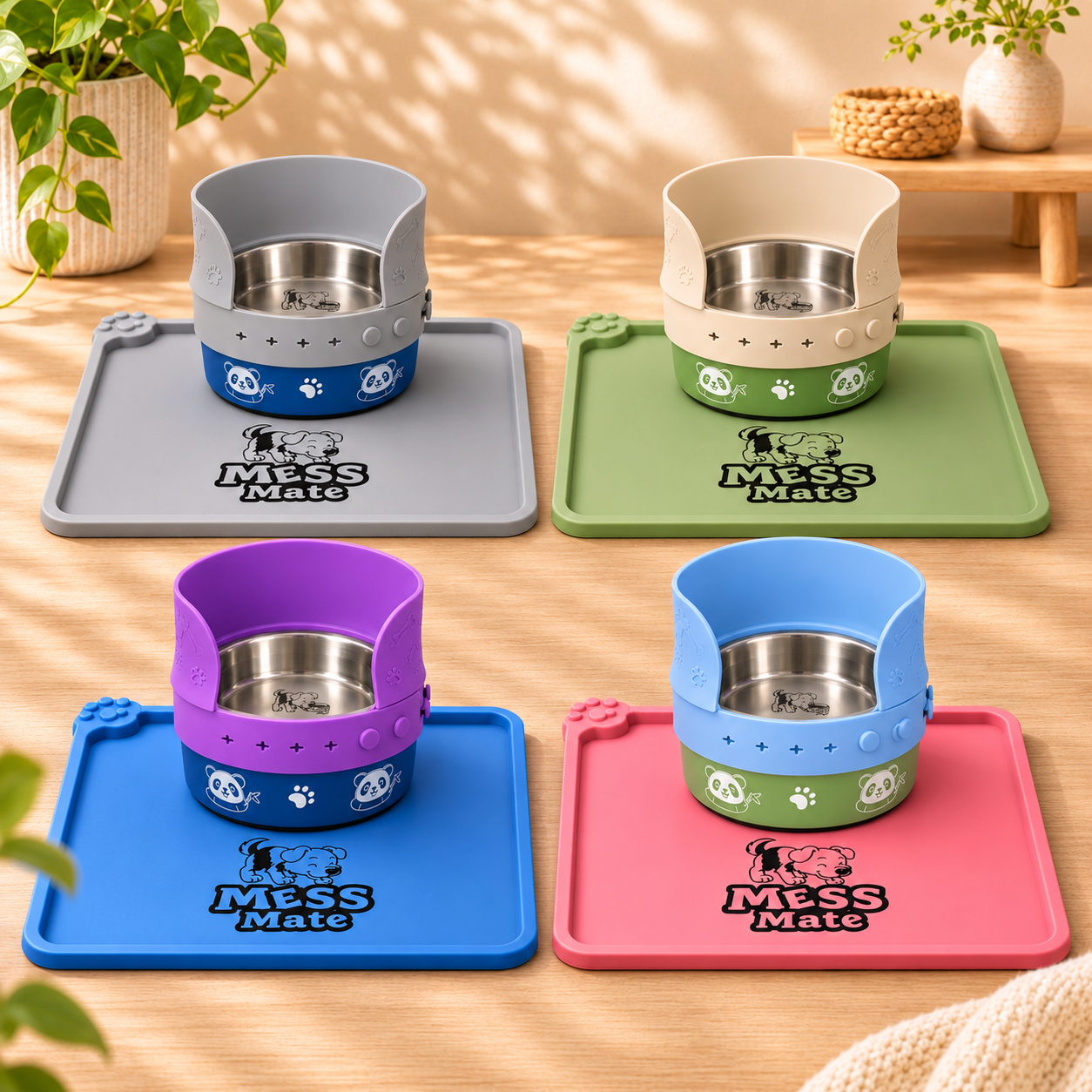
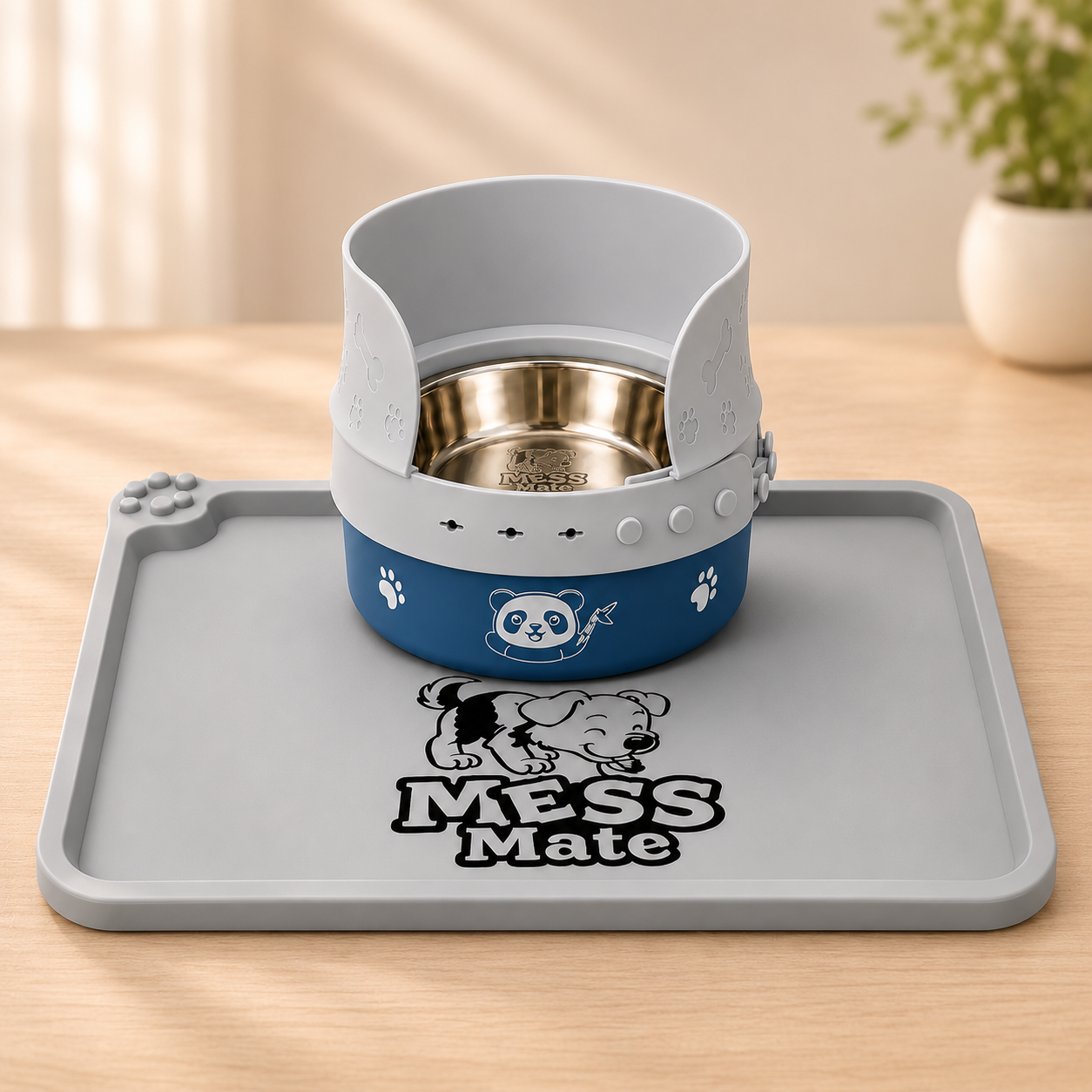
A smooth silicone surface is quick to rinse and wipe, and it can go in the dishwasher on the top rack. A mat that is easy to pick up is a mat you will actually wash. If you are looking for one, take a look at the silicone pet feeding mat, or browse all of the anti-mess feeding mats.
Choose bowls with simple shapes
Bowls with deep grooves or hard-to-reach corners hold on to residue. A simple, smooth interior is quicker to clean thoroughly.
Keep water bowl splashes contained
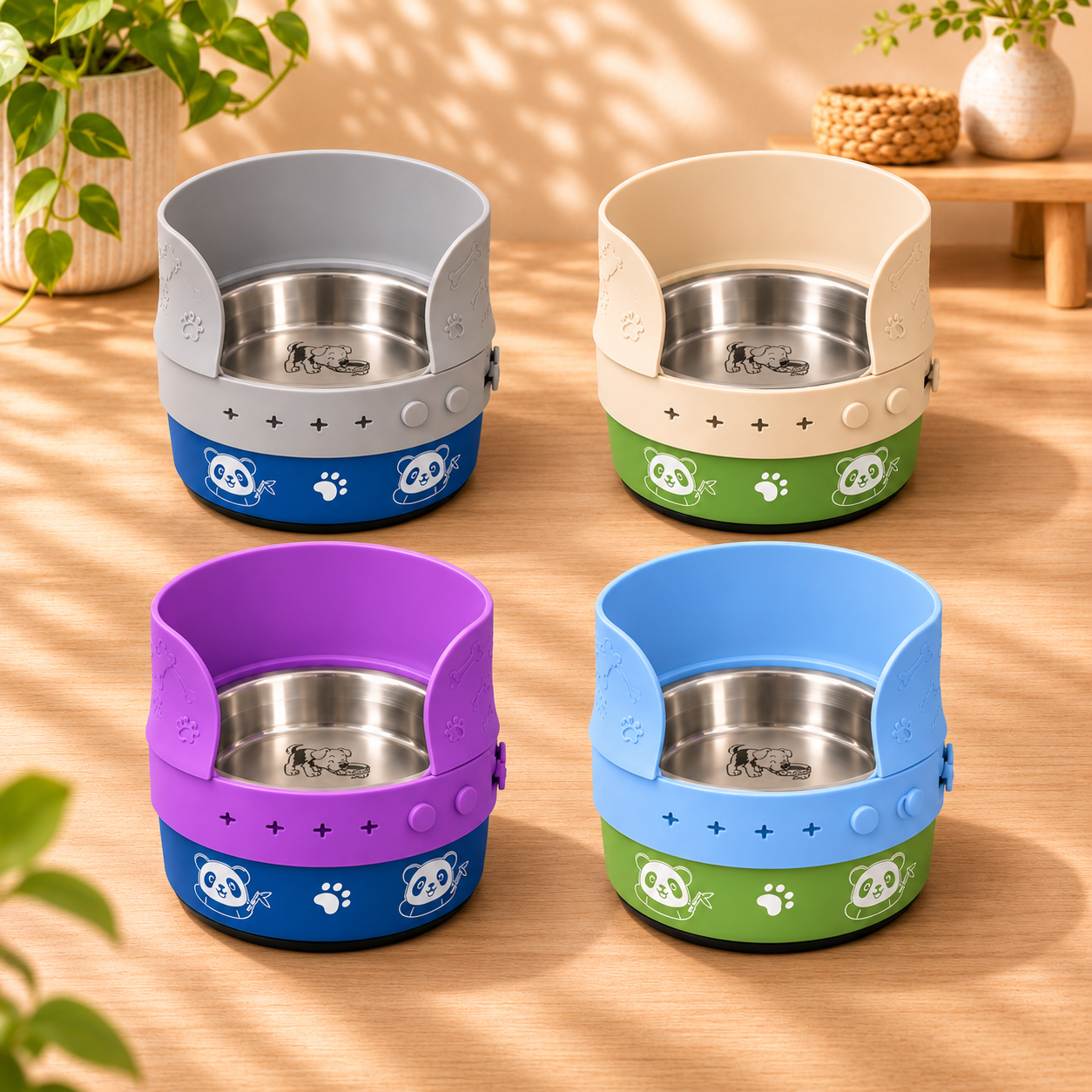
Much of the dampness under a bowl comes from water that gets splashed or dripped around it. A splash guard can reduce the amount that lands on the floor, although it does not make a bowl waterproof or stop every drip. The MessMate splash guard clips around the outside of a round bowl 7 to 9 inches across the top opening, with a 3-inch silicone wall. That makes it suited to medium to extra-large dogs and large cats, and it is not intended for bowls under 7 or over 9 inches. It also does not include a bowl when bought on its own.
Give the area some airflow
If possible, avoid tucking a feeding mat into a closed, humid corner. A spot with some air movement dries faster between meals.
What to do if you find a problem
- Pick up the bowl and mat, and move them away from the area.
- Wash both thoroughly with hot water and soap, or run them through the dishwasher on the top rack.
- Clean and dry the floor underneath. If the surface is damaged or the smell returns, it may be worth checking for a deeper moisture source such as a leak.
- Let everything dry completely before putting it back.
- If a mat or bowl is stained, cracked or still smells after cleaning, replace it.
Think in sets
If you are replacing the mat, the bowl and the guard anyway, a coordinated set makes washing easier because everything goes through the same routine at once. The complete mealtime set is a good starting point, and if you have questions about fit, our FAQ page covers sizing and what is included. Purchases come with 30-day returns.
The short version
- Moisture, food residue and little airflow are what let grime build up under bowls and mats.
- Wipe daily, wash weekly and clean the floor monthly.
- Dry everything fully before putting it back.
- Replace anything that stays stained or smelly after a good cleaning.
- Talk to your vet if you have health concerns about your pet.