You fill the bowl, and your dog takes one mouthful, walks across the kitchen, drops it on the carpet and eats it there. Then back for another. It is a surprisingly common habit, and while it is usually harmless, it leaves crumbs in places you would rather not find them. Here is why dogs do it and what you can change to keep mealtime in one spot.
Why dogs take food out of the bowl
Nobody can read a dog's mind, but trainers and owners tend to point to a handful of likely explanations. Your dog may fit more than one.
They prefer to eat on a different surface
Some dogs simply like the feel of a rug or a soft spot better than a hard floor. Others do not like the sound of kibble hitting a metal bowl. Eating on carpet may be quieter and more comfortable for them.
They want some privacy or a better vantage point
If the bowl sits in a busy hallway or near other pets, a dog might carry food to a calmer corner, or somewhere they can keep an eye on the room while they eat. Our guide to where to put your dog's food bowl has ideas for choosing a quieter spot.
Habit from competing for food
Dogs that have shared meals with other pets, or that grew up around competition for food, sometimes grab a bite and move away from the bowl. Rescue dogs in particular may do this at first, and a calm, predictable routine tends to help them settle.
Other pets are nearby
In a multi-pet home, carrying food away may be a way to keep it safe from a bowl-sharing housemate. See feeding multiple pets without the mess for tips on separating feeding spots.
It just became a routine
If a dog has done it for a long time, it may be nothing more than a habit. Habits are not always fixable overnight, but they can often be redirected.
Practical ways to keep mealtime in one place
Make the feeding spot more appealing
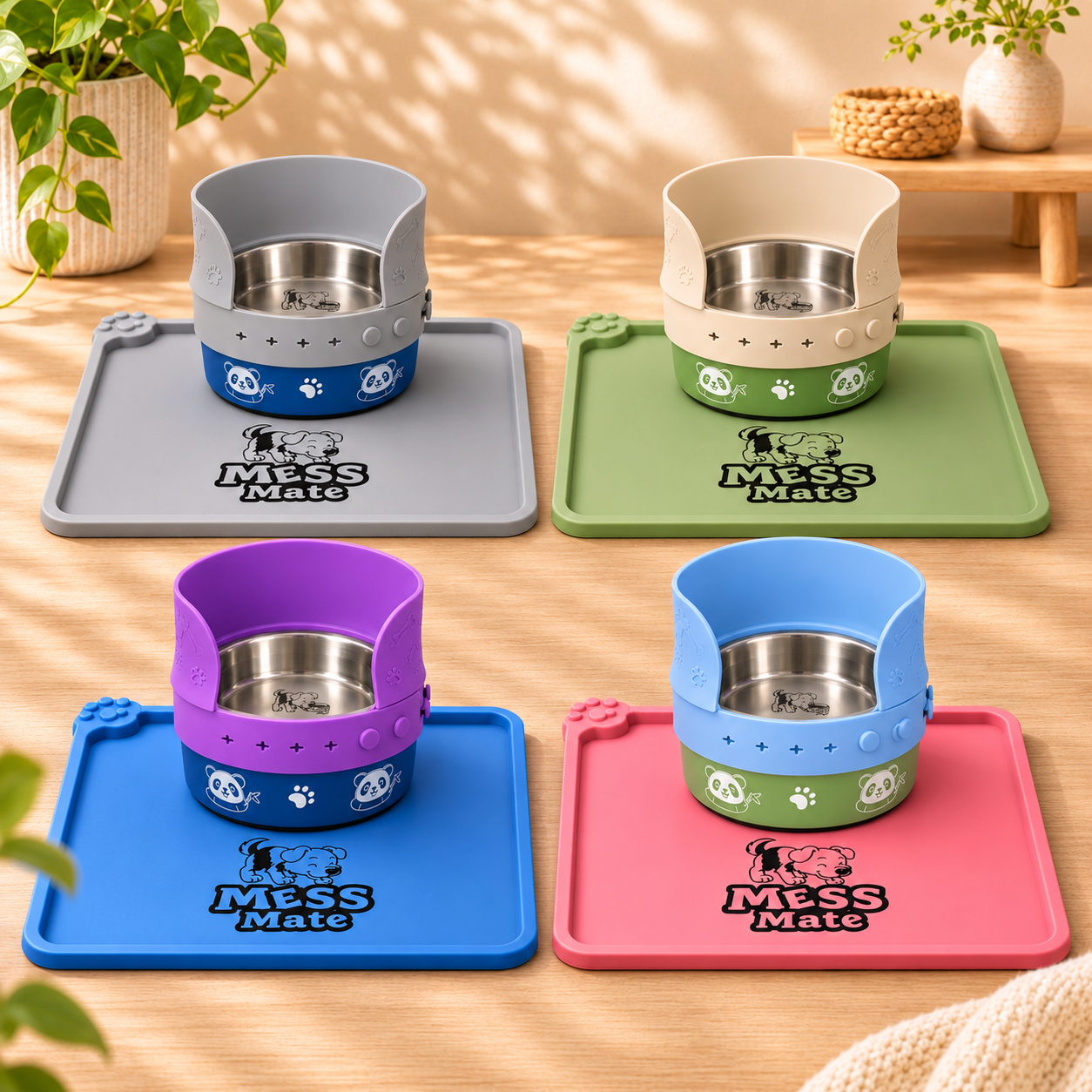
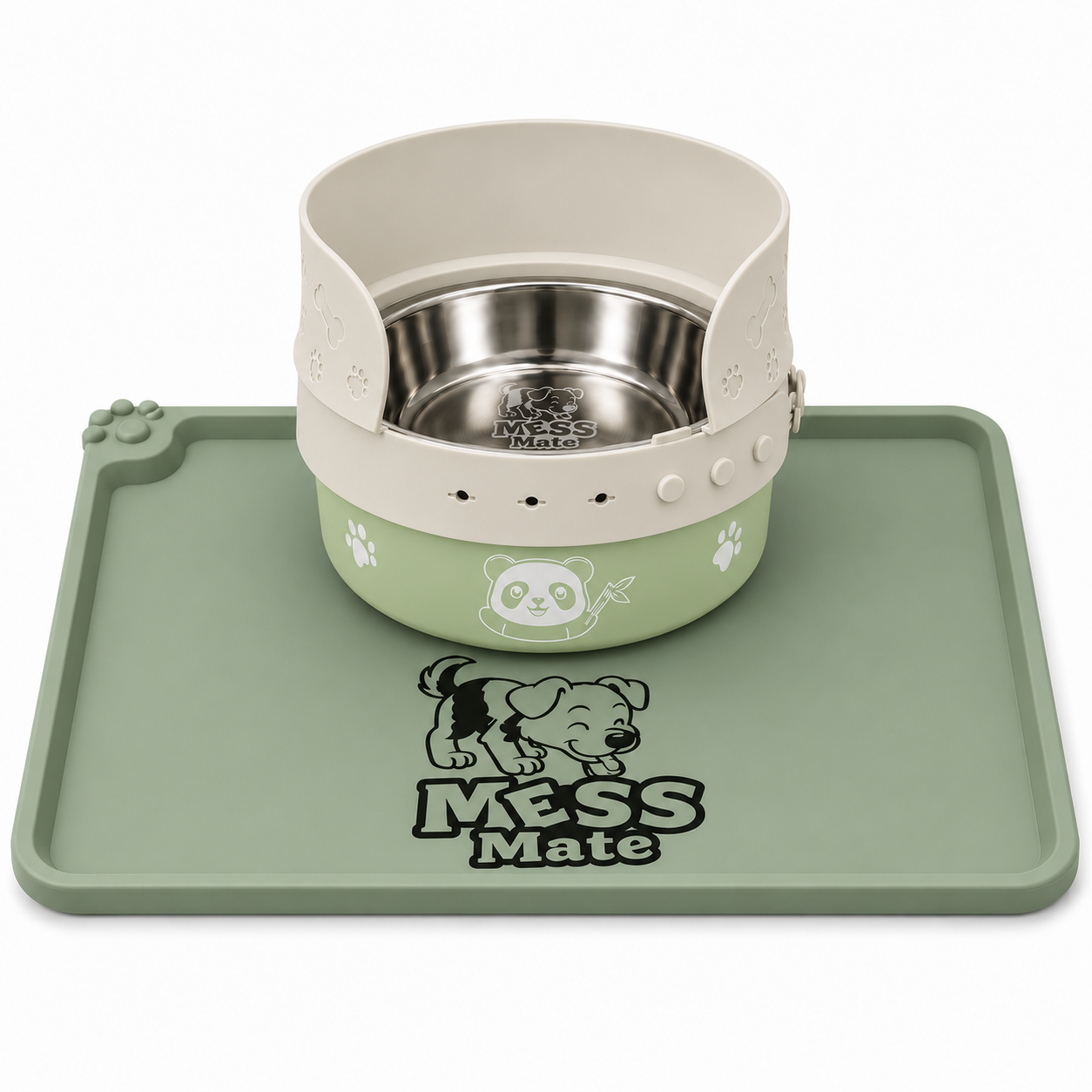
If your dog likes softer surfaces, put the bowl on a silicone feeding mat so the spot feels defined and the floor underneath is protected. A mat will not make a dog stay put, but it gives the bowl a home base and catches the crumbs that fall out.
Move the bowl to a calmer place
Try a low-traffic corner where your dog can eat without people stepping around them. Give it a week or so, since dogs often need time to accept a new spot.
Feed pets separately
If there is more than one animal, feeding them in different rooms or at separate times can reduce the urge to grab and run. Even a few feet of separation can help.
Do not chase or scold
Following your dog around with the bowl or telling them off can make them more anxious about eating, which tends to reinforce the carrying. Calm, predictable meals are more likely to help than pressure.
Serve smaller amounts at a time
If the bowl is heaped, it is easy for kibble to be scooped out by the mouthful. Smaller servings, or splitting a meal in two, can reduce the amount that gets carried off.
Clean up quickly
If your dog does eat on the carpet, sweep or vacuum soon afterward so crumbs do not get ground in. Washing the area occasionally also keeps the spot from becoming a magnet for ants and other pests.
Can a splash guard help with this?
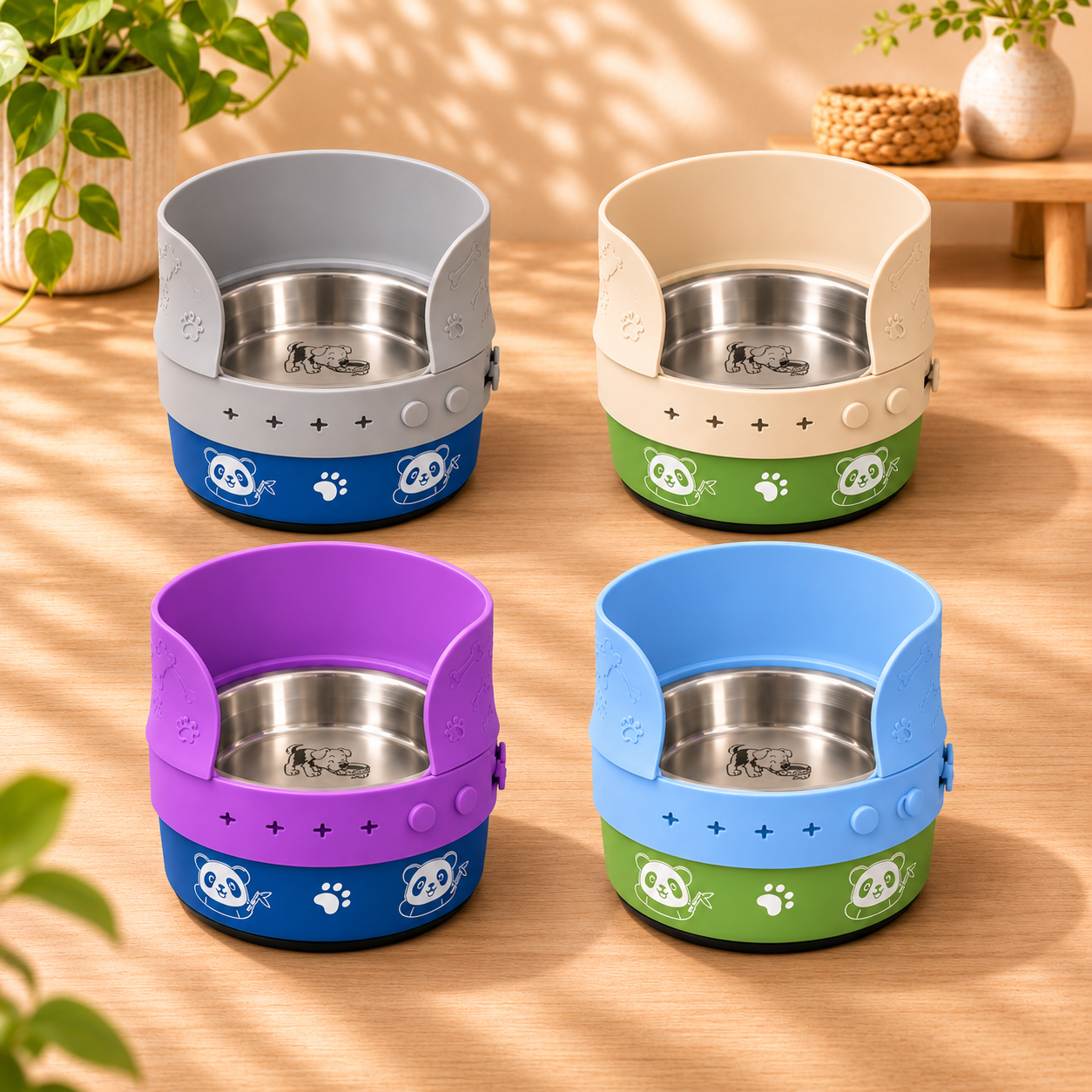
Only partly, and it is worth being upfront. The MessMate splash guard has a 3-inch silicone wall that clips around the outside of a round bowl with its strap. It is good at catching kibble that gets flung or nudged out of the bowl while a dog is eating, and it keeps water splashes contained. It will not stop a dog from deliberately picking up a mouthful and walking away with it, because that behavior happens above and over the wall.
It is also sized for particular bowls: round bowls 7 to 9 inches across the top opening, which suits medium to extra-large dogs and large cats. It is not suited to bowls under 7 or over 9 inches, and the guard sold alone does not include a bowl. If you would like matching pieces from the start, take a look at the bowl and splash guard set or the complete mealtime set. The fit guide walks through measuring if you already own a bowl.
Think of the guard and mat as ways to tidy up the mess around the bowl, rather than as a way to change where your dog likes to eat.
When to check with your vet
Carrying kibble away is usually a quirk rather than a concern. If it starts suddenly, if your dog seems reluctant to eat from the bowl at all, or if you notice changes in appetite, chewing or general behavior, mention it to your veterinarian. They can help work out whether something more than habit is going on.
The short version
- Carrying food away is common and often about comfort, privacy or habit.
- A quieter spot and a defined feeding area can help.
- Separate pets at mealtime if competition may be a factor.
- Keep it calm: no chasing, no scolding.
- Use a mat and guard to contain mess, knowing they will not change the habit on their own.