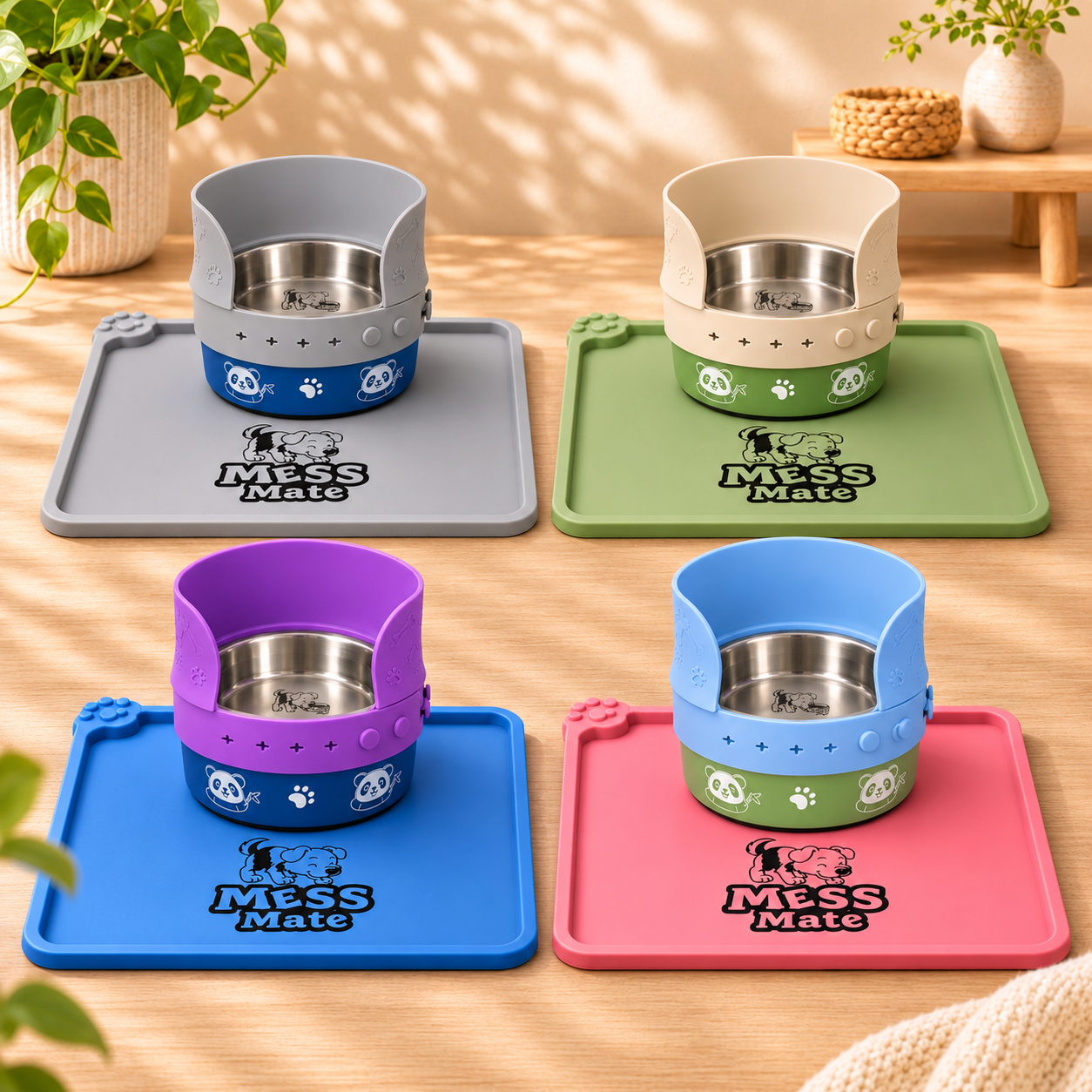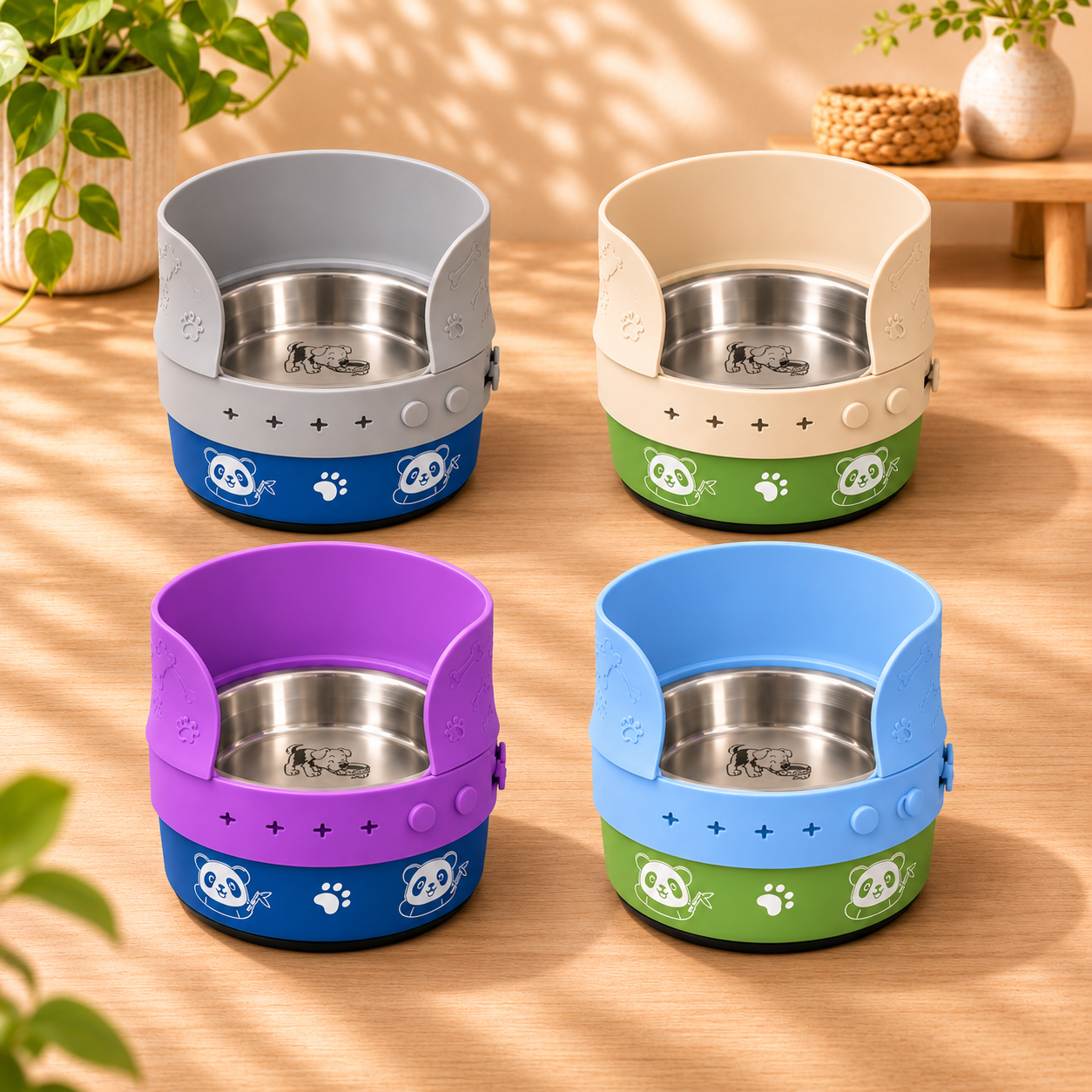
Few things are more frustrating than a bowl that ends up upside down with dinner scattered across the floor before your dog has finished a bite. If your dog keeps flipping, nudging or tipping the food bowl, you are far from alone. The cause is usually something simple that you can adjust at home. This guide walks through the common reasons, the setup changes worth trying, and when it makes sense to check in with a veterinarian.
Why dogs flip their bowls
There is rarely just one reason. More often it is a mix of a few small things that add up to a habit.
The last bites are hard to reach
As the bowl empties, kibble tends to slide toward the edge or settle in a corner. Some dogs paw at the bowl, shove it with their nose, or lift one side with a snout to get at the remnants. If it works even once, the dog learns that tipping the bowl gets results.
The bowl is light or slides easily
An empty, lightweight bowl on a smooth floor moves with almost no effort. A bowl that skates away can turn into a game of chase, and a game of chase can turn into a flip. Our post on why a dog's bowl slides across the floor covers that side of the problem in more detail.
Play, boredom or excess energy
Some dogs treat the bowl like a toy, especially young or high-energy dogs. Pushing it, carrying it and tossing it can all be entertaining, and the clatter often gets a reaction from you, which can be rewarding in its own right.
Asking for attention or more food
A dog that has finished and would like a refill may push the bowl around to say so. If you always respond, even to tell the dog off, the bowl becomes a reliable way to get your attention.
Something about the bowl itself
A few dogs are bothered by the sound, the shine or the way a new bowl moves. If the flipping started right after you changed bowls, try introducing new gear gradually: let your dog sniff it, feed a few meals with it on the floor beside the old one, and swap over once they are relaxed.
Setup changes that often help
Give the bowl something to grip
Setting the bowl on a silicone feeding mat gives it more traction than a bare hard floor, and it also catches whatever does escape. Be realistic about it: a mat reduces sliding, but a determined dog can still lift a light bowl, so think of it as one piece of the solution rather than a cure.
Choose a bowl with some heft
A heavier bowl is simply harder to flip. When comparing options, pick one up and judge the weight in your hand. Stainless steel is a popular choice for durability and easy cleaning, and you can compare the options in our stainless steel bowls collection.
Stop food collecting at the edges
If your dog is chasing the last few pieces, try serving slightly smaller portions in a wider bowl, or split a meal into two servings so there is never a big pile of stray kibble to chase around.
Pick the bowl up after mealtime
An empty bowl left on the floor is an invitation to play. With scheduled meals, you can lift the bowl once your dog is done so there is nothing to flip afterward. Dogs that graze on food left out all day tend to have more time with the bowl, which gives the habit more chances to show up.
Do not reward the flip
Try to stay calm and neutral when it happens. Reset the bowl without a big reaction, and only refill at regular mealtimes so the dog does not learn that tipping the bowl produces food or attention.
Give your dog another outlet
A dog with energy to burn will find something to do, and sometimes that something is your bowl. A walk, a play session or a chew before dinner can take the edge off. If your dog is tipping the bowl out of excitement, a calmer lead-up to mealtime can help too.
Where a splash guard fits, and where it does not
It helps to be clear about what a splash guard does. The MessMate splash guard clips around the outside of a round bowl with its strap and has a 3-inch silicone wall that catches flung kibble and splashes. It fits round bowls that are 7 to 9 inches across the top opening, so it is meant for medium to extra-large dogs and large cats, and it is not suited to bowls under 7 or over 9 inches. If you are not sure about your bowl, the fit guide shows how to measure.
What it does not do is anchor the bowl or stop your dog from flipping it. If the bowl is being tipped, address that first with the steps above. Once the bowl is staying put, a guard can keep the spillover contained. The splash guard sold on its own does not include a bowl, so if you want the pieces to match, the bowl and splash guard set or the complete mealtime set are the easiest places to start.
When to check in with your vet
An occasional flipped bowl is normal dog behavior. It is worth mentioning to your veterinarian if the behavior is new and sudden, if your dog seems to be struggling to eat, or if bowl-flipping comes with other changes such as a drop in appetite, drooling or signs of discomfort. Your vet is the right person to rule out anything that goes beyond a mealtime habit.
A quick recap
- Work out why your dog is doing it: hard-to-reach food, a sliding bowl, play or attention.
- Add grip with a mat and choose a bowl with a bit of weight.
- Offer scheduled meals and take the bowl up afterward.
- Stay calm and avoid rewarding the flip.
- Use a splash guard to contain spills, not to stop flipping.
Still have questions about sizing or what is included? Our FAQ page answers the most common ones, and every order comes with 30-day returns.