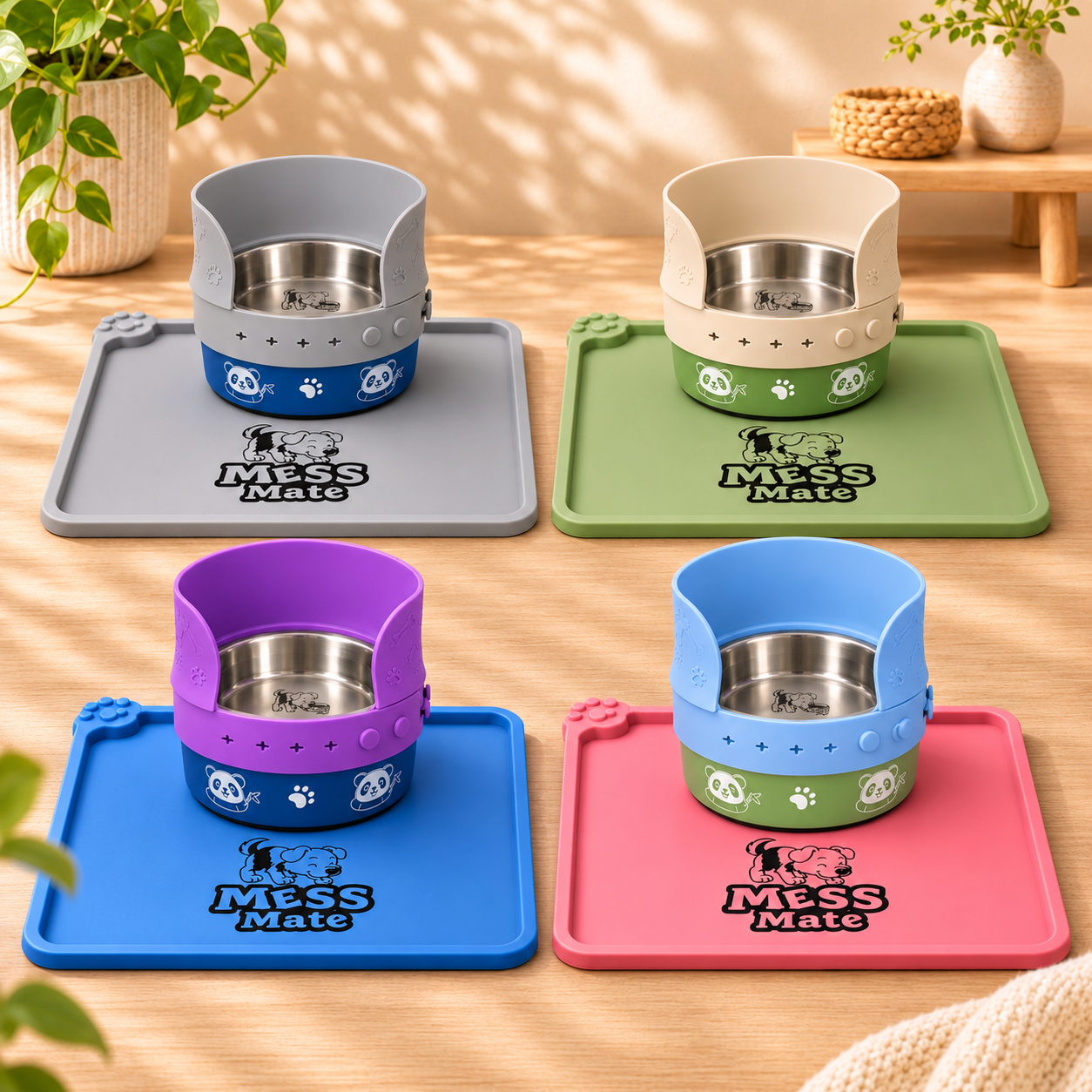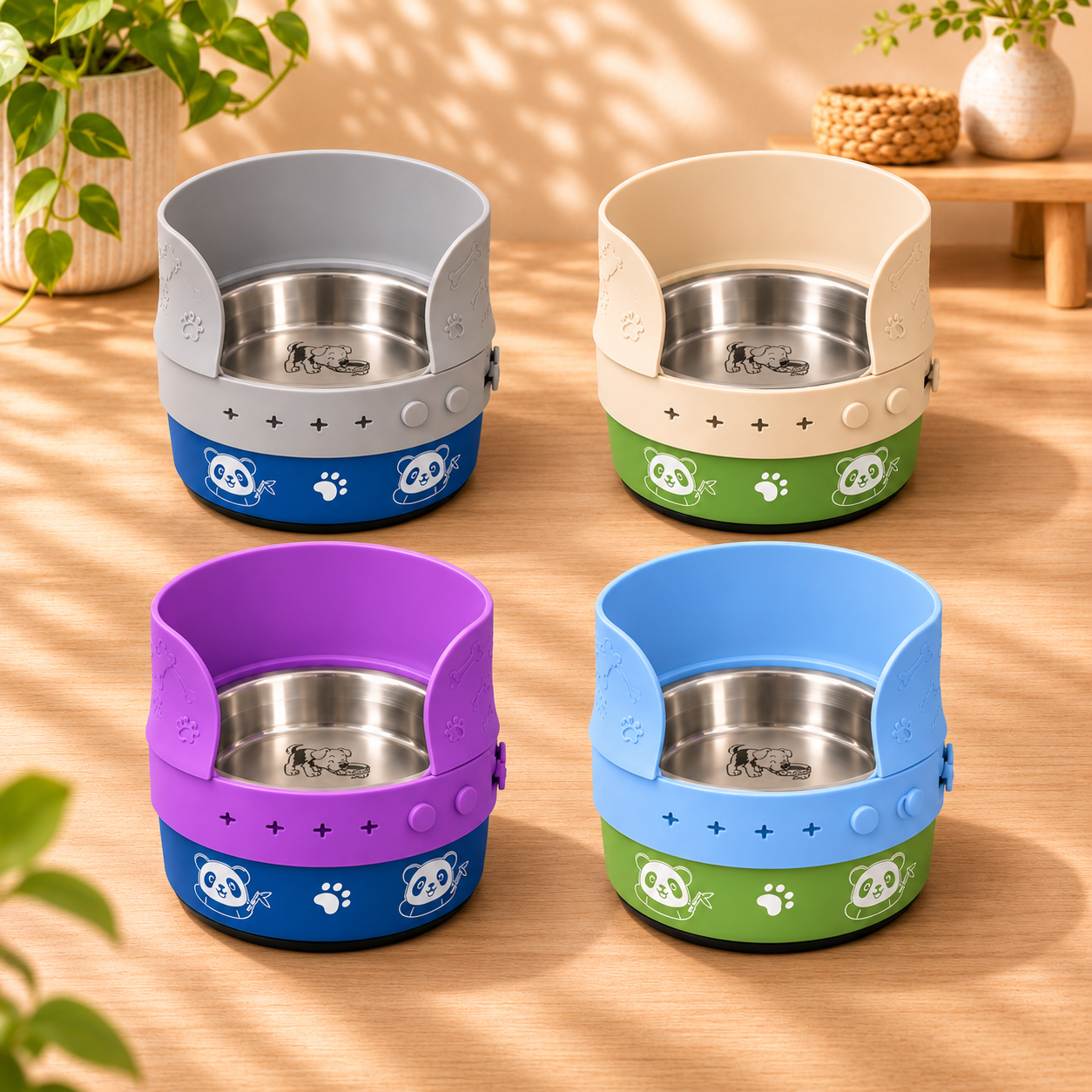
Dishes for people go in the dishwasher without a second thought, but pet dishes raise questions. Will the heat warp silicone? Will stainless steel spot? Is it actually cleaner than washing by hand? The answers depend on the material and on the manufacturer's instructions, so here is a practical walkthrough you can adapt to your own kitchen.
The short answer
For MessMate pieces, yes: the food-grade silicone and stainless steel items are dishwasher safe on the top rack. For bowls or accessories from other brands, check the label or the maker's website first. "Dishwasher safe" is a claim each manufacturer makes about its own product, and a bowl with a plastic liner, a painted finish or a weighted base may have different rules than a plain stainless bowl.
The top rack is the usual recommendation because it sits farther from the heating element at the bottom of most machines. If you are ever unsure, hand washing is always the safe fallback.
How to load the dishwasher
Stainless steel bowls
Scrape off dried food first. A quick rinse under the tap keeps the filter from clogging and helps the detergent reach the surface instead of fighting through caked-on kibble dust. Place the bowl upside down on the top rack so water drains instead of pooling in the base. If you have a small bowl that might tip or slide, nestle it between other dishes so it stays put during the cycle.
Stainless steel is smooth and non-porous, which is a big reason many people like it for daily feeding. If you are comparing materials, our guide to stainless steel vs. plastic vs. ceramic dog bowls goes deeper, and you can browse the full stainless steel bowl collection if you are shopping.
Silicone splash guards and feeding mats
Silicone is flexible, which means it can fold, curl or flip in a strong spray. Lay a splash guard flat or hang it over the tines so it cannot drop onto the heating area, and keep mats flat against the side of the rack where they will not block the spray arm. Light items can flip over and fill with water, so give them room and check them after the cycle.
The MessMate bowls with splash guards and the silicone feeding mat are both safe for the top rack, which makes cleanup a matter of loading and walking away.
Why silicone can still feel greasy or smell after a cycle
Silicone has a slightly tacky surface compared with stainless steel, and it can hold on to oils from wet food, fish toppers or fatty kibble. If your dishwasher finishes and the guard still looks dull, smells a little like dinner or feels slick, that is usually a residue issue rather than a sign anything is wrong. A few things help:
- Pre-wash greasy pieces. A quick scrub with warm water and a drop of dish soap removes most of the oil before the machine takes over.
- Do not overload the rack. Water and detergent need to reach every surface. Crowded loads are the most common reason things come out less than clean.
- Use a fresh detergent pod or enough powder. Weak or old detergent struggles with fats.
- Dry fully. Trapped moisture can cause a stale smell, so let silicone air dry completely before it goes back under the bowl.
We wrote a full walkthrough on this in how to clean silicone pet bowls, guards and mats, including what to do about lingering odors.
When hand washing is the better choice
There are times when skipping the dishwasher makes sense:
- The manufacturer does not list the item as dishwasher safe, or you cannot find the information.
- You are washing just one bowl and do not want to run a half load.
- A piece has stuck-on food that needs a scrub brush before it can go in the machine.
- You notice a persistent film that the dishwasher does not remove. A hand wash with warm soapy water and a soft brush often does better on slick residue.
With stainless steel, avoid harsh abrasive pads that can scratch the surface, since scratches are harder to keep clean than smooth metal. A soft sponge or brush is enough for daily use.
How often should bowls be washed?
That depends on your pet, the type of food and your household, so there is no single rule that fits everyone. Many owners wash food bowls daily and water bowls every day or two. If your pet has a health condition or a sensitive stomach, ask your veterinarian what they recommend. Our post on how often to clean your dog's bowl lays out a simple routine you can adjust.
A simple dishwasher routine
- After the meal, scrape or tip out leftover food.
- Give greasy pieces a quick rinse with warm water.
- Load bowls upside down and silicone flat on the top rack.
- Run the normal cycle with fresh detergent.
- Check silicone for trapped water, and let everything dry completely before the next meal.
It is not complicated, but doing it the same way every day matters more than any single trick.
What a dishwasher cannot do
A clean dish does not stop a bowl from sliding or kibble from landing on the floor, and dishwasher safety is only one part of a tidy feeding area. MessMate's splash guard fits round bowls from 7 to 9 inches across the top opening and adds a 3-inch silicone wall around the rim, which helps contain splashes and scattered food. It is not designed for bowls smaller than 7 inches or larger than 9 inches, so measure before you buy; our fit guide shows how. If you would rather not measure at all, the splash guard set comes with a bowl matched to the guard.
Orders ship free in the U.S., and returns are accepted for 30 days. Use LOYAL15 for 15% off your order. MessMate also donates to animal-rescue groups in memory of Spud. For more answers about materials and care, the FAQ is a good place to start.