Run a finger around the inside of your dog's water bowl and you might feel it: a slick, slightly slimy layer that was not there when you filled the bowl. It can show up even when the water looks clear, and it often returns within a day or so of washing.
That film is a common annoyance for dog owners, and the good news is that it is usually easy to deal with once you know what you are looking at. This guide explains what the slime generally is, how to clean it properly, and how to set up a routine so it does not keep coming back.
What is the slimy film?
The slippery coating is often described as a biofilm: a thin layer of bacteria and residue that clings to surfaces that stay wet. Every time your dog drinks, a little saliva and tiny bits of food or debris end up in the water. Those leftovers give microorganisms something to cling to, and they can build up on the inside walls of the bowl.
We are not veterinarians, and we cannot tell you what is in your particular bowl. If your dog has stomach upset or seems unwell, talk to your vet. For everyday purposes, the practical takeaway is simple: a slimy bowl is a dirty bowl, and regular washing is the fix.
Why does it keep coming back?
- Topping up instead of replacing. Pouring fresh water on top of old water leaves the film in place.
- Rinsing only. A quick rinse moves water around but does not remove the layer. It usually takes friction.
- Warm spots. A bowl near a sunny window, a heater or a warm kitchen may get film faster.
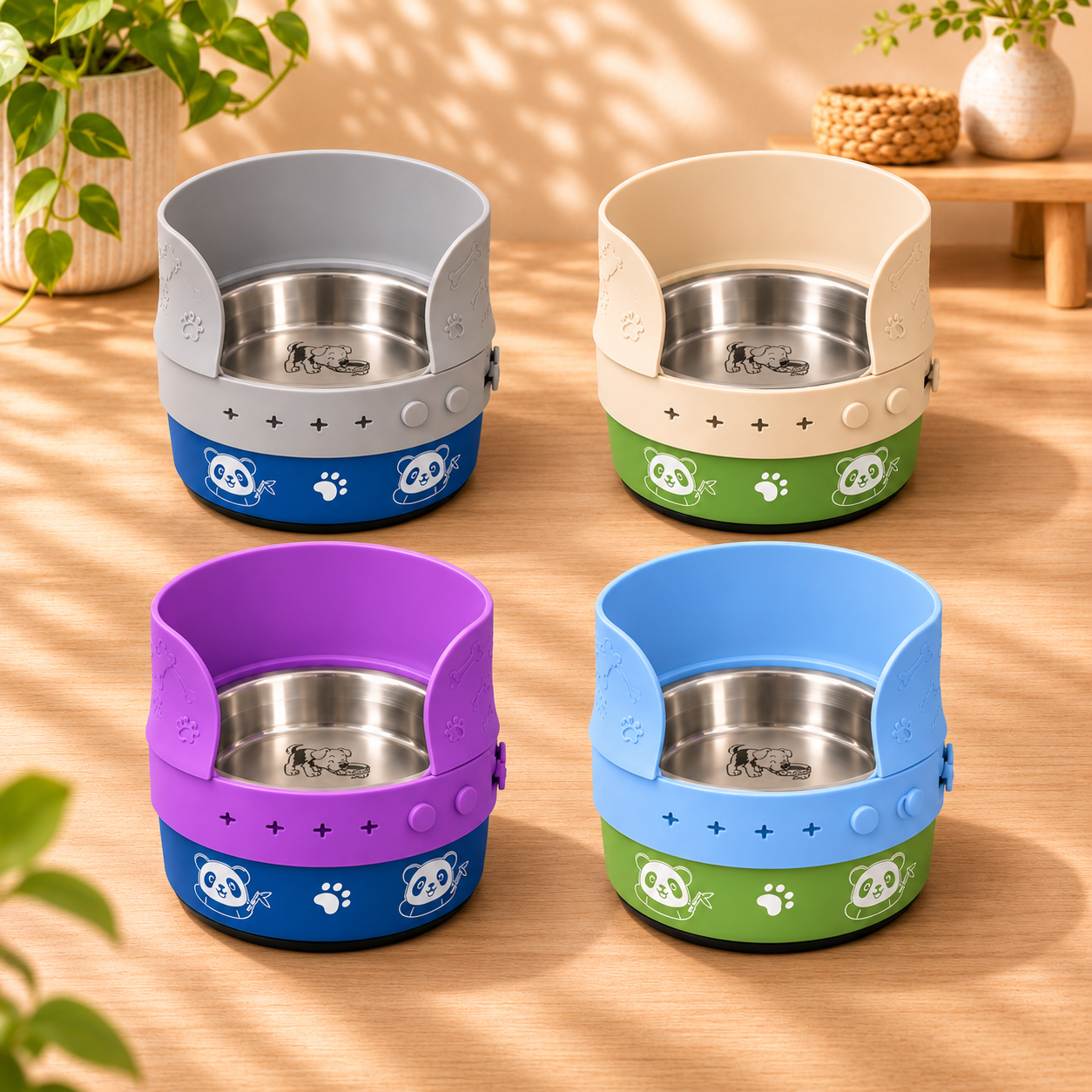
- Hard-to-reach spots. Seams, rims and the underside of a splash guard strap can hold residue if you do not clean them.
How to clean the bowl properly
Stainless steel bowls
Stainless steel is a good choice for water because it has a smooth, non-porous surface that is easy to scrub. Use warm water, dish soap and a dedicated sponge or bottle brush. Rub the whole inside surface, including the rim and the bottom edge where the walls meet the base. Rinse well to remove all soap, then dry or let air dry. MessMate's stainless steel bowls are food-grade and dishwasher safe on the top rack, so you can also run them through a cycle when you are doing a full load.
If you spot cloudy patches or marks on steel, that is a different issue. We cover it in our guide to cloudy spots and rust marks on stainless steel bowls.
Silicone guards, bases and mats
Silicone pieces such as a splash guard or feeding mat should be cleaned too. Residue can build up along the clip area and the edges. Silicone is food-grade and dishwasher safe on the top rack in the MessMate range. For hand washing, use warm soapy water and a soft brush, and pay attention to the folds and edges. If you notice odors or a greasy feel, see our guide to cleaning silicone pet bowls, guards and mats.
What about vinegar or other products?
Some owners use a diluted vinegar soak for stubborn buildup. If you try it, rinse thoroughly and make sure no residue or smell remains before refilling. Avoid harsh chemicals, and never mix cleaning products. If you are unsure whether a product is safe around your pet, ask your vet.
A simple cleaning schedule
There is no single magic frequency, because it depends on your dog, your home and the weather. But a routine most owners find workable looks like this:
- Daily: Pour out the old water, give the bowl a quick scrub with soap and warm water, rinse and refill.
- Every few days: Take apart anything with a strap or clip, such as a splash guard, and clean all surfaces.
- Weekly: Run the bowl, guard and mat through the top rack of the dishwasher, or do a deeper hand wash.
For feeding bowls, we have a separate piece on how often to clean your dog's bowl.
Make cleaning easier with a better setup
Small design choices make a big difference to how often a bowl gets properly scrubbed.
- Use a smooth, simple bowl. Fewer grooves and crevices mean less to scrub.
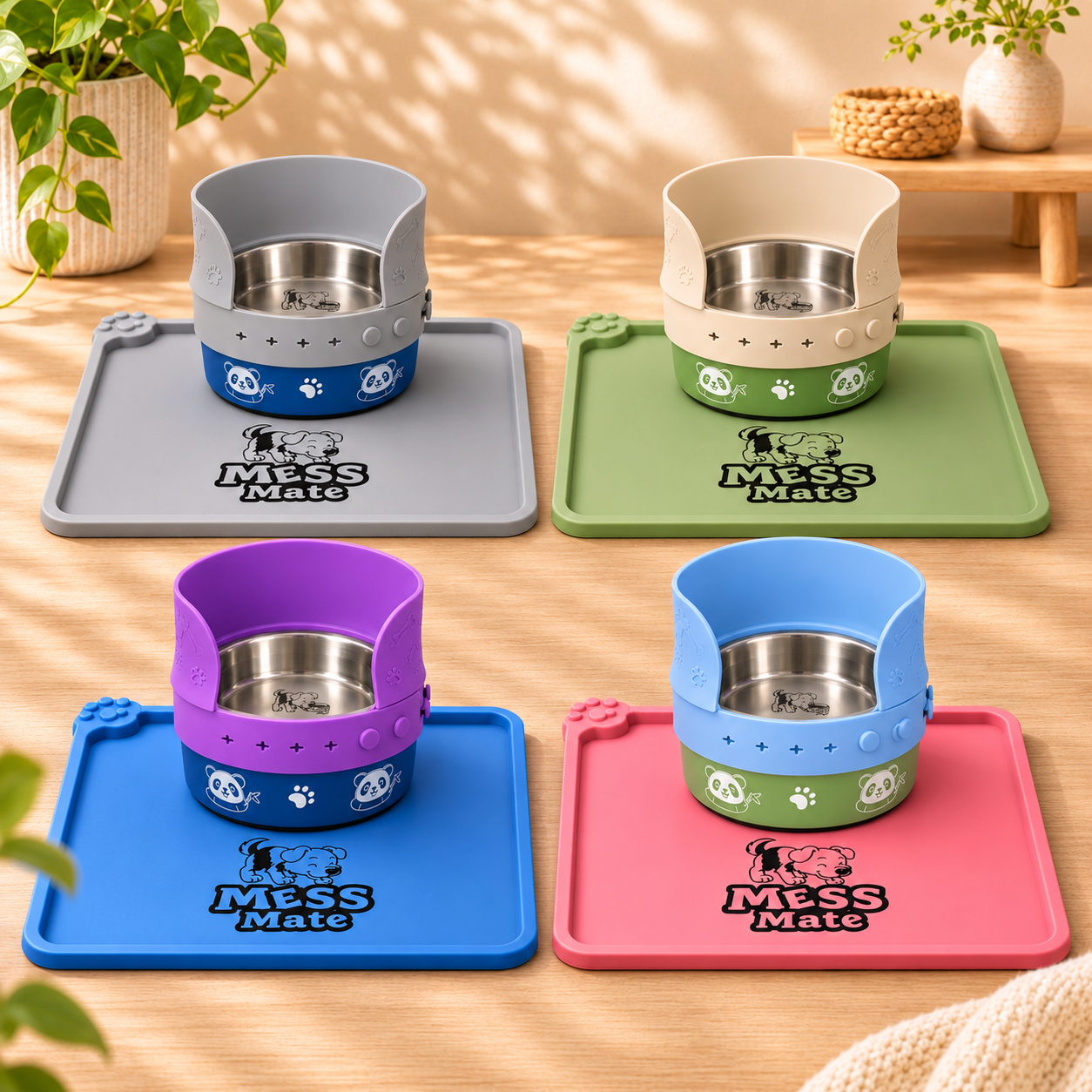
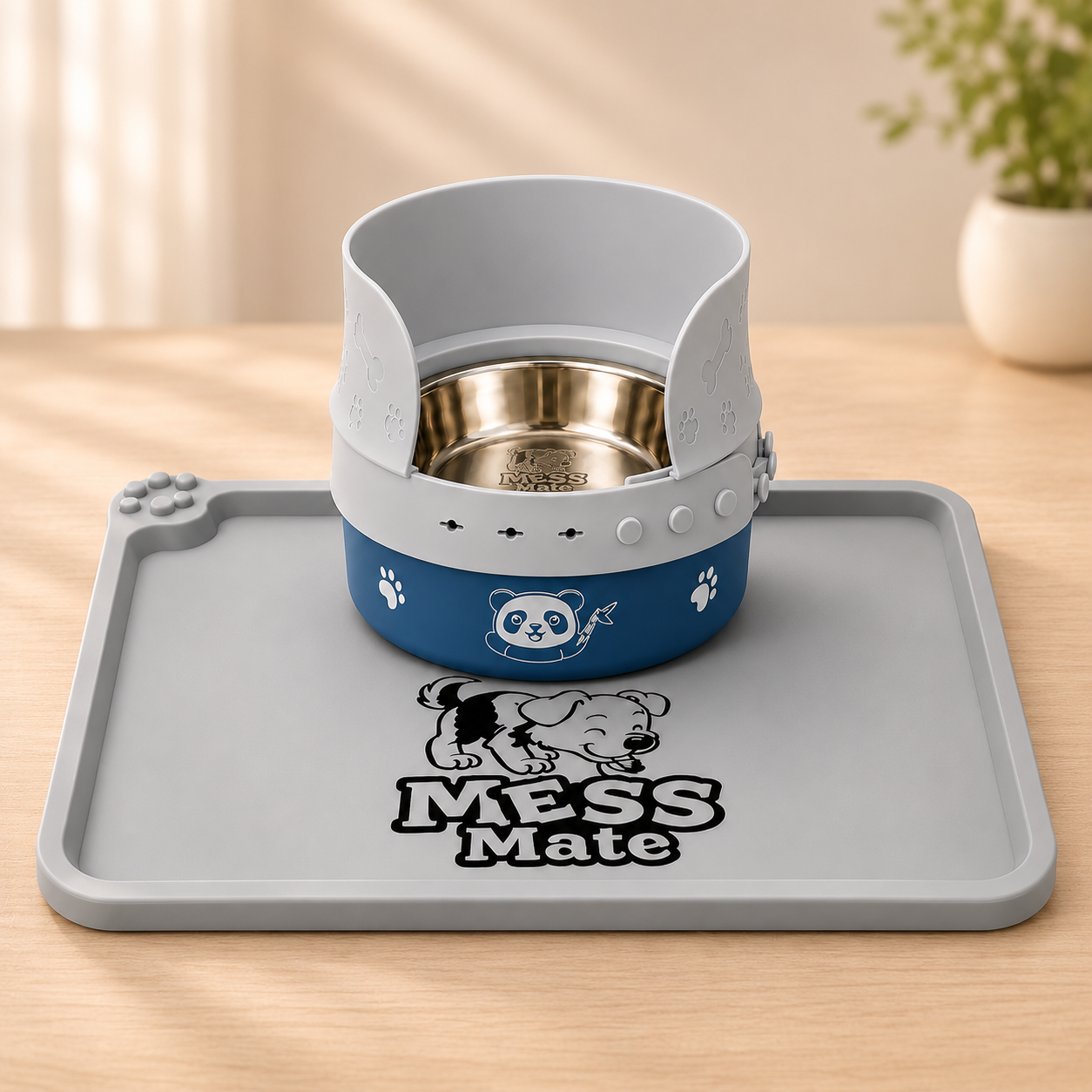
- Keep the bowl on a mat. A silicone mat with an edge catches drips so the area does not get grimy, and you can pop it in the dishwasher.
- Choose gear that comes apart. The MessMate splash guard clips around the outside of a round bowl with its strap, so it can be removed for washing. It has a 3-inch silicone wall and fits round bowls 7 to 9 inches across the top opening. It is designed for medium to extra-large dogs and large cats, it is not suited to bowls under 7 or over 9 inches, and the guard sold alone does not include a bowl.
If you want the pieces matched so there is no guessing about size, the complete mealtime set bundles the bowl, guard and mat together.
Honest note on what gear can and cannot do
No bowl, guard or mat will stop a film from forming if the bowl is not washed. Gear can make washing quicker and the area tidier, but the actual cleaning still needs doing. A splash guard also can mean a bit more surface to rinse, so it is worth getting into the habit of taking it off for the weekly wash.
When to ask your vet
If your dog suddenly refuses water they normally drink, seems to be drinking far more or less than usual, or shows signs of illness, call your vet. A clean bowl is a sensible baseline, but it is not a substitute for medical advice.
Quick recap
- The slimy layer is usually a biofilm that builds up on wet surfaces.
- Rinsing is not enough. Scrub with soap and warm water.
- Replace water rather than topping it up.
- Run bowls, guards and mats through the top rack weekly, if you like.
- Check in with your vet if your dog's drinking habits change.
MessMate ships free to U.S. addresses, offers 30-day returns, and donates to animal-rescue groups in memory of Spud.