It seems logical to put a cat's food and water side by side. It is tidy, it is convenient for you, and it matches how we serve ourselves a meal and a glass of water. But if your cat walks past the water bowl, drinks very little, or keeps dragging food into the water, you may wonder whether the setup is the problem.
This guide looks at why some owners separate food and water for cats, how to test it at home, and how to keep the area clean either way. It is based on common owner experience and general guidance, not a promise that it will change your cat's behavior. Every cat is different, and if your cat's drinking changes suddenly, a veterinarian should check them.
Why separate bowls come up so often
You will see advice to keep water away from food in cat care articles. The usual explanations are:
- Instinct. Some people suggest cats may prefer water that is not near their food, possibly because a wild animal would not want to drink where it eats. This is a popular explanation, but it is not something every cat follows.
- Cleanliness. Crumbs, wet food and oils end up in water when bowls are crowded together. Cats may turn away from water that looks or smells off.
- Splashing and pawing. Close bowls get knocked, nudged and dragged, which means more puddles.
Some cats drink happily next to their food, so this is a thing to try, not a rule.
How to test it at home
- Move the water a few feet away. Start with another spot in the same room, ideally somewhere your cat already passes through.
- Keep it easy to reach. Avoid putting water next to the litter box or a noisy appliance.
- Watch for a few days. Notice whether your cat visits the water more often.
- Try more than one spot. Multi-cat households and larger homes often do better with several water stations.
If you are not sure how much your cat drinks, mention it to your vet, especially if you see a clear change. Increased thirst or reduced drinking can be a sign of a health issue and is worth a professional opinion.
Bowl choice matters too
Placement is only part of the picture. The bowl itself can affect whether a cat is comfortable. Some owners find that a wide, shallow dish works better than a deep, narrow one. For background on that, see what "whisker fatigue" does and doesn't tell us.
Material matters as well. Stainless steel is easy to wipe and does not hold on to odors the way some plastics can, and it is dishwasher safe on the top rack when it is MessMate stainless steel.
Cats who splash and paw at water
If your cat taps the water, flicks it, or scoops it out with a paw, separating bowls will not stop that, but it can keep food out of the splash zone. For ideas on why cats do this, read why does my cat paw at the water bowl.
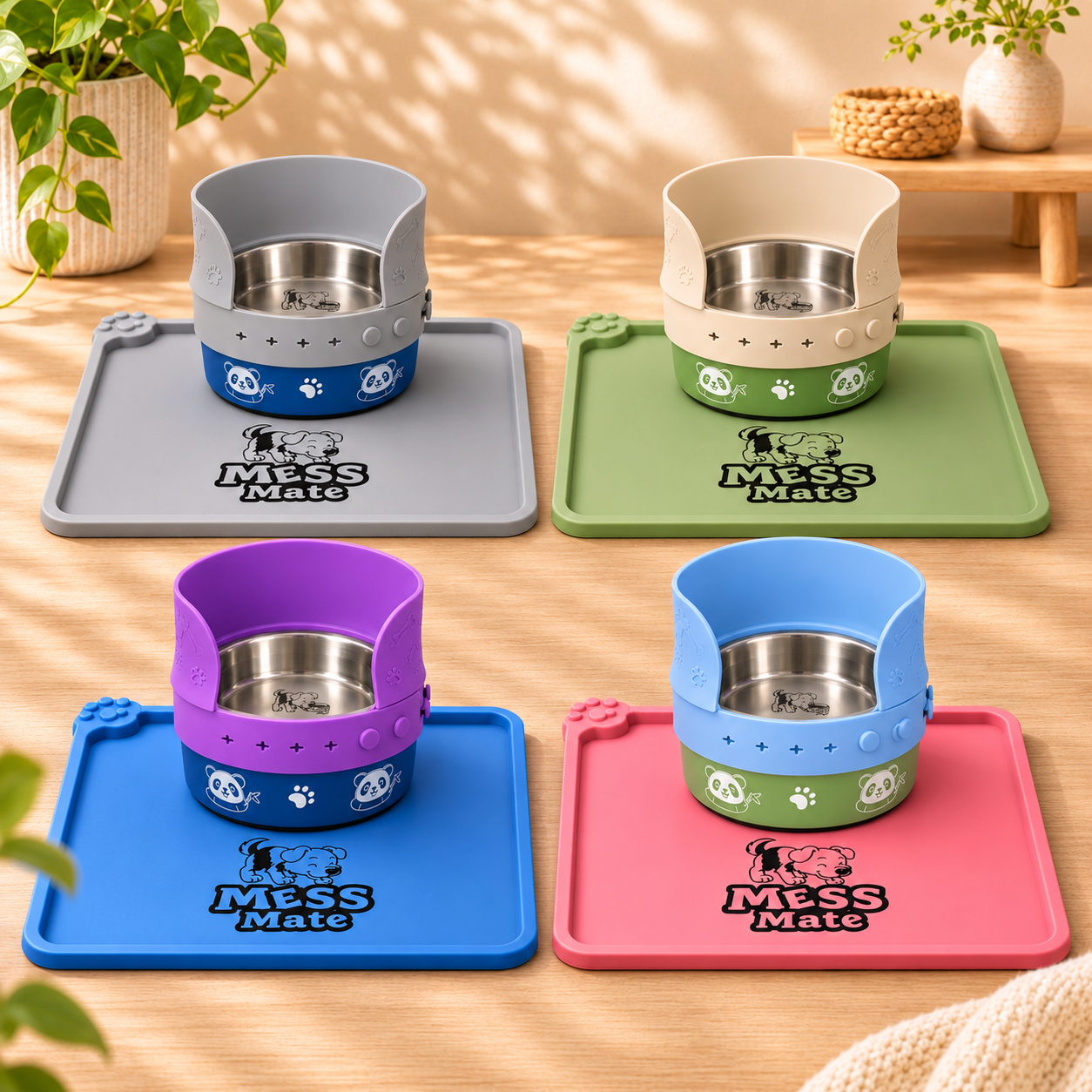
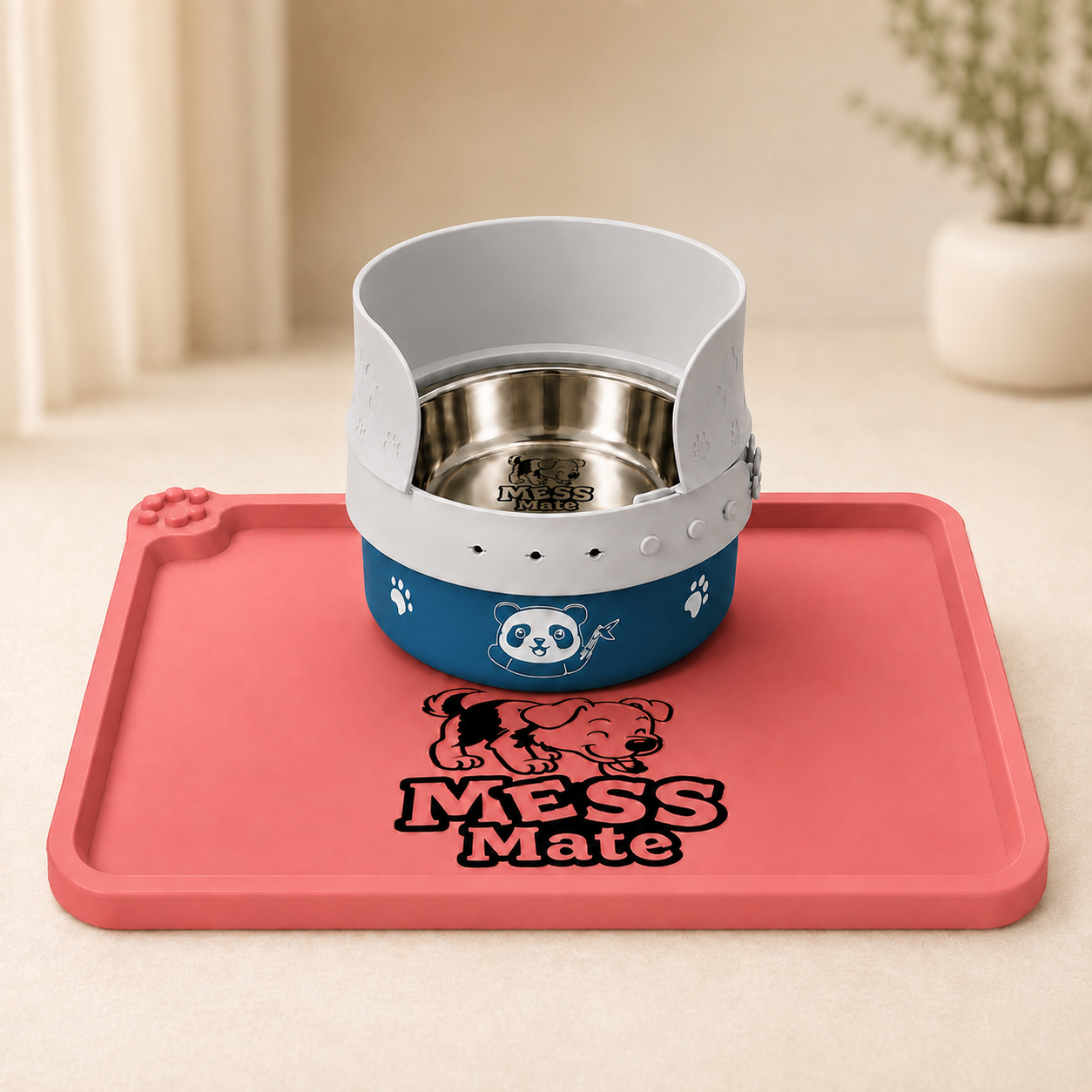
A silicone feeding mat under the water bowl catches drips and is easy to rinse. The raised edge keeps small puddles from spreading across the floor, which is helpful on hardwood.
A splash guard: only for some cats
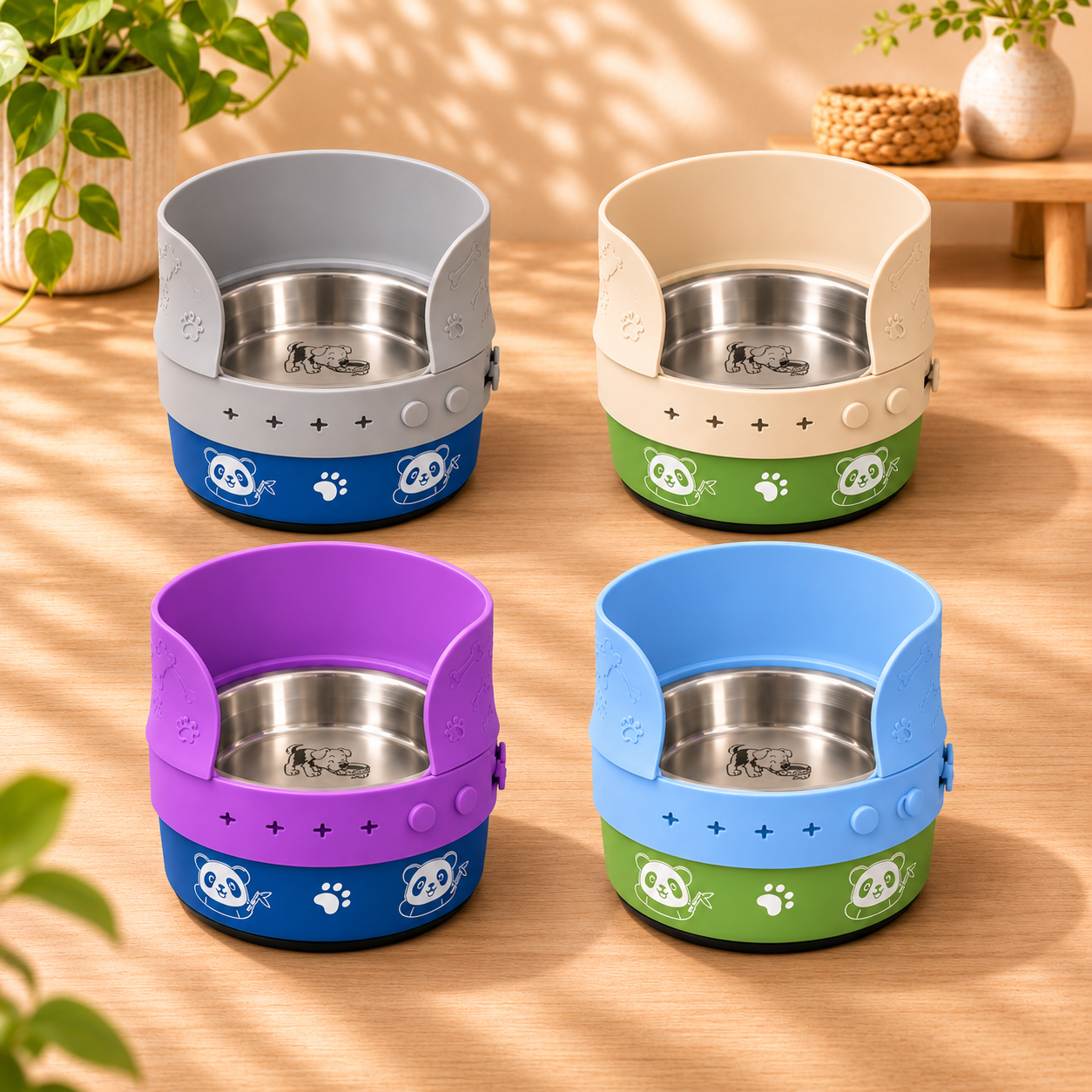
It is worth being clear about fit here. The MessMate splash guard has a 3-inch silicone wall and clips around the outside of a round bowl with its strap. It fits bowls 7 to 9 inches across the top opening, which makes it a better match for large cats than for small ones. It is not suited to bowls under 7 inches, and it is not designed or sized for kittens or small cats. If your cat uses a smaller bowl, a mat is the better option.
If you have a large cat with a round 7 to 9 inch bowl, the guard may help keep water and kibble from escaping, but it will not stop pawing or change how your cat drinks. The guard sold alone does not include a bowl. The fit guide explains how to measure your bowl.
Keeping both bowls clean
Whether the bowls are together or apart, a routine does more than a clever setup:
- Refresh the water at least once a day and wash the bowl regularly.
- Wash food bowls after wet food meals rather than letting them sit.
- Check for a slimy film inside water bowls, which is a sign it is time for a good scrub.
- Use the dishwasher's top rack if you prefer. MessMate silicone and stainless steel pieces are food-grade and dishwasher safe on the top rack.
Dealing with food scooped into the bowl
Some cats pull food out and eat it from the floor, which makes mess whichever way you arrange bowls. If that is your cat, why cats scoop food out of the bowl offers practical suggestions.
When to try something else
- If separating bowls changes nothing, try a different bowl shape or a different location.
- If your cat prefers moving water, some owners try a fountain, though it brings its own cleaning needs.
- If drinking drops or increases sharply, call your vet.
The takeaway
Separating a cat's food and water is a low-cost experiment. It may help, it may make no difference, and you will know within a week or so. Pair it with a stable bowl, a mat that catches drips, and a regular cleaning routine, and you will have a tidier spot whatever your cat decides.