If you have spent any time reading about cat bowls, you have probably run into the phrase "whisker fatigue." The idea is that a cat's sensitive whiskers brush the sides of a deep or narrow bowl while eating, and that this may be uncomfortable. It is a popular explanation for why some cats paw food out of the bowl or leave kibble in the bottom. But how much weight should you put on it?
This post looks at what the idea suggests, what is and is not settled, and how to choose a bowl that works for your cat and your kitchen floor, without overpromising.
What people mean by whisker fatigue
Whiskers are packed with nerve endings and help cats sense their surroundings. The theory is that repeated contact with the walls of a tight bowl might bother some cats. Many pet product makers, and some veterinary professionals, talk about it. However, as far as we know, it is not a firmly established diagnosis, and opinions differ on how common or significant it is. That is worth keeping in mind before you rush to replace every bowl in the house.
The practical takeaway is more modest and still useful: some cats seem to be more comfortable eating from a wider, shallower dish, and trying one is cheap and low-risk.
Other reasons a cat might scoop food out
Before blaming the bowl, consider that cats move food around for many reasons. Some prefer to eat from a flat surface. Some like to "hunt" kibble across the floor. Some are picky about temperature or texture, especially with wet food. We cover these in more detail in our post on why cats scoop food out of the bowl.
It is also worth watching for changes. If your cat suddenly starts dropping food, chewing on one side, drooling, or eating less, a dental problem, nausea or another health issue could be involved. In that case, the right next step is a call to your veterinarian rather than a new bowl.
What to look for in a cat bowl
Whether or not whisker fatigue is the cause, a few bowl traits are sensible for most cats:
- Wide opening. A broader bowl gives whiskers more room and makes it easier to see the food.
- Shallow depth. A low rim means less contact with the sides.
- Stability. A bowl that does not slide or tip is less likely to turn into a game.
- Easy cleaning. Shallow bowls are quick to wipe, and food residue is easier to see.
- Material you trust. Stainless steel bowls are durable and food-grade, and MessMate's are dishwasher safe on the top rack.
The trade-off: wide bowls can mean wider scatter
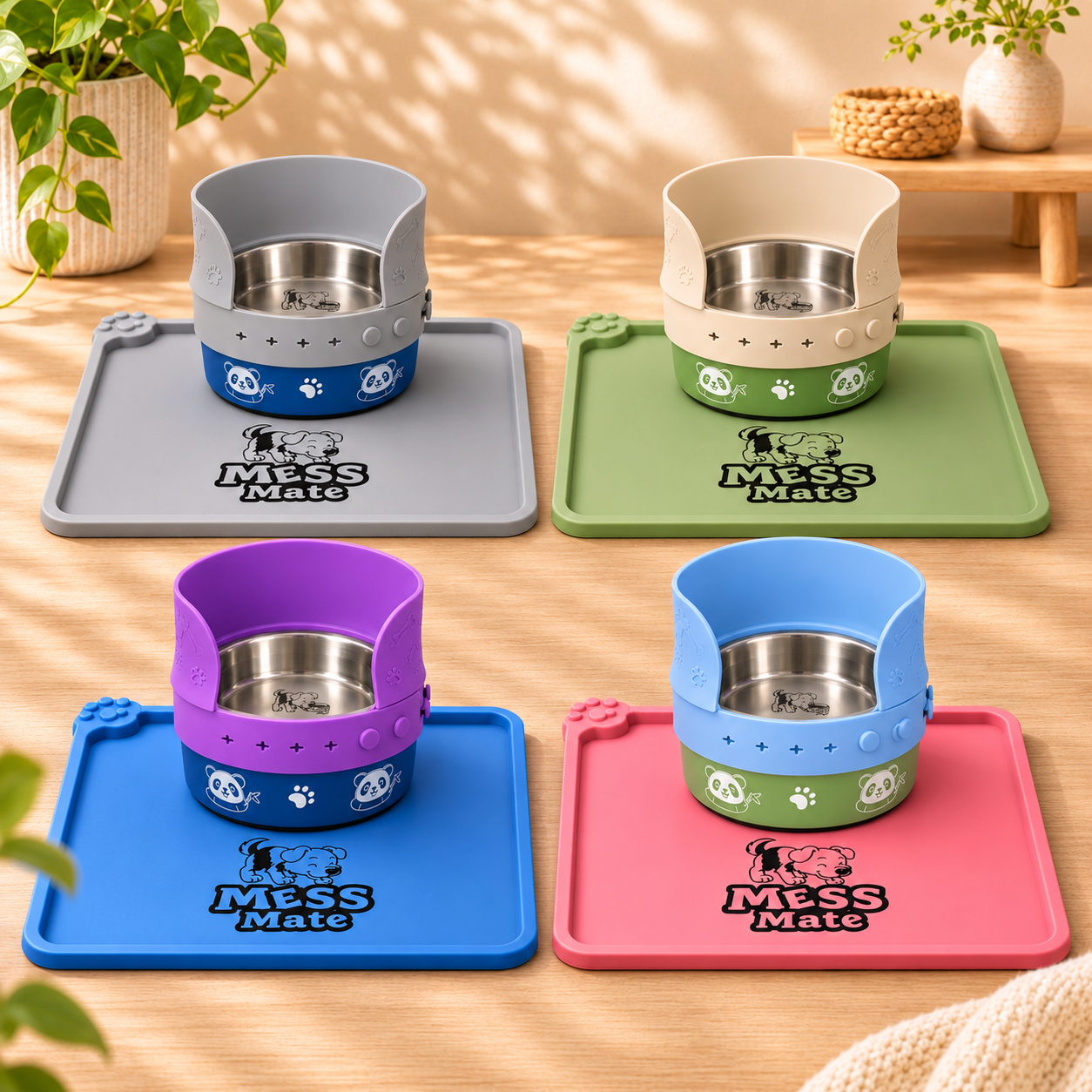
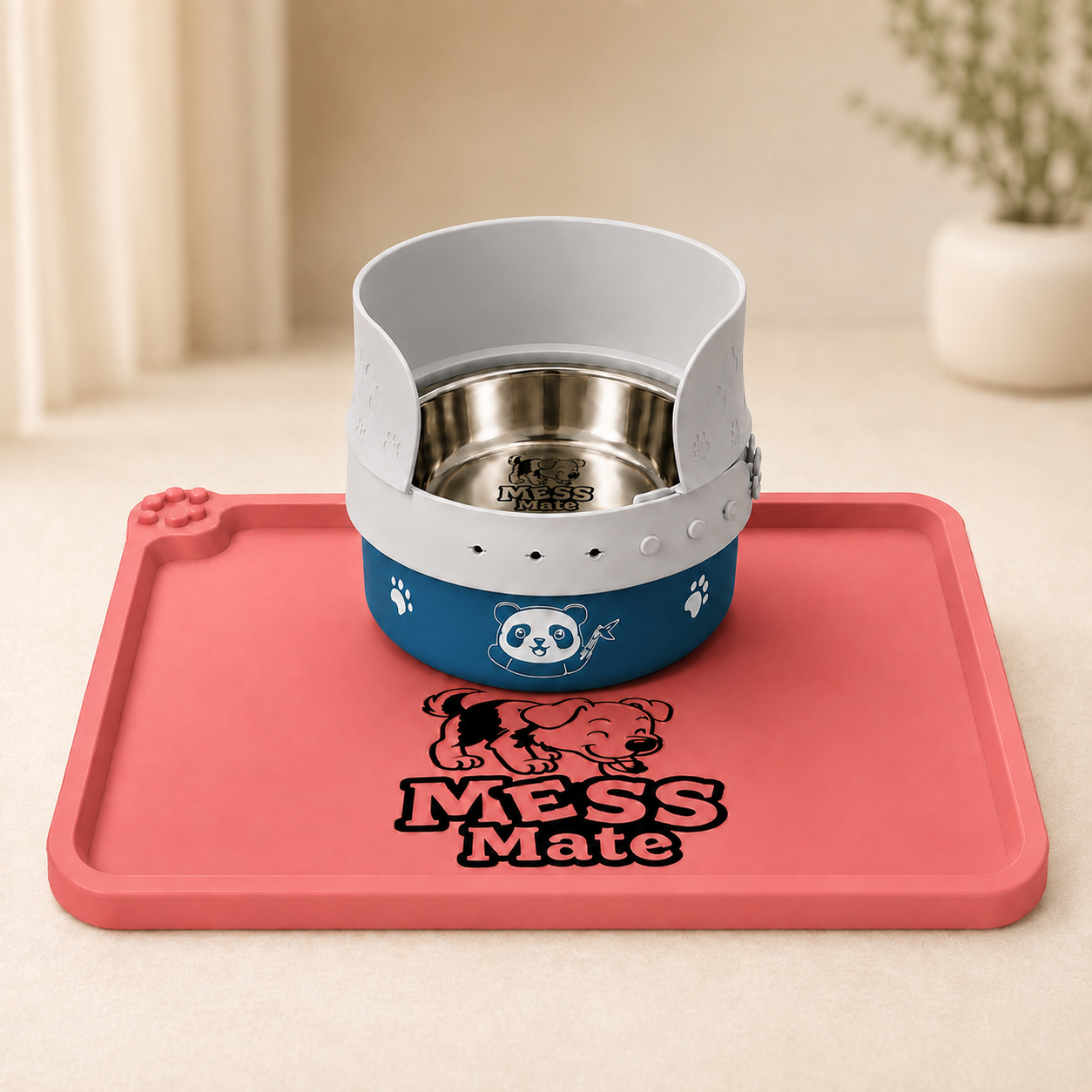
A wide, shallow bowl can make eating more comfortable but also gives food an easy path out. That is where a mat can help. Placing the bowl on a feeding mat catches kibble and drips so you can pick up the mess in one go. You can see the options in our anti-mess feeding mats collection.
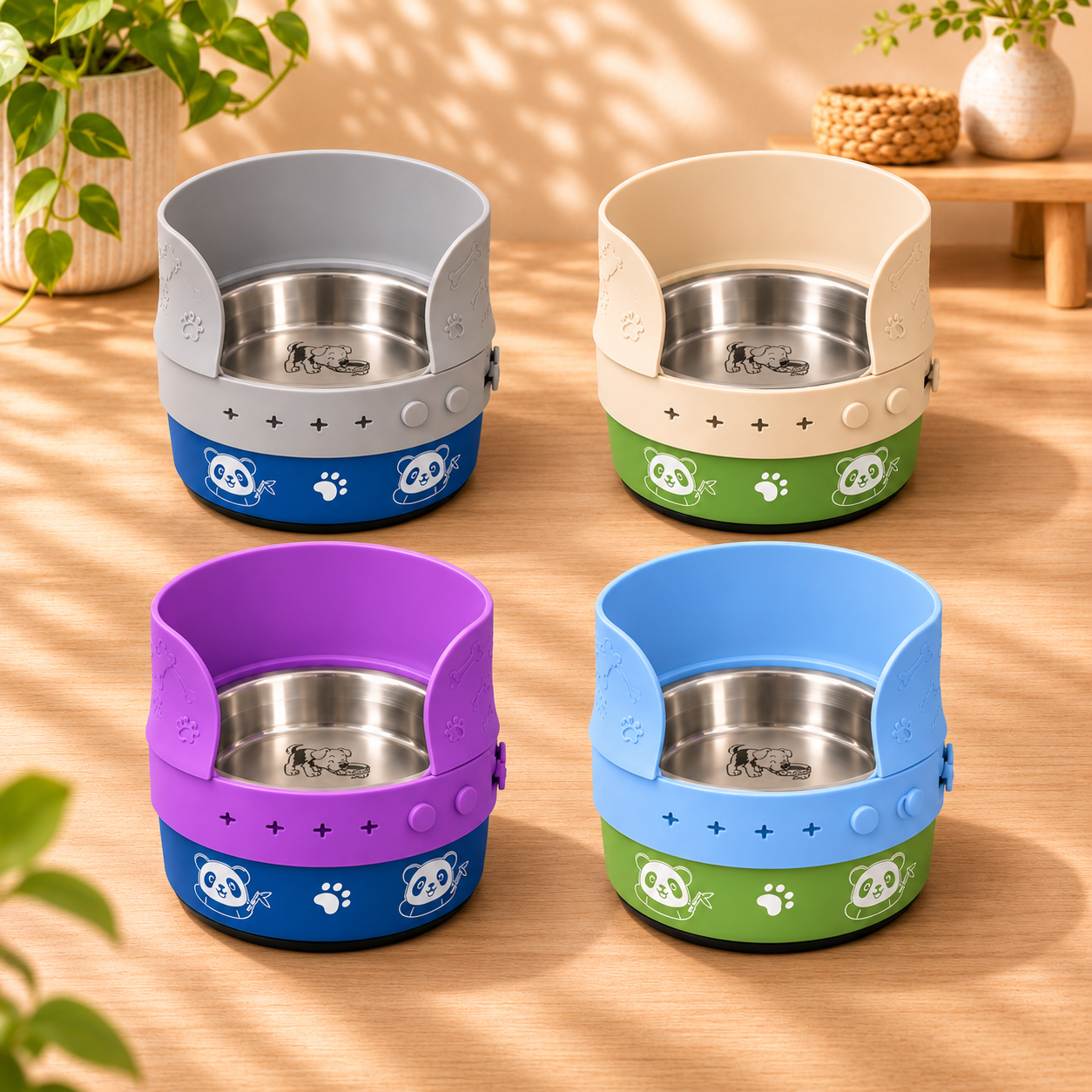
This is also the point to be honest about our splash guard. It has a 3-inch silicone wall and fits round bowls 7 to 9 inches across the top opening. A lot of cat bowls are smaller than 7 inches, and a splash guard is not suited to those. If your cat's bowl falls outside that range, our post on what to do when a splash guard won't fit offers other options, and our fit guide shows how to measure.
How to test whether your cat prefers a wider dish
You do not need to buy anything new to try the idea. Here is a simple at-home experiment:
- Put your cat's usual portion on a clean, flat plate or a wide, shallow saucer.
- Keep the location and meal time the same as always.
- Watch for a few days. Does your cat eat more calmly, leave less behind, or scatter less food?
- If it helps, a wider bowl may be worth buying. If nothing changes, the bowl is probably not the cause.
Introduce changes gradually. Some cats are wary of new dishes, and you may need to place the new bowl beside the old one for a few days.
Keep water separate, and keep everything clean
Many cats prefer their water away from their food, though preferences vary. A separate, stable water bowl in a quiet spot is a simple thing to try. Wash food and water bowls regularly, since oils and residue build up quickly in shallow dishes. For wet food in particular, rinse the bowl soon after the meal.
The bottom line
Whisker fatigue is a handy phrase, but it should not be treated as proven fact or as the only reason a cat leaves food behind. A wide, shallow, stable bowl is a reasonable and inexpensive thing to try, and a mat can handle the scatter that sometimes comes with it. If your cat's eating habits change suddenly, check in with your veterinarian first.