The first days with a rescue dog are a mix of joy and guesswork. You may not know how they were fed before, how they feel about food, or what a normal appetite looks like for them. Mealtime is one of the few parts of the day you can make predictable right away, and a calm, simple setup can help your new dog settle in. A tidy one helps you too, because you will not be mopping up kibble while also learning each other's habits.
This guide covers the basics of a first-week feeding setup. It is not a substitute for advice from your rescue, a trainer or your veterinarian, who know your dog's specifics.
Expect the first days to look a little different
Newly adopted dogs can behave unlike themselves. Some barely touch their food for the first day or so, which is often attributed to stress and a new environment. Others eat very fast, as if the bowl might disappear. Some are wary of the bowl itself, the spot you chose, or you standing nearby. None of this is unusual, and none of it tells you what your dog will be like in a few weeks.
What you can do is keep the variables low. Same place, same bowl, same times, and not much else going on. Ask the rescue or shelter what they were feeding and when, so you can start from something familiar.
Pick one quiet feeding spot
Choose a spot that is out of the main foot traffic but still part of the home, such as a corner of the kitchen or a quiet edge of a utility area. Hard floors are easier to clean than carpet. Our post on where to put your dog's food bowl goes into the pros and cons of different locations, including how to keep it away from walls and doorways.
Once you pick a spot, stick with it for the first few weeks. Moving the bowl around the house adds one more thing for a new dog to figure out.
Keep the routine simple and predictable
Many people find that set meal times work well for newly adopted dogs, because they create structure and make it easier to notice appetite changes. You can read more about the trade-offs in our comparison of free feeding and scheduled meals. Whichever way you go, a few habits help:
- Feed at roughly the same times each day.
- Put the bowl down, step back, and let your dog eat without an audience.
- Pick up the bowl when your dog is done and note how much was eaten.
- If you plan to change foods, ask your veterinarian or rescue how to transition gradually.
Give them space while they eat
It is tempting to hover, especially if your dog is eating very little or very fast. Most dogs do better with some room. Keep children, visitors and other pets away from the bowl, and avoid reaching into it or taking it away to "test" your dog. If you have other pets, feeding them in separate areas can prevent tension in the first weeks.
If your new dog stiffens, freezes, growls or snaps near food, take it seriously and do not punish it. This is sometimes called resource guarding, and it is best handled with a qualified trainer or veterinary behaviorist who can see the dog in person. In the meantime, give the dog distance and keep everyone safe.
Choose gear that stays put and cleans easily
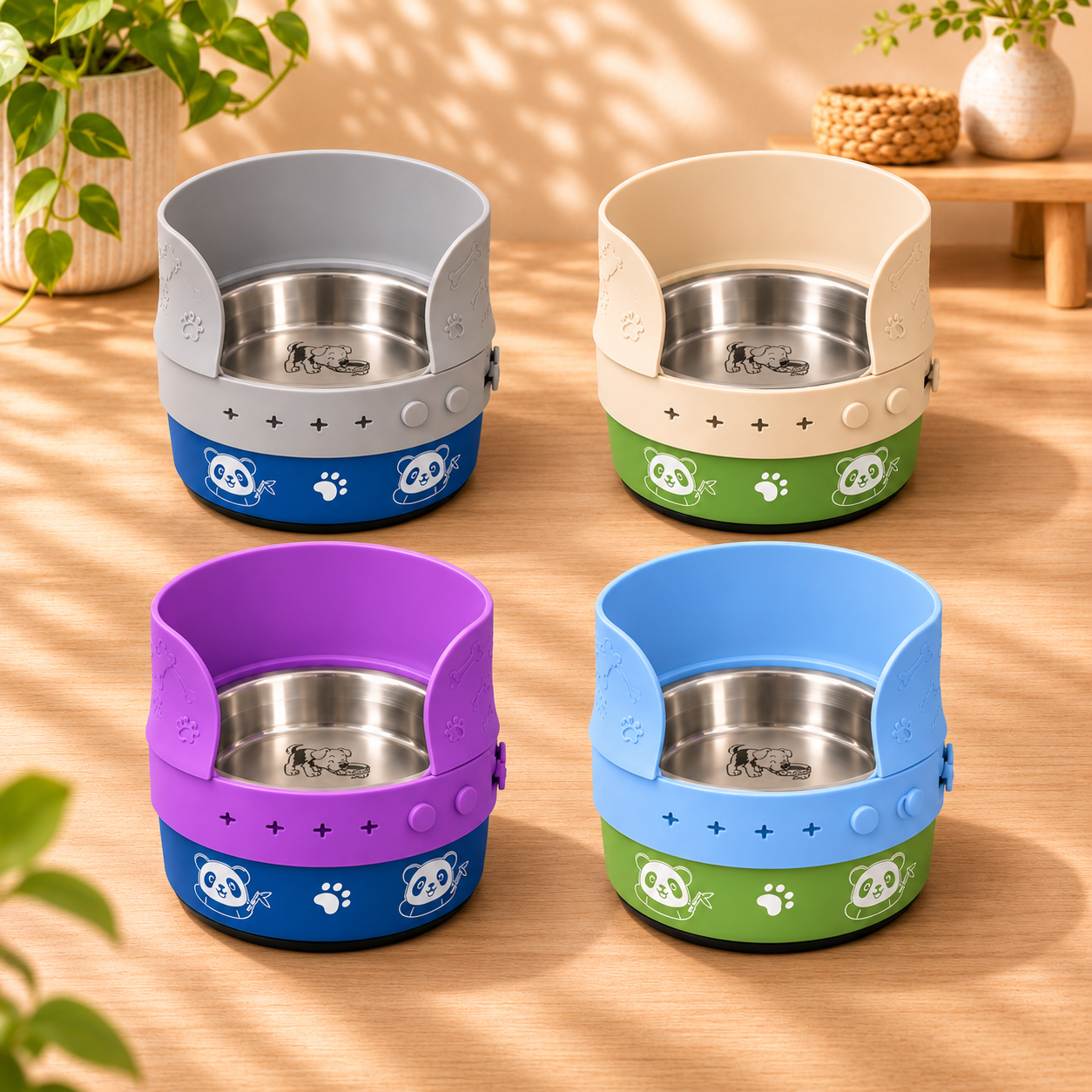
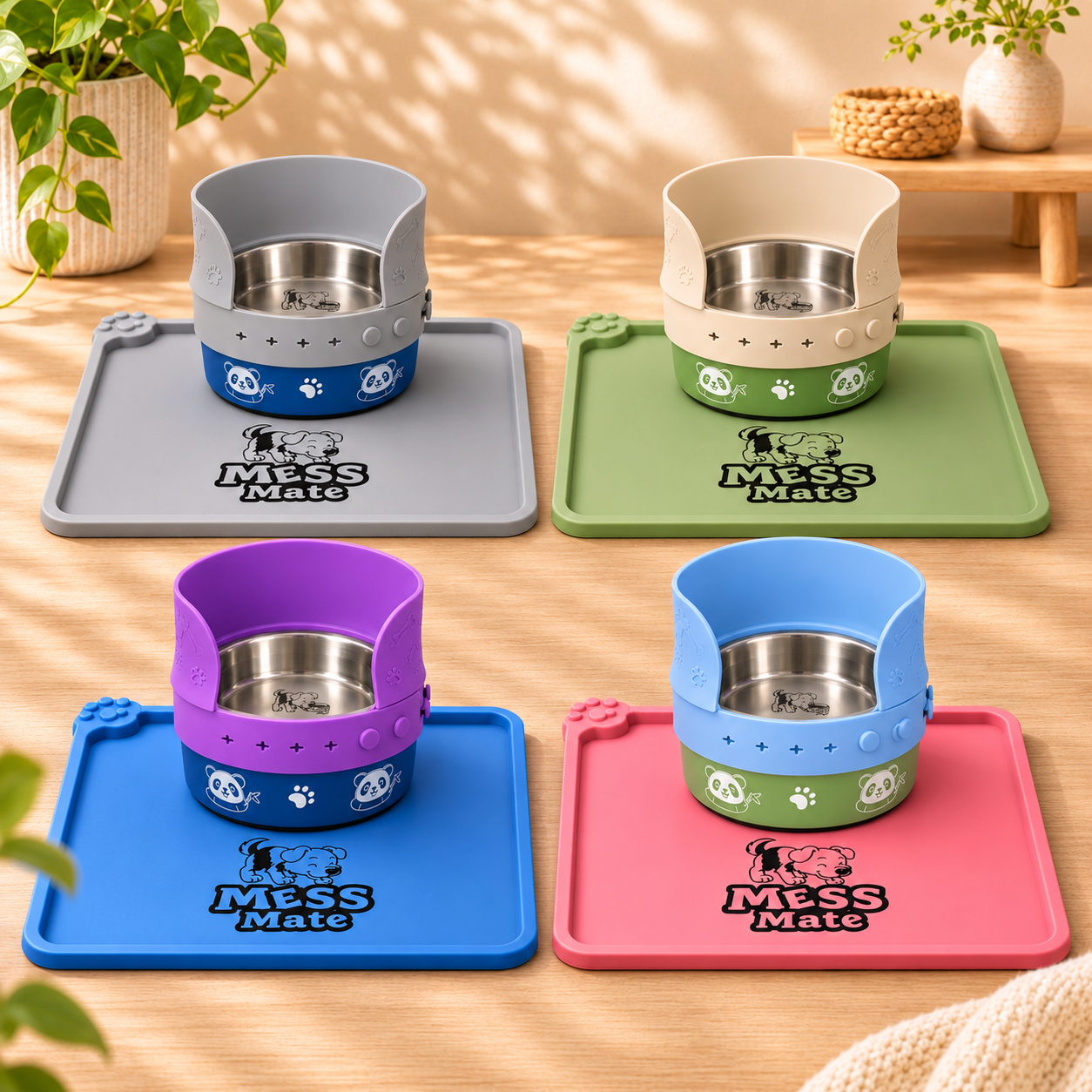
A new dog who is nervous about food does not need a bowl that skids across the floor or a surface that is hard to clean. Heavier stainless steel bowls tend to be stable, and a mat under the bowl defines the feeding area and catches spills. The MessMate complete mealtime set pairs a stainless steel bowl, a silicone splash guard and a feeding mat, and the silicone and stainless steel pieces are food-grade and dishwasher safe on the top rack.
A realistic note: feeding gear manages mess, not behavior. A splash guard will not slow down a dog who gulps or change how a nervous dog feels about mealtime. It also fits round bowls 7 to 9 inches across the top opening only, so check your bowl against our fit guide before you order. If your rescue dog is a puppy, our guide to feeding a puppy without the mess has additional tips.
For many people, adopting is about giving back, and it is why a portion of MessMate sales goes to rescue organizations in memory of Spud.
Water and cleanup in the first week
Keep fresh water available in a stable bowl, and expect that a stressed or excited dog may drink more messily than usual. Wipe up spills promptly, rinse the food bowl after meals, and wash it on a regular schedule. Small, consistent cleanup is easier than a big weekend scrub, and it keeps the feeding area pleasant for both of you.
When to call your veterinarian
Some appetite changes are normal during a big transition, but do not wait too long if something seems off. Contact your veterinarian if your dog refuses food for more than a day or so, vomits repeatedly, has ongoing diarrhea, seems lethargic, or you notice anything that worries you. Your vet will also want to know what your dog ate before adoption, so share whatever the rescue told you.
The bottom line
For a rescue dog, the best mealtime is boring in the best way: one quiet spot, a steady schedule, a stable bowl and enough space. Give it a few weeks, watch how your dog settles, and adjust slowly. Appetite and confidence often change as a dog comes to trust a new home.