You set down breakfast, turn around, and a few minutes later there is a thin, determined line of ants heading straight for your dog's bowl. It is one of the most common mealtime annoyances, especially in warm months and in homes with ground-floor kitchens. The good news is that ants are usually after something very simple: easy food and water. If you take away the easy part, most of the problem goes with it.
This guide walks through practical, low-effort ways to keep ants away from your dog's or cat's feeding spot, without reaching for sprays or powders you would not want near a pet's dish. We will also be upfront about what feeding gear can and cannot do here.
Why ants show up at the pet bowl
Ants are scouts first. One ant finds a crumb, a drop of gravy or a smear of wet food, and then leaves a scent trail so others can follow. Pet food is an especially attractive target because it is often greasy, a little sweet, or both, and because bowls tend to sit in the same spot every day. A spot that is reliably rewarding is a spot ants will keep checking.
Seeing a few ants does not mean your home is dirty. It usually means a trail has been established. The goal is to break that trail and make the area less rewarding, so scouts stop finding anything worth reporting back.
Start with leftovers and timing
The biggest single factor is food that sits out. A bowl of kibble left down all day gives ants hours to find it, and wet food can attract them quickly. If your pet's routine allows it, offer meals at set times and pick up the bowl when your pet walks away. Our post on free feeding versus scheduled meals goes through the trade-offs, including pets who do better with food available all day.
If you do free feed, consider dry food only, keep the amount modest, and check the area a few times a day for crumbs. If your pet is on a prescribed feeding plan, check with your veterinarian before changing how or when you feed.
Clean up crumbs, drips and the splash zone
Ants do not need much. Tiny kibble fragments, a dried drip of gravy on the floor, or a film of water and food around the bowl can all be enough. After each meal, take a minute to:
- Pick up any kibble that has scattered and wipe the surface underneath.
- Wipe the outside and base of the bowl, where residue often builds up.
- Wipe around the water bowl too, since sweet or sticky drips count.
- Wash the bowl itself regularly. Our simple bowl-cleaning routine lays out how often is reasonable for most homes.
The more consistently you do this, the sooner scouts stop finding anything. Consistency matters more than any single product.
Use a feeding surface you can wipe or rinse
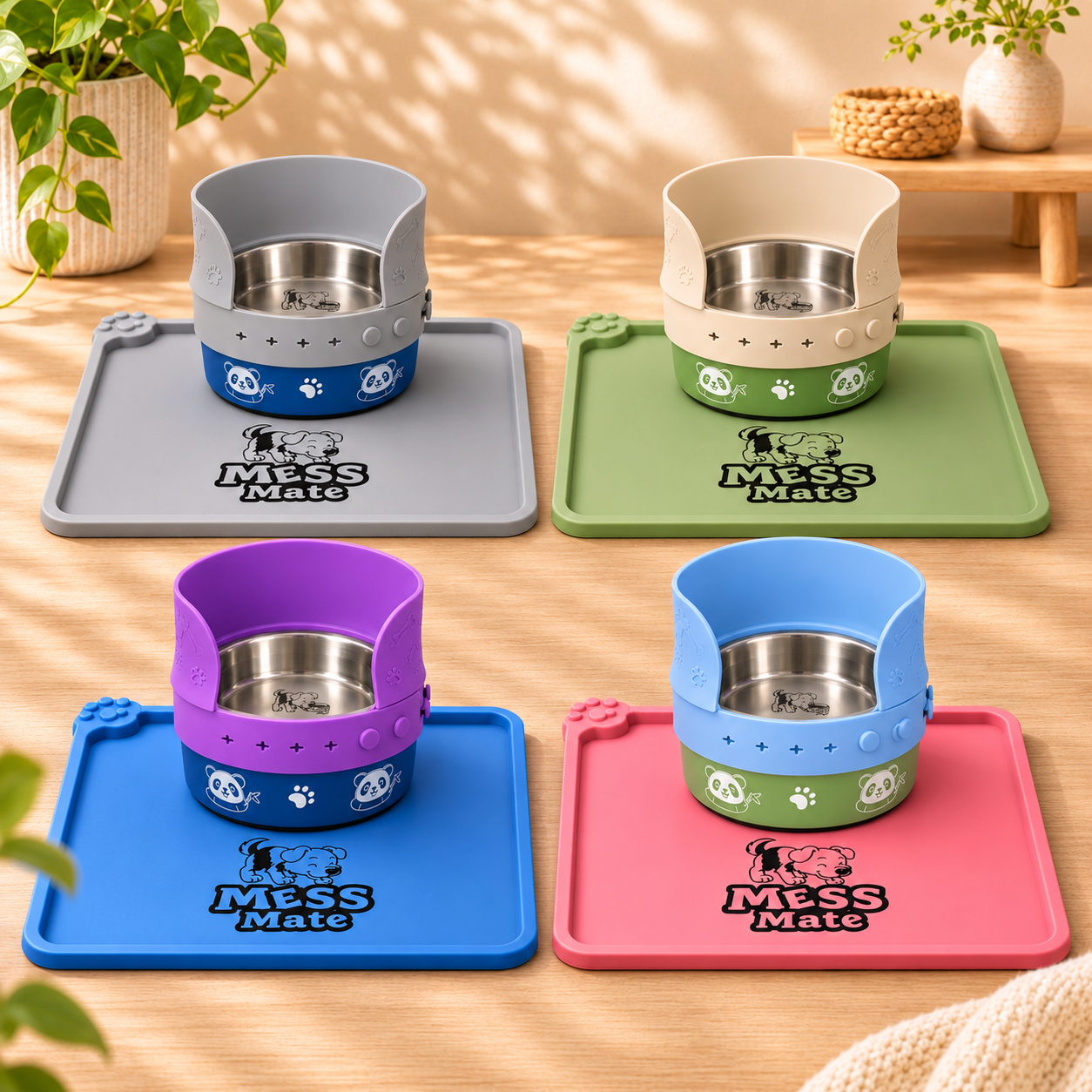
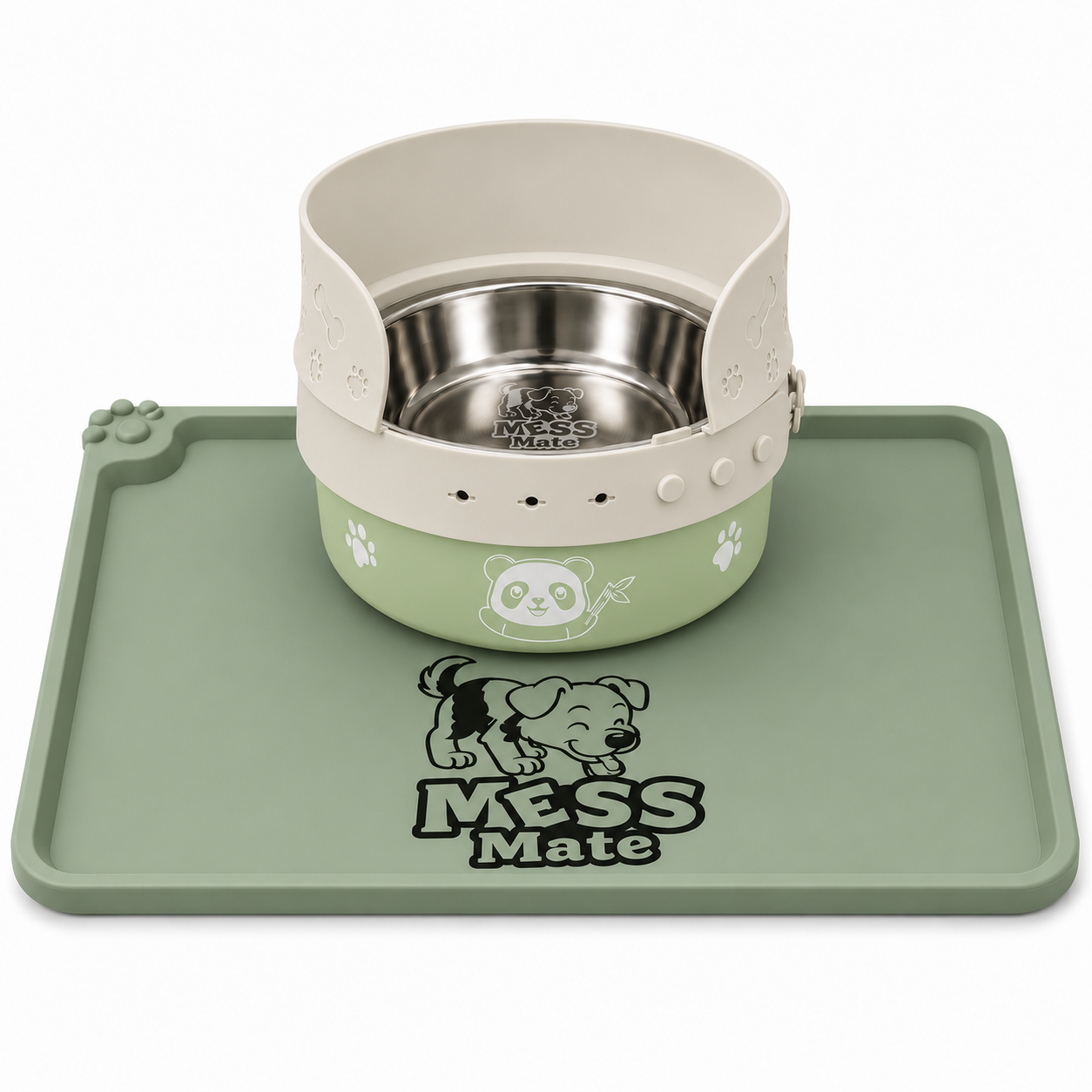
A defined feeding zone makes cleanup quicker. Instead of mopping a whole stretch of kitchen floor, you can lift one mat, shake it out, and rinse or wipe it. The MessMate silicone feeding mat is food-grade silicone and dishwasher safe on the top rack, so washing off greasy residue is simple. You can also browse the full range of anti-mess feeding mats.
To be clear about expectations: a mat does not repel ants, and nothing about it is designed to. What it does is make it easier to catch and remove the crumbs and drips that attract them. Think of it as a faster way to do the cleaning described above, not a barrier.
Store pet food so scouts cannot reach it
Sometimes the trail leads to the bag, not the bowl. Keep dry food in a sealed container with a tight lid rather than a rolled-over bag, and wipe the scoop and the container rim after use. Store opened cans or pouches of wet food in the refrigerator, following the label, and wash can lids and the spoon you use. If you buy in bulk, keep only what you need for a week or two in the kitchen and store the rest somewhere cool and sealed.
A few extra tricks that help
- Move the bowl if you can. If ants always come in at one spot, such as a door threshold or a gap near a baseboard, shifting the feeding area a few feet away can disrupt the trail.
- Try a shallow water moat. Some owners set the bowl inside a larger, shallow tray with a little water in it so ants have to cross the water. Keep it clean so it does not become a second mess, and do not add anything to the water.
- Clean the trail. Wiping the ant path with a mix of white vinegar and water can help remove the scent they follow. Rinse the area well before your pet eats nearby.
A note on sprays and baits
Be cautious with insecticide sprays, powders and bait stations near pet feeding areas. Pets can lick floors, chew bait stations and walk through residue. If ants keep coming back despite good housekeeping, ask a pest control professional about pet-safe options, and call your veterinarian if you think your pet has eaten something it should not have.
A quick checklist
- Pick up leftovers after meals when possible.
- Wipe crumbs and drips daily.
- Wash bowls and mats on a regular schedule.
- Seal dry food and refrigerate opened wet food.
- Check for new entry points if the trail returns.
The bottom line
Keeping ants away from your pet's bowl comes down to a few steady habits: less food sitting out, less residue on the floor, and sealed storage. A wipeable feeding surface makes those habits faster, but the habits do the real work. If you are also dealing with scattered kibble or water splashes, our guide to a clean pet feeding station pulls the whole setup together.