If you share your home with a large dog, you already know mealtime can feel like a small weather event. Bigger mouths mean bigger gulps of water, longer drool strings and a lot more kibble to nudge around. A single drink can leave a puddle that a small dog would need three visits to make.
This guide is about practical ways to keep the mess under control with a large breed: how to think about bowl size, how to protect the floor, and what to expect from feeding gear, including where our own products do and do not fit.
Why large dogs seem to make more mess
There is no secret formula here, just physics. Large dogs have larger muzzles and jaws, so they displace more water when they drink, and they tend to use more force when they eat. Drool, water dripping from the chin and food carried out of the bowl all travel farther than they would from a smaller dog. And because larger dogs usually eat more, there is simply more food and water in play.
That does not mean you have to accept a wet floor. It means the setup needs to be sized for the dog.
Start with a stable bowl
A bowl that slides is a bowl that spills. Heavier stainless steel bowls tend to stay put better than lightweight plastic, and a non-slip base or mat underneath helps further. If your dog pushes the bowl around the room, our post on why dog bowls slide across the floor has several fixes.
Size matters too. A bowl that is too small makes a big dog work harder and scatter more food, while a very large bowl can be harder to clean and store. Pick a size where your dog can reach the food comfortably without needing to tip the bowl.
Where a splash guard fits, and where it doesn't
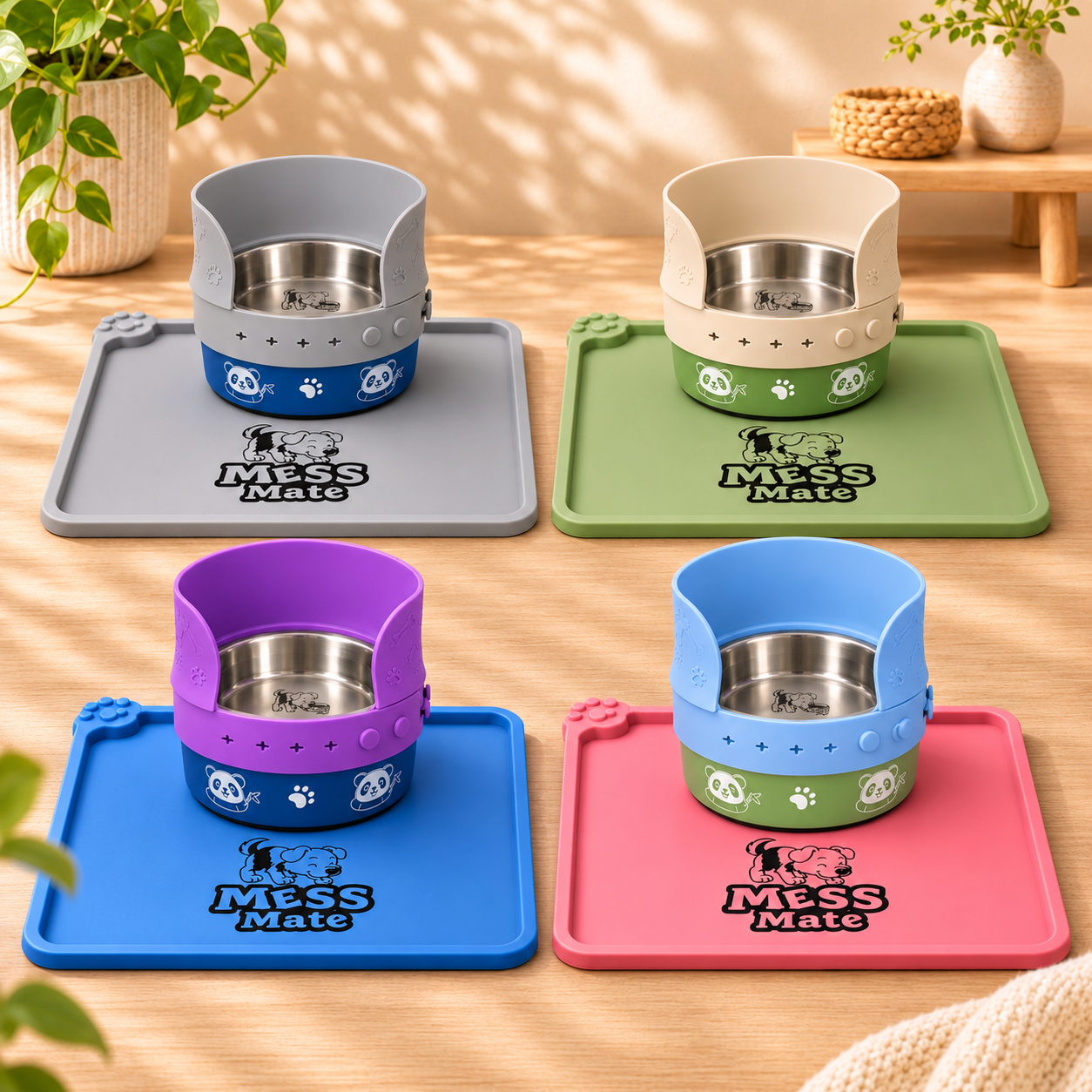
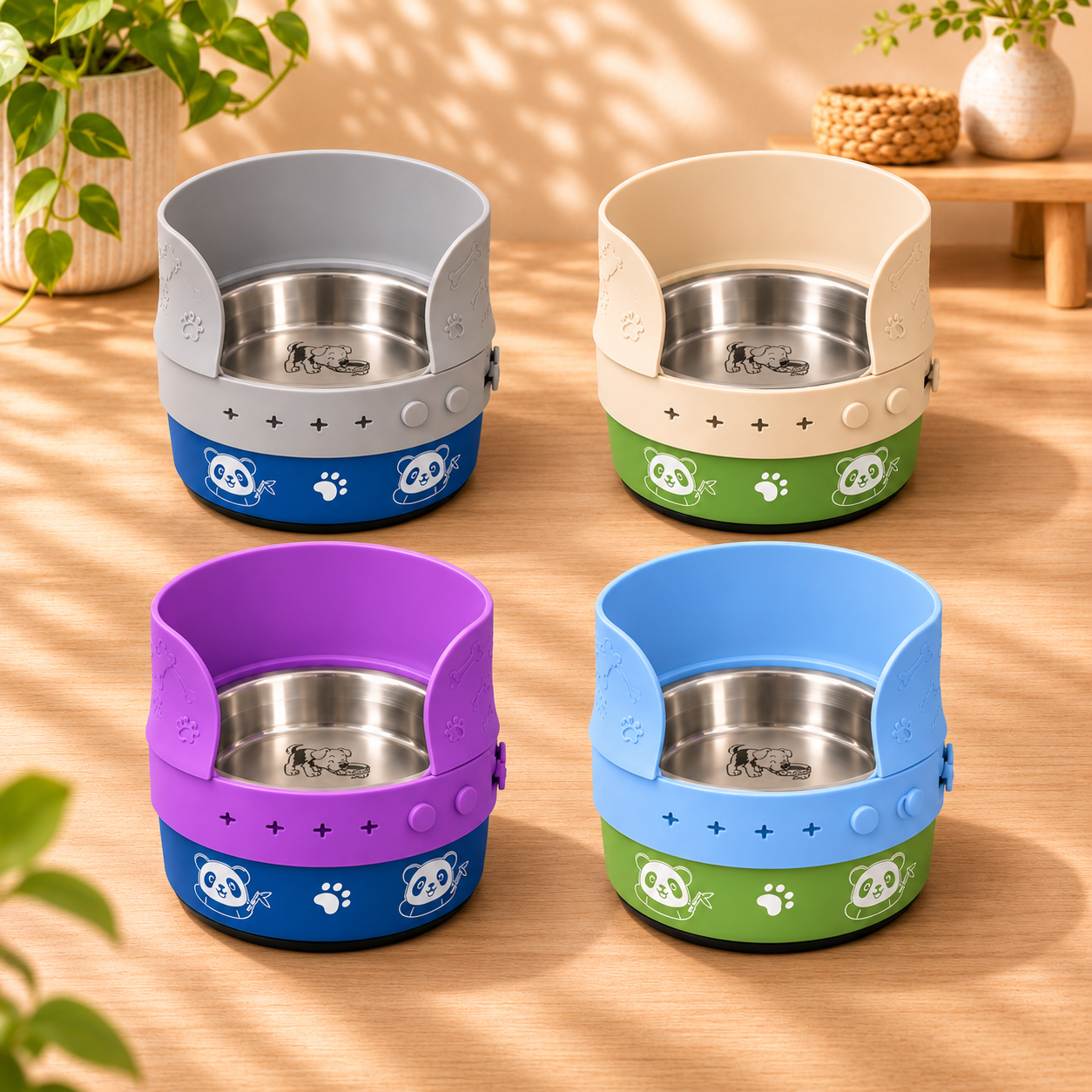
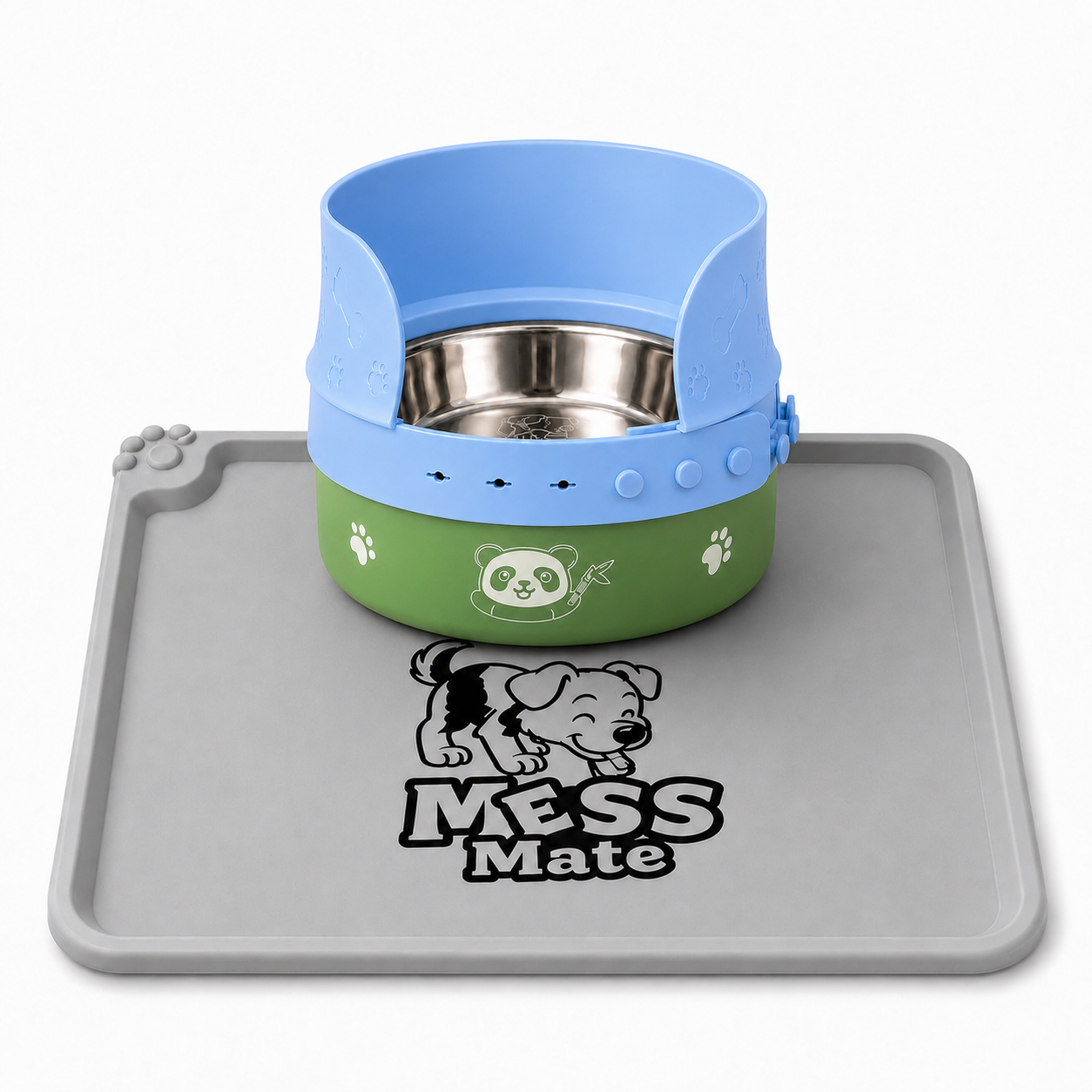
Here is the honest part. The MessMate splash guard has a 3-inch silicone wall and fits round bowls 7 to 9 inches across the top opening. It is not suited to bowls under 7 or over 9 inches. Many medium and some large dogs eat from a bowl in that range, but a lot of bowls made for giant or very large breeds are wider than 9 inches, and a guard will not fit them.
The only way to know is to measure. Our guide on how to measure your dog's bowl takes about a minute, and if you land outside the range, this post covers alternatives. We would rather you find out before you buy.
Protect the floor with a mat
Whatever size bowl you use, a feeding mat is one of the simplest ways to protect your floor. It defines the feeding zone, catches kibble and water drips, and lifts off the floor for easy rinsing. The MessMate silicone feeding mat is food-grade silicone and dishwasher safe on the top rack. For a big dog, think about placing the mat so it extends beyond where your dog stands, not just under the bowl, since drips tend to fall from the chin.
If your dog is a very messy drinker, consider a second mat under the water bowl, and keep a towel nearby for the drool that always seems to appear right after a drink.
Handling the water bowl
Water is usually the bigger problem with large dogs. A few ideas that help many owners:
- Use a heavy, stable bowl so it does not tip or travel.
- Do not overfill. A bowl filled to the brim is easier to slosh.
- Place the water bowl on a hard floor on top of a mat or towel, away from walls and furniture.
- Wipe the dog's chin or the nearby floor after drinking if drool is a constant issue.
We go deeper on this in our guide to a no-spill dog water bowl.
A word on raised bowls and health
Raised feeders are often suggested for big dogs, and you will find strong opinions online. Whether one is right for your dog, and how to feed a deep-chested breed in general, is a question for your veterinarian, since it can relate to your dog's specific health and history. If you are curious about the mess side, our post asks whether elevated dog bowls reduce mess.
A simple daily routine for large breeds
- Feed on a mat or in the same defined spot every time.
- Pick up any scattered kibble right after the meal.
- Wipe the area around the water bowl at least once a day.
- Wash bowls and mats on a regular schedule, and run silicone and stainless steel pieces on the top rack if they are dishwasher safe.
- Check the floor and baseboards weekly for moisture, especially on wood or laminate.
The bottom line
Large dogs will always be somewhat messier than small ones, but a stable bowl, a mat that is generous in size and a simple routine go a long way. Measure your bowl before you consider a splash guard, and be realistic: if your dog's bowl is wider than 9 inches, a mat and good cleanup habits will do most of the work.