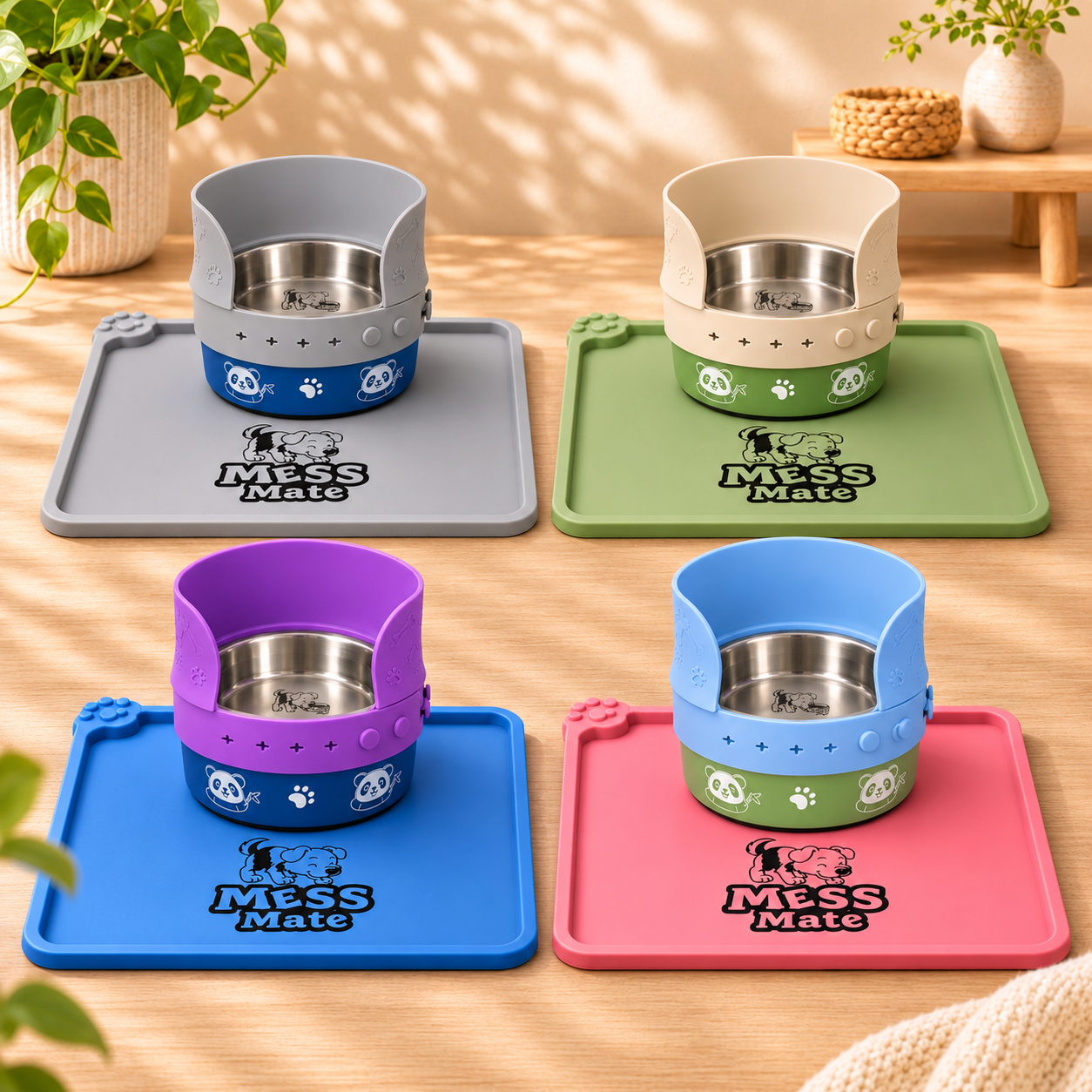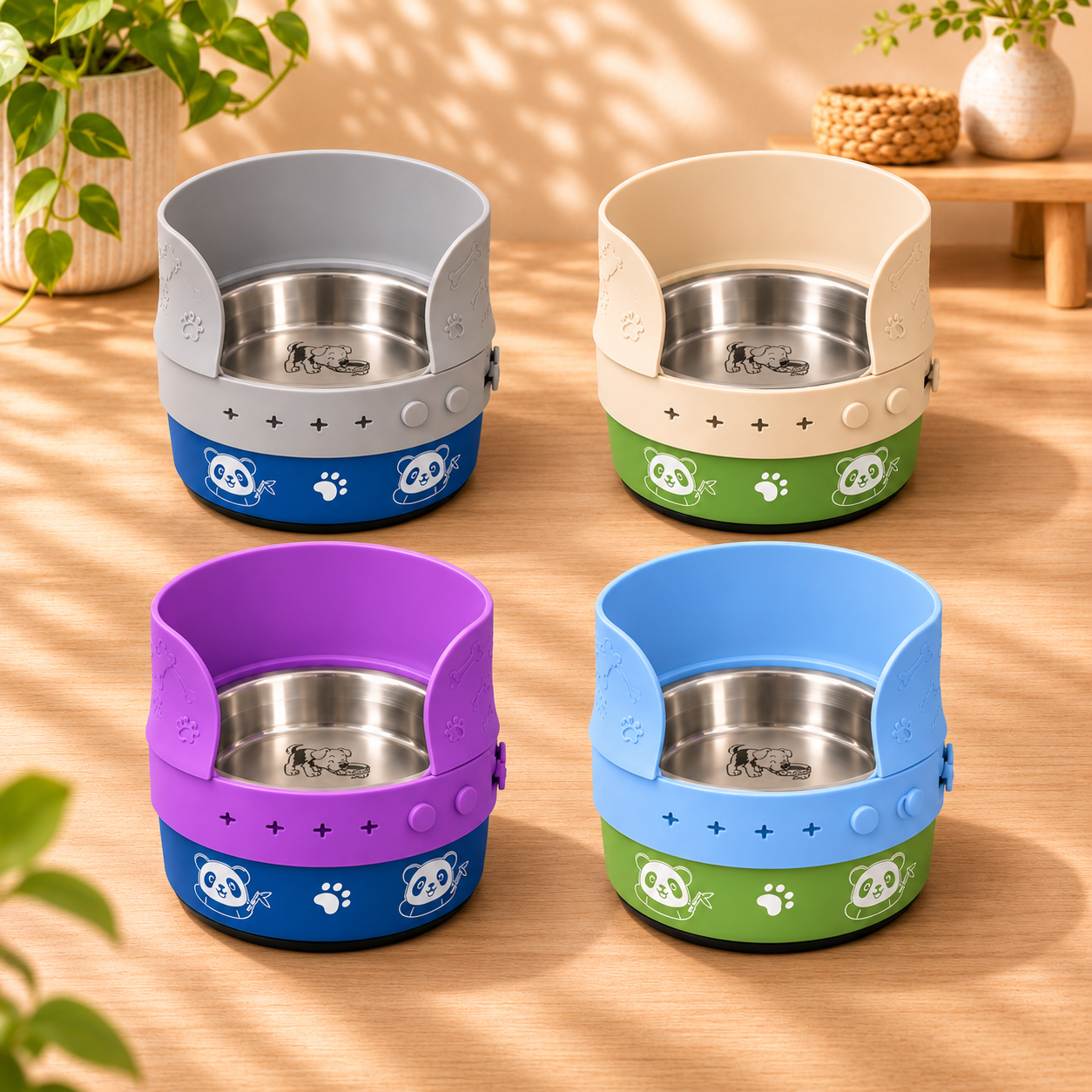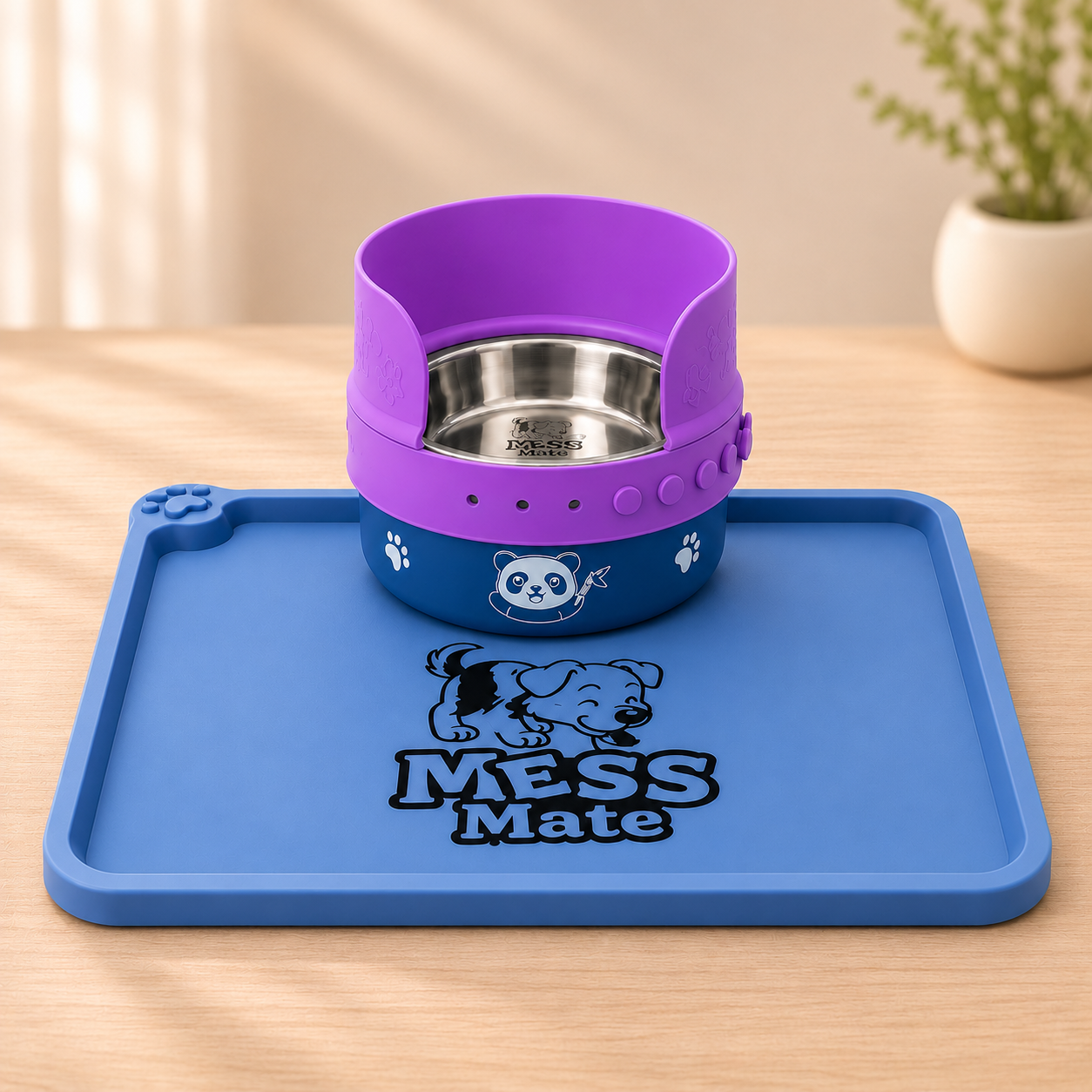
You unbox a new bowl, mat or splash guard, set up the feeding spot, and your dog walks around it, sniffs, and refuses to eat. It is a surprisingly common reaction. Dogs like routine, and a new object in a familiar place can look suspicious, even when it holds the same food in the same spot.
The good news is that most hesitation fades with a slow, low-pressure introduction. Here is a step-by-step approach, along with some honest notes on when to stop troubleshooting and call your veterinarian.
Why dogs hesitate around new feeding gear
We cannot read a dog's mind, but a few explanations are common. A new bowl or mat may smell unfamiliar, like packaging or manufacturing. It may feel different underfoot. A shiny stainless steel bowl may reflect light or make a different sound when your dog's tags hit it. A mat that shifts slightly, or a bowl that slides, can be unsettling. And some dogs are just cautious about change, especially if they are older, anxious or newly adopted.
None of this means the gear is wrong for your dog. It usually means the introduction needs to be gradual.
Step 1: Wash it and let it air out
Before anything touches your dog's meal, wash new pieces with warm water and dish soap and rinse well. MessMate's silicone and stainless steel pieces are food-grade and dishwasher safe on the top rack, so that is an option too. Washing removes any residue from shipping and handling and helps the item smell more like your home.
Step 2: Let your dog investigate with no pressure
Put the new item on the floor away from mealtime and let your dog sniff it. Do not push it toward your dog or hold the dog near it. If your dog ignores it, that is fine. If your dog sniffs it, paws at it or steps on it, you can calmly mark the moment with a small treat. The goal is for the object to become boring.
Step 3: Introduce one change at a time
If you bought a full set, resist the urge to switch everything at once. Try this order:
- The mat first. Put it down in the usual feeding spot and keep the old bowl on top of it. Many dogs accept a mat quickly because the bowl, food and routine stay the same.
- The new bowl next. Place it beside the old bowl for a day or two, then use it for meals with the old bowl nearby, then retire the old bowl.
- The splash guard last. Rest it on an empty bowl first so your dog can see it, then add food. A few tasty pieces dropped on the mat near the bowl can help.
If you are still choosing, our post on the dog bowl with splash guard set explains how the pieces fit together, and the MessMate bowl and splash guard set comes ready to use without measuring.
Step 4: Keep everything else the same
Feed at the usual time, in the usual spot, with the usual food. If your dog is wary, adding a new location or new food on top of new gear makes it harder to tell what is causing the hesitation. If the bowl keeps moving during meals, our post on why dog bowls slide can help you stabilize it, since an unsteady bowl can be a reason some dogs avoid it.
Check the fit and the setup
Make sure the gear suits your dog. A splash guard fits round bowls 7 to 9 inches across the top opening, so check your bowl against our FAQ and fit guide if you are not sure. Also make sure the guard is seated securely and the wall is not so close that your dog has to angle awkwardly to reach the food. For very small or very large bowls, a guard may simply not be the right tool.
Be realistic: some dogs take longer
Most dogs adjust in a few days, but some need longer, and a few never warm up to a particular item. That is okay. Feeding gear is supposed to make life easier, not become a standoff. If you have tried a gradual introduction and your dog still will not use something, you have options. MessMate offers free U.S. shipping and 30-day returns. You can also look at the complete feeding sets and pick only the pieces your dog will use.
When to call the veterinarian
A dog who skips one meal because of a new bowl is usually fine, but do not assume the gear is the whole story. Call your veterinarian if your dog refuses food for more than a day or so, seems lethargic, vomits, has diarrhea, or shows any other sign of illness. Puppies, seniors and dogs with health conditions can need attention sooner, so follow your vet's guidance for your dog.
The bottom line
New gear is a change, and dogs usually need time to accept change. Wash it, let your dog investigate, introduce one piece at a time, and keep the rest of the routine steady. If your dog is still reluctant after a fair try, you are free to adjust, return or swap, and if your dog's appetite drops, call your vet.