You fill the water bowl, turn around, and by the time you look back your dog has a front paw in it, or is pawing at the surface like they are digging for treasure. The floor is soaked, the bowl has migrated across the kitchen, and your dog looks very pleased with themselves. If this sounds familiar, you are in good company.
This guide covers the common reasons dogs dig in or stand in their water, what you can try to change the habit, and how to set up the drinking area so the mess stays manageable while you work on it. We will also be straight about what a splash guard can and cannot do here.
Common reasons dogs dig or stand in their water
Nobody can read your dog's mind, and the same behavior can have different causes from one dog to the next. These are the explanations trainers and owners most often point to.
They find moving water fun
Water that ripples, splashes and makes noise is interesting. Many dogs treat a bowl the way they treat a puddle or a garden hose: something to bat at and investigate. Dogs that are young, energetic or under-stimulated often do this more.
They are trying to cool off
On a warm day, a dog may step into water or paw at it to cool their feet. If the behavior shows up mostly in hot weather, that may be the reason. Making sure your dog has shade, airflow and a cool place to rest can help, and a separate shallow pan or kiddie pool for supervised cooling-off can keep the drinking bowl for drinking.
They are bored or want attention
If every splash earns a reaction from you, even a sigh and a towel, some dogs learn that the water bowl is a quick way to get you involved. Rewarding calm behavior around the bowl, and giving your dog other outlets such as chews, puzzle toys and walks, can reduce the appeal.
The bowl itself is part of the problem
A very light bowl that slides, a bowl that is too full, or one that sits in a high-traffic spot can make pawing worse. A bowl that scoots every time it is touched becomes a moving toy, and a bowl that stays put is much less fun to push around.
When to check in with your vet
Most of the time, digging in the water is a quirk. But if your dog suddenly starts doing it after never having done so, seems to be drinking much more than usual, or the behavior comes with other changes in energy, appetite or bathroom habits, mention it to your veterinarian. We are a pet accessories company, not a medical source, so we will leave the diagnosing to the professionals.
Practical changes to try
1. Anchor the bowl and protect the floor
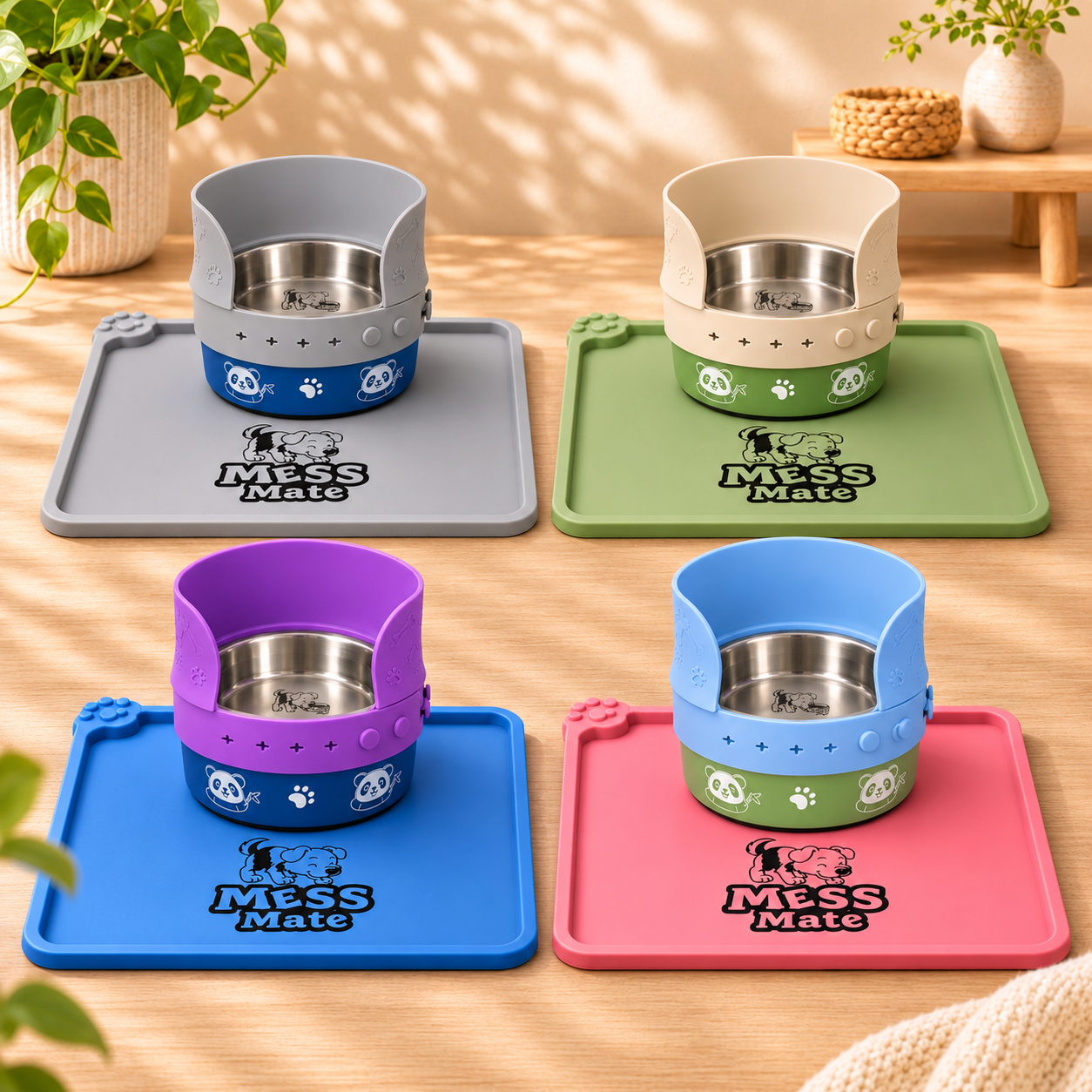
Put the water bowl on a non-slip surface so it stays where you set it. A silicone mat with a raised edge catches the water that does get out, which makes cleanup a quick wipe or rinse instead of a mop job. Our silicone pet feeding mat is built for exactly that job, and it is dishwasher safe on the top rack.
2. Do not overfill
A bowl filled to the brim gives a pawing dog more to throw. Filling to a moderate level and topping up more often, if you are home, means less water to slosh around. Make sure there is always enough water for your dog, though. Never limit drinking water to solve a mess problem.
3. Choose a stable bowl
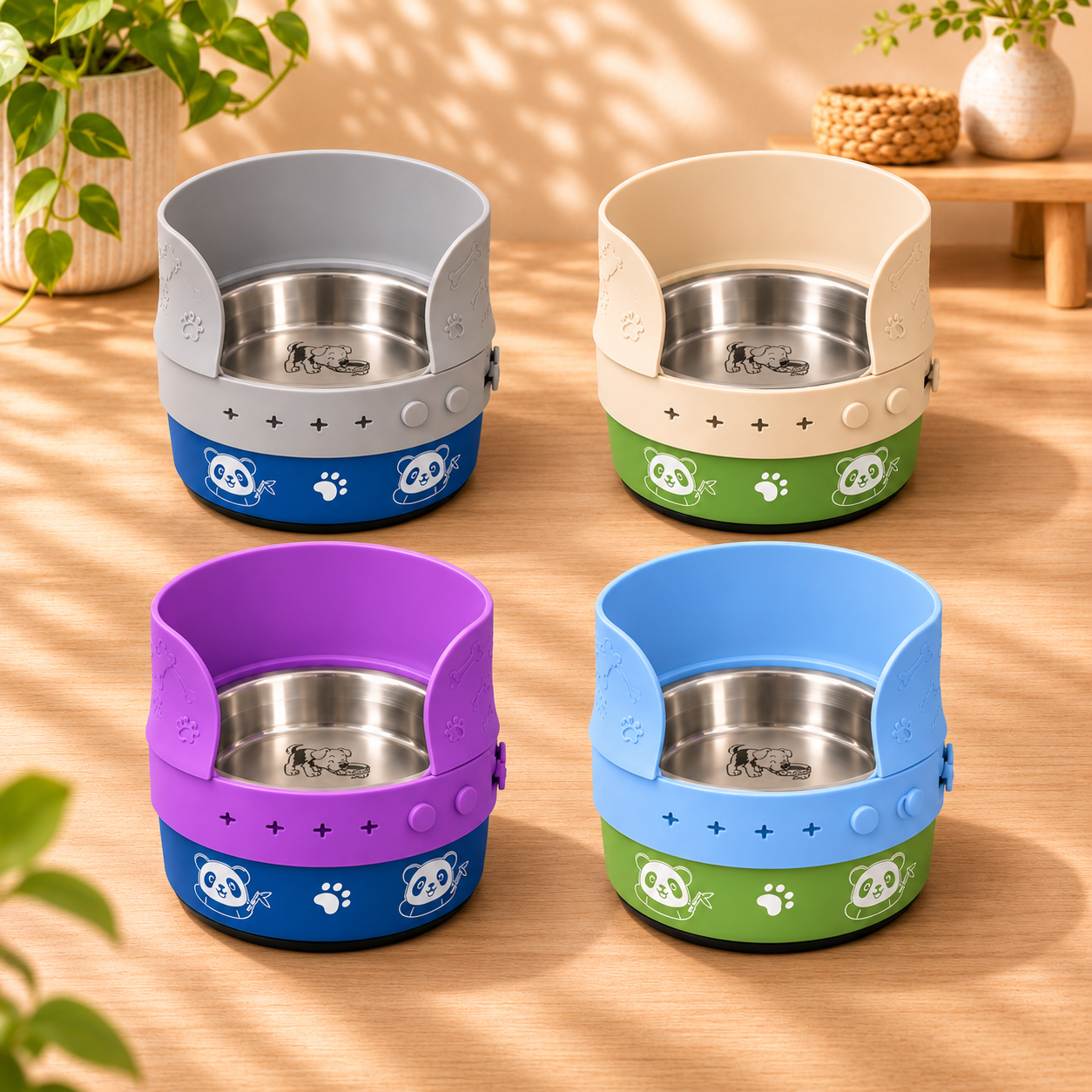
A bowl with some weight and a grippy base is harder to tip or push. Stainless steel is a popular choice because it is durable and easy to clean, and MessMate's stainless steel and silicone pieces are food-grade and dishwasher safe on the top rack.
4. Add a splash guard for the water that does fly
This is where we want to be honest. A splash guard will not stop a dog from digging in the water or standing at the bowl. What it does is act as a wall: the MessMate guard has a 3-inch silicone wall that clips around the outside of a round bowl with its strap, so water that gets flicked or sloshed over the edge is more likely to land back in the bowl or against the wall instead of on your floor. It is designed for medium to extra-large dogs, and it fits round bowls that are 7 to 9 inches across the top opening. It is not suited to bowls smaller than 7 inches or larger than 9 inches, and the guard sold on its own does not include a bowl.
If you would rather not measure, the bowl and splash guard set pairs the two so the sizes already match. If you want the whole setup in one go, look at the complete mealtime set, which adds the mat. Not sure about your current bowl? The fit guide walks you through measuring it.
5. Offer a better outlet
If your dog loves water play, give them a place for it that is not the drinking bowl: a shallow pan outside, a sprinkler on a hot day, or a plastic paddling pool, supervised. Many dogs are satisfied once they have a proper splashing spot.
Keep expectations realistic
Habits take time to shift. A mat, a stable bowl and a guard can shrink the mess a lot, but they do not change why your dog is interested in the water. Pair the setup changes with patience, calm reactions and plenty of other activity, and the habit often fades or at least becomes much easier to live with.
A simple routine that helps
- Fill the bowl to a moderate level and place it on the mat.
- Keep the area clear of foot traffic so the bowl is not constantly bumped.
- Wipe the mat and guard at the end of the day, and run them through the top rack of the dishwasher when they need a deeper clean.
- Refresh the water so your dog always has plenty of clean water to drink.
If you want more ideas for the water side of things, our post on why dogs splash water out of the bowl goes deeper on the splashing itself. MessMate ships free within the U.S., offers 30-day returns, and donates to animal-rescue groups in memory of Spud.