If you live with a bulldog, boxer, mastiff-type or another flat-faced dog, you probably know the mealtime routine well: snuffling, nudging, kibble scattered in a wide arc, and a muzzle that somehow ends up wearing half the meal. Short-nosed breeds do not eat the way long-muzzled dogs do, and the bowl that suits a retriever may not suit them. Here is how to think about setup, with a few honest cautions along the way.
Why flat-faced dogs can be messier eaters
The shape of a short muzzle changes how a dog picks up food. Instead of scooping with a longer snout, many flat-faced dogs push, mash and snuffle food around the bowl. Loose skin, jowls and wrinkles can also catch food and water, which then drip or get wiped on the floor.
Not every short-nosed dog is the same. Some eat neatly and some make a spectacle of every meal, so watch your own dog before changing anything.
A note about health and breathing
Many flat-faced breeds can have breathing challenges, and mealtime can sometimes bring on noisy breathing, coughing, gagging or regurgitation. We are a feeding-gear company, not a veterinary source, so we will not tell you how to feed for a medical issue. If your dog struggles to breathe while eating, gags often, vomits after meals or seems uncomfortable, please talk to your veterinarian. They can advise on feeding position, portion size and pacing for your individual dog.
Choosing a bowl shape
For short-nosed dogs, the bowl itself is often the biggest lever.
- Width. A bowl that is too narrow can bump against the muzzle and push food out. A wider opening gives the face room.
- Depth. A shallow bowl can make food easier to reach, while a deep one can force a flat face to press hard against the sides. Many owners find a moderately shallow, wide bowl works better, though some dogs differ.
- Weight and base. Dogs that push their bowls need something stable. A bowl that slides makes everything messier. Our post on bowls that slide across the floor has ideas.
For a broader comparison of what works for messy eaters, see best dog bowl for messy eaters.
Where a splash guard fits, and where it does not
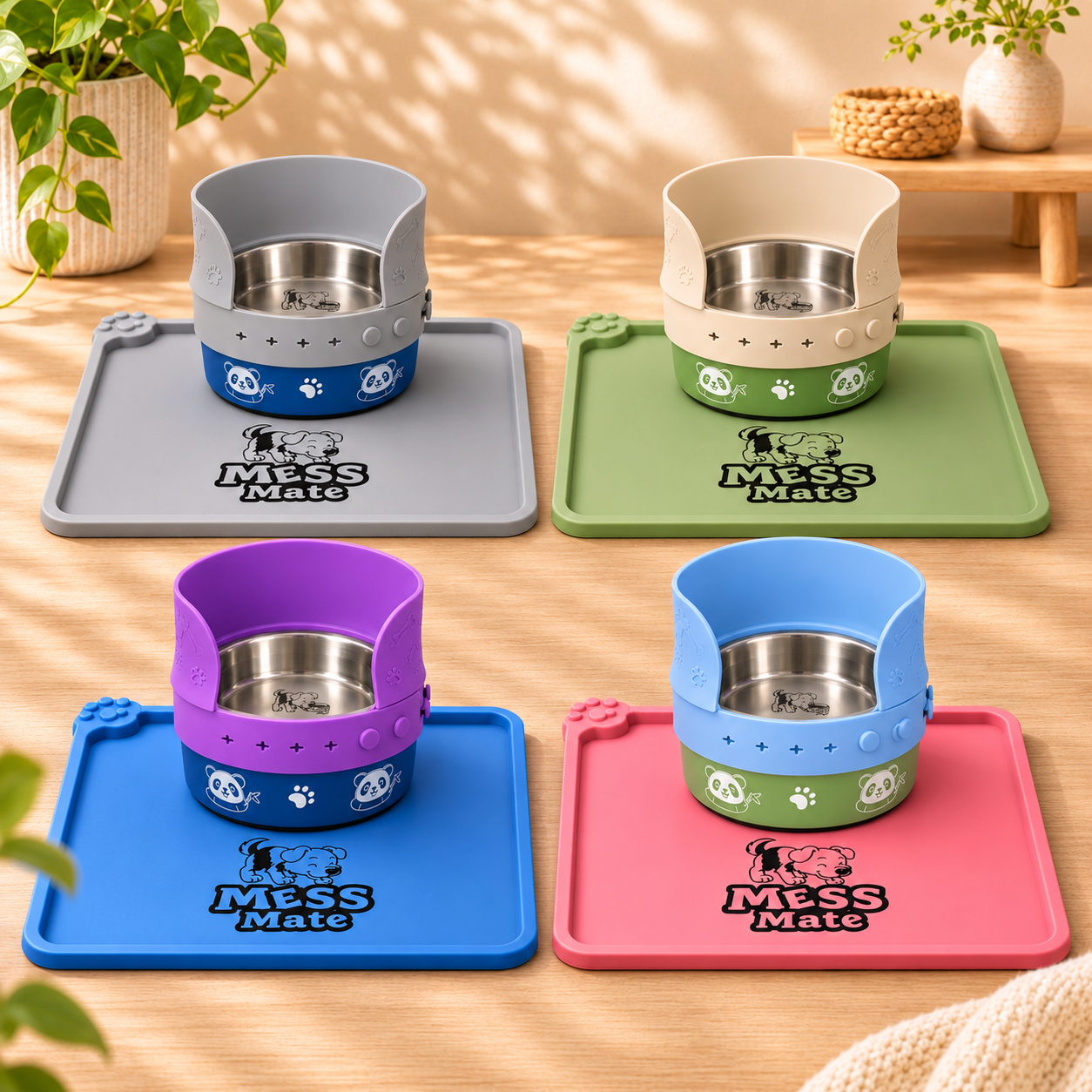
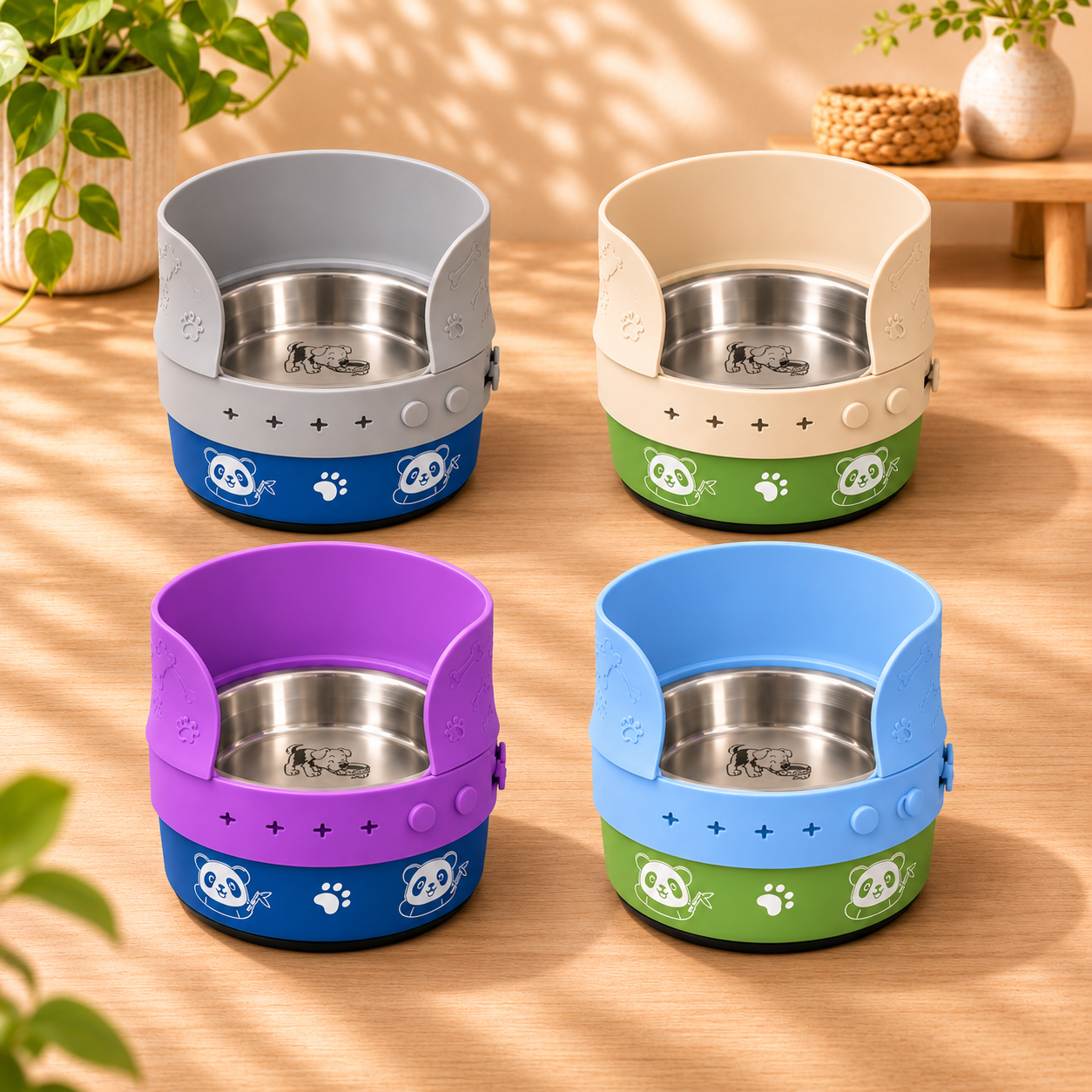
A splash guard sits around the bowl and acts as a wall, catching water flung from the bowl and kibble that gets pushed outward. For a dog that scatters food in every direction, that wall can contain a lot.
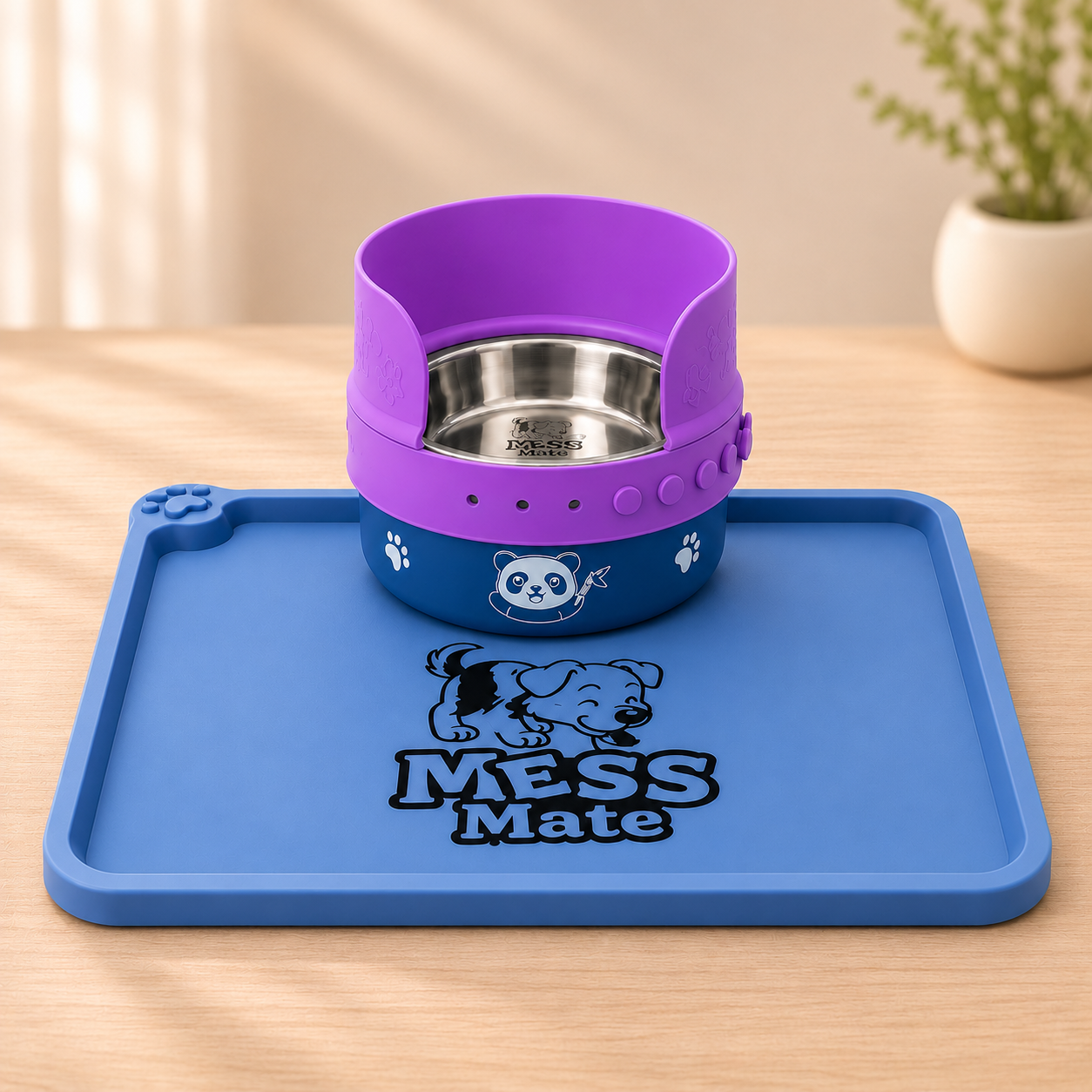
It is important to be accurate about sizing. The MessMate splash guard fits round bowls 7 to 9 inches across the top opening and has a 3-inch silicone wall. It clips around the outside of the bowl with its strap. It is meant for medium to extra-large dogs and large cats, and it is not suited to bowls under 7 or over 9 inches. Some flat-faced breeds are medium-sized, such as bulldogs, and may suit it, while smaller ones such as many pugs and Boston terriers are likely better matched to other solutions. Check your bowl width on the fit guide before ordering. If your bowl falls outside the range, what to do when a splash guard will not fit offers alternatives.
The guard sold alone does not include a bowl. For a ready-made pairing, look at the bowl and splash guard set. It will not change how fast your dog eats, and it will not address any breathing or medical issues.
Use a mat for what lands outside the bowl
Even with a guard, a flat-faced dog may flick bits out of reach. A silicone mat catches what escapes and protects the floor, and it is easy to wipe or put through the top rack of the dishwasher. The complete mealtime set combines bowl, guard and mat, which is a tidy starting point for a dog that makes broad messes.
Handling the face cleanup
The bowl is only half the story. Dogs with wrinkles and jowls can trap food and moisture in folds, and our article on messy-faced dogs at mealtime covers wiping routines. Some practical habits:
- Keep a soft, clean cloth near the feeding area.
- Wipe the face after meals, paying attention to folds, and dry them well.
- Ask your veterinarian about skin-fold care if you see redness, odor or irritation.
Stainless steel versus other materials
Many owners like stainless steel because it is easy to clean and does not hold odors the way some plastics can. If your dog has skin sensitivities, check with your vet before choosing materials. For a comparison, see stainless steel, plastic and ceramic dog bowls.
Quick setup checklist
- Pick a wide bowl with a depth your dog can reach comfortably.
- Make sure the bowl does not slide on your floor.
- Add a mat under the whole feeding area.
- Consider a splash guard only if your bowl is round and measures 7 to 9 inches across.
- Wipe and dry facial folds after eating.
- Call your veterinarian about any breathing difficulty, gagging or vomiting.
The takeaway
Flat-faced dogs eat differently, and a little adjustment to bowl shape, stability and floor protection can make mealtime much tidier. Keep expectations realistic: gear contains mess, but it does not solve medical concerns. Browse complete feeding sets if you would like a bowl, guard and mat that work together.