You unroll a new feeding mat, set the bowl on top, and a few days later the corners are lifting like the pages of an old book. Curled edges are annoying for a practical reason: a mat that does not lie flat lets water and crumbs slide underneath, and it becomes a tripping and sliding hazard for you and your pet. The good news is that curling is common, usually fixable, and often preventable.
Why feeding mats curl
Almost any flexible mat can curl at some point, whether it is silicone, rubber or fabric-backed. The usual causes are:
- Storage or shipping shape. A mat that spent time rolled or folded in a box tends to remember that shape.
- Uneven weight. If the bowl sits in the center and nothing holds the corners, the edges are free to lift.
- Moisture underneath. A damp underside or a damp floor can make a mat cling in some spots and lift in others.
- Temperature changes. Flexible materials can relax or stiffen with heat and cold, so a mat near a sunny window or a heating vent may behave differently from one in a cool corner.
- Pets. Dogs and cats paw, nudge and sometimes chew at mat edges, which encourages them to lift.
Material matters too. If you are comparing options, our article on silicone, rubber and fabric feeding mats covers how each one tends to behave.
Step one: give it a fresh start
Before trying anything clever, wash the mat and let it dry completely. Silicone and stainless steel pieces from MessMate are food-grade and dishwasher safe on the top rack, though a quick hand wash with warm water and dish soap works well too. Residue and film can make the underside grip unevenly, so a clean mat often lies flatter than a grimy one. Our guide to cleaning silicone pet gear has tips for greasy residue.
Step two: lay it flat and let it rest
Place the clean, dry mat on a flat, clean, dry floor and let it sit in a normal room-temperature spot for a day. Put a few light, clean, flat objects on the corners if needed, such as clean books wrapped in a towel, and make sure nothing heavy or sharp is pressed into the surface. Many mats relax noticeably after a day or two of lying flat, especially after being rolled in a box.
Check the care instructions that came with your mat before using heat of any kind. Hot cars, direct sun and radiators are best avoided unless the manufacturer says otherwise, since high heat can affect some materials.
Step three: fix the setup, not just the mat
If a mat flattens at night and lifts again by the next day, the cause is probably how it is used. Try these adjustments:
- Center the bowl properly. The weight of the bowl, and the splash guard if you use one, helps hold the middle of the mat down.
- Choose the right mat size. A mat that is too large for the space can ride up against baseboards or table legs. Our guide to choosing a feeding mat size walks through measuring.
- Wipe the floor underneath. Dust, pet hair and moisture reduce grip. A quick wipe before you put the mat down can help.
- Keep it away from heat sources. Move it away from vents, fireplaces and sunny windows if you can.
What if the mat slides instead of curls?
Sliding and curling often show up together. If your bowl or mat travels across the floor at mealtime, our article on why dog bowls slide covers grip, floor type and bowl weight. Hard, smooth floors like tile and vinyl are the most likely to let things move, and feeding on different floor types explains what each surface needs.
When a mat is past saving
If a mat stays stubbornly curled after cleaning, resting and a better setup, or if it develops cracks, tears, a persistent odor or chewed edges, it is time to replace it. A chewed mat is a safety concern: if your pet is swallowing pieces, stop using it and talk to your veterinarian. Replacing a worn mat is better than leaving a damaged one in the feeding area.
Prevention habits that help
- Store the mat flat, or hang it, rather than tightly rolled for long periods.
- Rotate between two mats if you have a spare, so each one gets time to dry and rest. The same idea applies to bowls, as explained in our post on rotating a second set of bowls.
- Dry the mat fully after washing before putting it back down.
- Check under the mat each week for moisture or grime, since a musty smell can start in unseen places. See grime and musty smells under bowls and mats for what to look for.
An honest note about mats and mess
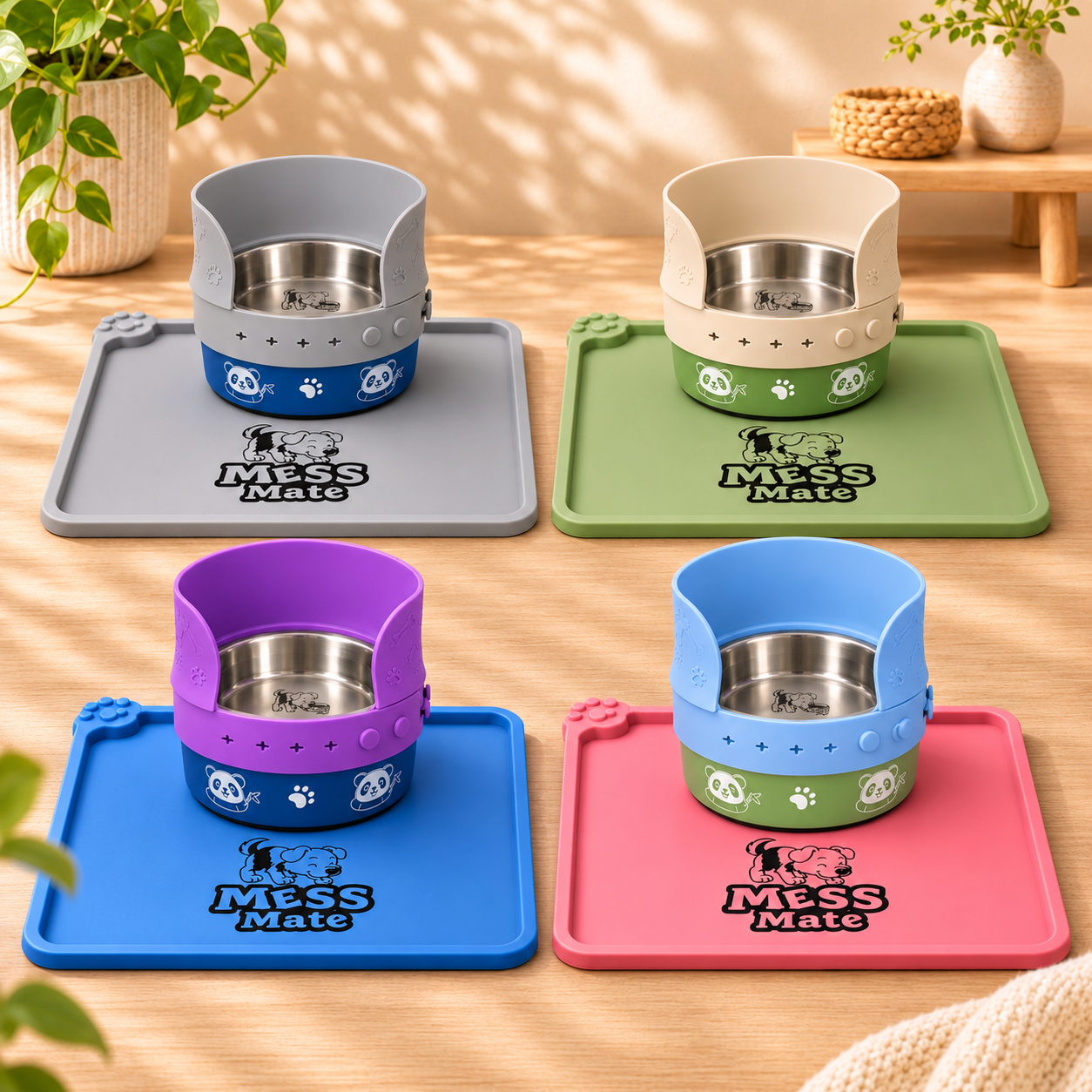
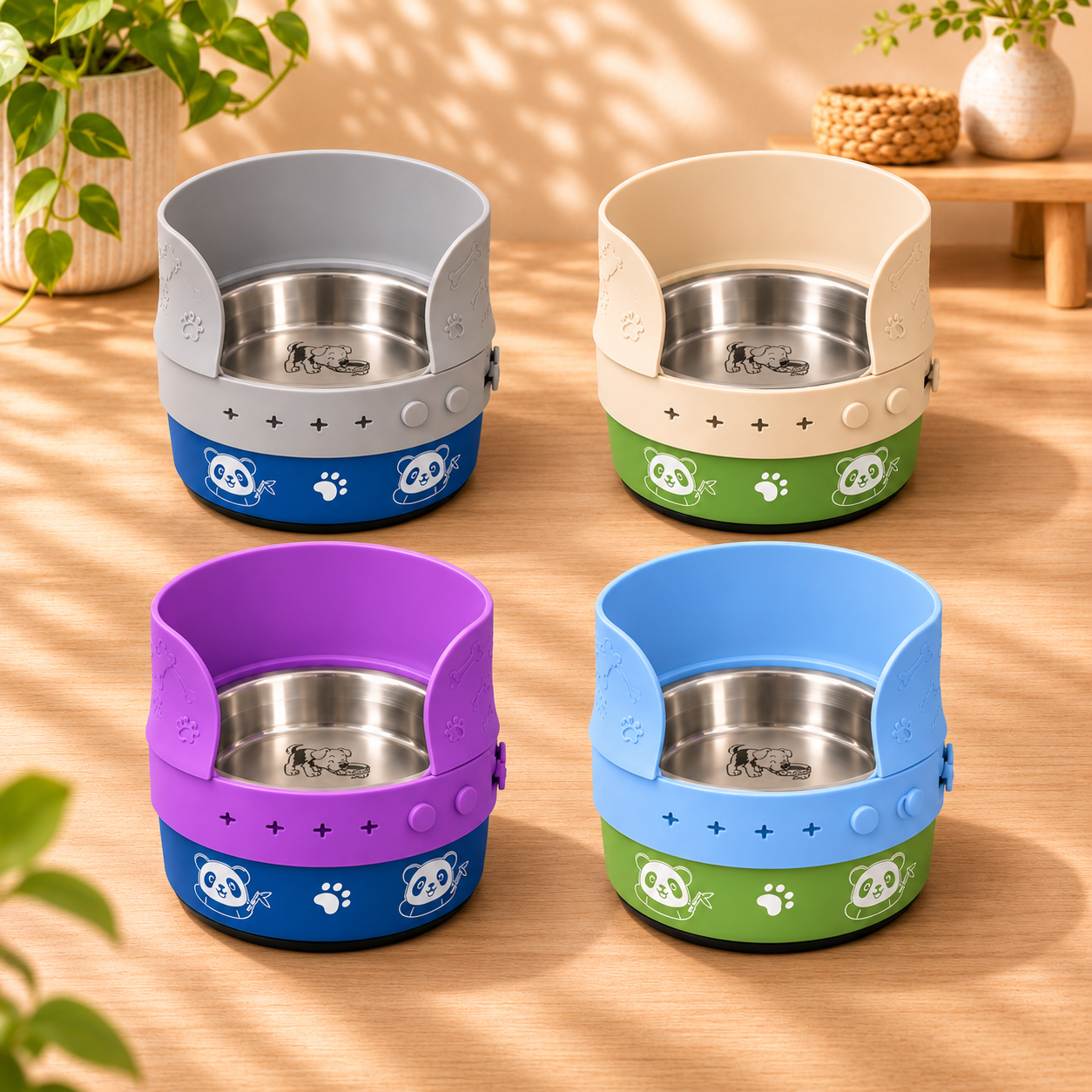
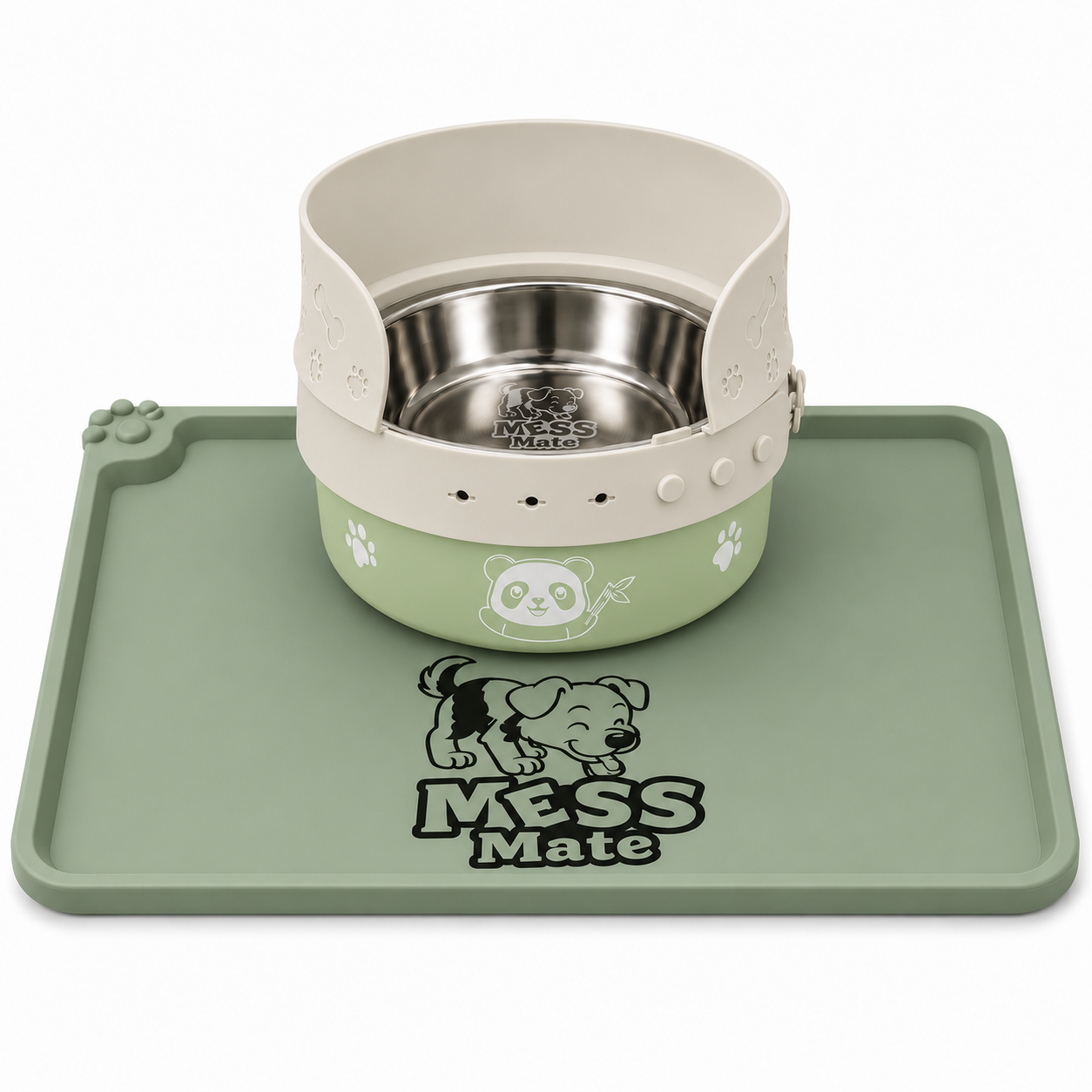
A feeding mat protects the floor and gives the bowl a defined spot, but no mat can stop a dog from flicking water or kibble beyond its edges. A mat works best as part of a setup. The MessMate silicone feeding mat is designed for the floor-protection part of that job, and the complete mealtime set combines it with a bowl and splash guard. You can also browse the anti-mess feeding mats category.
Summary
Curled edges usually come from storage shape, uneven weight, moisture or temperature. Clean the mat, let it rest flat, center the bowl, and fix the surface underneath. If it still will not behave, replace it. A flat mat is worth the small effort, because it keeps meal mess where you can wipe it up.