Walk down any pet aisle and bowls come in a confusing range of sizes, often labeled with vague words like "medium" or "large." If you have ever poured a meal into a bowl and watched kibble tumble over the edge, or bought a bowl so wide it took over half the kitchen, you already know that size matters. This guide walks through how to choose a dog food bowl that suits your dog, your meal portions and your floor space.
Why bowl size affects mess
A bowl that is too small forces food to pile up, so kibble gets pushed over the rim every time your dog noses around for the last bites. A bowl that is too large can spread food thin, which some dogs chase around the floor. Neither is a disaster, but the right size makes mealtime calmer and cleanup shorter.
Size is not just about volume. Three separate measurements matter, and they behave differently.
The three measurements that matter
1. Width across the top opening
This is the distance across the widest part of the opening, from one inner edge to the other. It decides how much room your dog's muzzle has and how far food can scatter. It is also the number that matters for any accessory you want to add, such as a splash guard. Our guide on how to measure your dog's bowl shows the simple way to take it.
2. Depth
Depth controls how food and water sit inside the bowl. A deeper bowl holds more and keeps kibble from sliding out, but a very deep bowl can be awkward for a dog with a long face or for a dog that is older and stiff. A shallower bowl is easier to eat from but gives food less protection from flicking and pushing.
3. Capacity
Capacity is how much the bowl actually holds, and manufacturers measure it in different ways, sometimes to the brim and sometimes to a sensible fill line. You rarely need to fill a bowl to the top, so look for capacity that comfortably exceeds one meal.
Matching the bowl to your dog's meal
Here is a practical test that does not require any special numbers. Measure out one normal meal in your scoop or measuring cup, pour it into the bowl, and look at the result:
- If the food reaches close to the rim, the bowl is too small for that meal.
- If the food fills roughly the lower half to two-thirds of the bowl, you have comfortable headroom.
- If the food looks lost in the bottom of a huge bowl, the bowl may be larger than you need for dry food, though it can still suit water.
Remember that wet food, toppers and added water take up extra room. If you mix in extras, test with the full mix. Your veterinarian can tell you how much your dog should eat; bowl size is only about fitting that amount comfortably.
Food bowls and water bowls need different thinking
Water bowls benefit from being larger and heavier than food bowls, because dogs often drink in big gulps and a lightweight bowl slides or tips. A wide water bowl is easier to refill less often, but a wide, shallow one also splashes more easily when a dog drinks with enthusiasm. If water on the floor is your main complaint, our article on a no-spill dog water bowl covers the options, and why dogs splash water out of the bowl explains what is going on.
Sizing for your dog's breed and build
Dog size is a rough guide, not a rule. Two dogs of the same weight can eat very differently, one with a long narrow muzzle and another with a broad flat one. As a general starting point:
- Medium dogs usually do well with a bowl that gives their muzzle room without sprawling across the floor.
- Large and extra-large dogs tend to need wider bowls with enough depth that food stays put when they eat enthusiastically. Our large-breed feeding guide goes deeper on this.
- Dogs with short, flat faces often do better with shallower bowls where they can reach food easily.
Watch your own dog eat. If your dog has to tilt their head awkwardly, or keeps pushing the bowl to reach the last bites, that is useful information about size and shape.
How bowl size affects splash guard fit
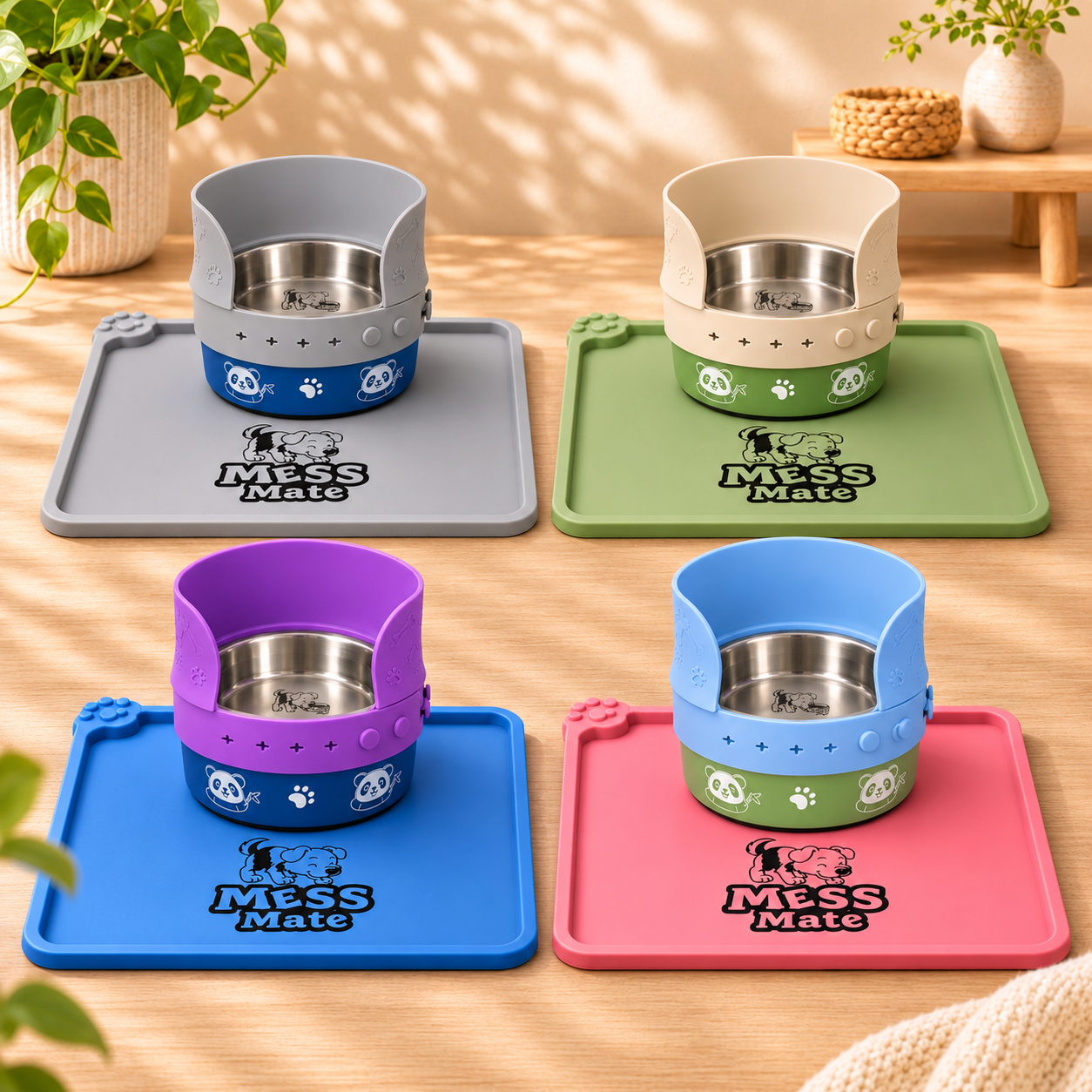
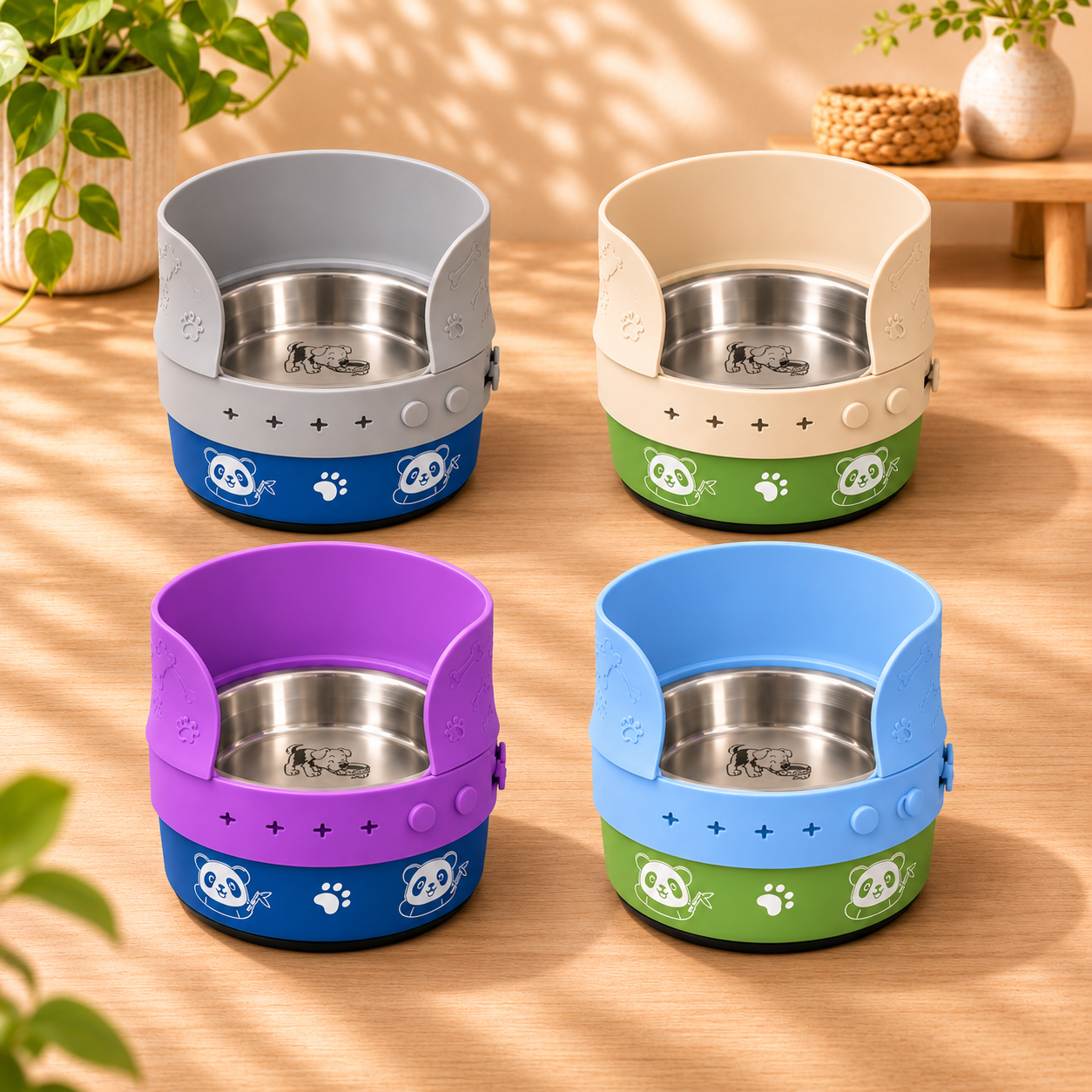
If you plan to add a splash guard, the width of your bowl becomes a hard requirement rather than a preference. The MessMate splash guard fits round bowls that measure 7 to 9 inches across the top opening. It has a 3-inch silicone wall and clips around the outside of the bowl with its strap. It is not suited to bowls under 7 inches or over 9 inches, and it is designed for medium to extra-large dogs and large cats rather than small or toy breeds.
Two other things are worth knowing. The splash guard sold on its own does not include a bowl, so you will need a bowl in the right size range. And the guard helps contain splashes and scattered kibble; it will not change how fast your dog eats or how they behave at mealtime.
If you would rather not measure at all, the bowl and splash guard set pairs a bowl with a guard that fits it, and the complete mealtime set adds a feeding mat. If you already own a bowl, check the fit guide first, then look at the bowls and splash guards page.
A quick bowl-sizing checklist
- Measure the top opening across the widest point.
- Pour one real meal into the bowl and check the headroom.
- Pick a depth that suits your dog's face and age.
- Choose a heavier water bowl than you think you need.
- If you want a splash guard, confirm the bowl is round and between 7 and 9 inches wide.
- Check that the bowl and any accessories are dishwasher safe, on the top rack, for easy cleaning.
The bottom line
The best dog bowl is one that fits the meal, fits your dog's face and fits your floor. Spend two minutes measuring and testing with a real portion, and you will likely avoid both the overflowing bowl and the oversized one. If mess is the main problem, size is only one piece of the puzzle, so it is worth reading how a complete feeding set brings the bowl, guard and mat together.