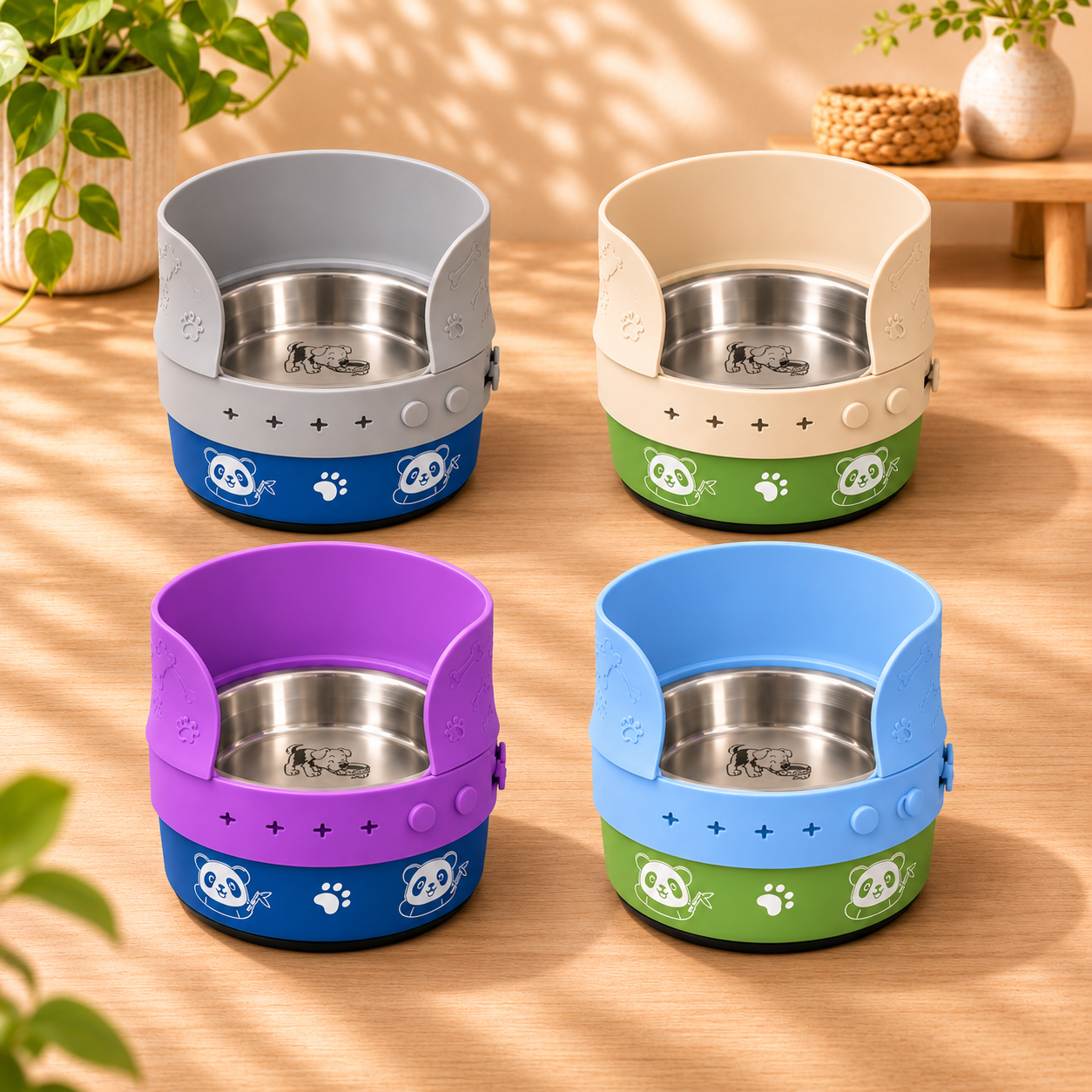
If your dog flings kibble across the kitchen or turns every drink into a puddle, you have probably wondered whether a different bowl would fix it. The honest answer: the right bowl helps, but it rarely solves the problem on its own. Here is what to look for, and what to add when the bowl is not enough.
Why messy eaters make messes in the first place
Most bowls are open on every side. Food and water have nowhere to go except where your dog's mouth pushes them. Enthusiastic eaters shove the bowl, scoop food with their tongue, carry mouthfuls away to eat elsewhere, or drip water as they lift their heads. A bowl cannot change those habits, but its design can decide how much of the result lands on your floor.
Features worth paying for
1. A non-slip base
A bowl that slides is a bowl that spills. Look for a rubber or silicone ring on the bottom, or a heavier build, so the bowl stays put while your dog eats. Chasing a bowl across tile is the first step to a bigger mess.
2. Stainless steel over plastic
Stainless steel does not scratch as easily as plastic, which means fewer tiny grooves where bacteria and old food can hide. It is also easy to wash and holds up to daily use. Our guide to the best stainless steel bowl for dogs and cats covers what to check before you buy.
3. The right size and shape
A bowl that is too shallow lets food fly out; one that is too deep can frustrate a dog that has to dig for it. Match the bowl to your dog's muzzle and portion size. A wider opening is easier to eat from, but it also gives splashes more room to escape, which is where walls come in.
4. Something that raises the edge
This is the biggest change you can make. A bowl with high sides, or a splash guard that adds a wall around part of the rim, stops kibble and water from leaving the bowl when your dog pushes or shakes. That single difference is what separates a tidy meal from a wipe-the-wall meal.
Where a bowl alone falls short
Even a good bowl leaves the area around it exposed. Water drips from your dog's chin, and kibble still gets nudged over the rim. That is why many owners pair the bowl with two simple additions.
- A splash guard to keep food and water inside the bowl. Read why dogs splash water out of the bowl for the causes and fixes.
- A waterproof feeding mat to catch what still escapes and protect the floor.
A set that is designed to work together
If you do not want to measure and match separate pieces, a matched set removes the guesswork. The MessMate bowl and splash guard set pairs a non-slip stainless steel bowl with a guard sized to fit it, and the complete mealtime set adds a silicone feeding mat. You can browse all of them in the complete feeding sets collection.
Already have a bowl you like? The MessMate splash guard fits round bowls from 7 to 9 inches across the top opening. Use our fit checker or read how to measure your dog's bowl. If your bowl is smaller or larger than that range, the guard will not seat securely, and a set is the better choice.
Quick checklist
- Non-slip base so the bowl stays in place
- Stainless steel for easy, thorough cleaning
- A size that suits your dog's muzzle
- A raised edge or splash guard to keep food and water in
- A mat underneath for whatever still escapes
The bottom line
The best dog bowl for a messy eater is one that stays put, is easy to clean, and has walls that keep food and water inside. Start with a sturdy non-slip bowl, add a guard, and put a mat underneath. That combination handles most messes without changing how your dog eats.