If you are shopping for pet feeding gear, you will see silicone everywhere: mats, splash guards, collapsible travel bowls and bowl bases. A common question follows quickly: is silicone safe for dogs and cats? This guide explains what "food-grade" generally means, what you can check as a shopper, how to care for silicone gear and where your veterinarian should be your first call. We are a pet accessories brand, not a lab or a regulator, so we will stick to practical points and be clear about what we cannot promise.
What is silicone, in plain terms?
Silicone is a flexible, rubber-like material used in everything from baking mats to kitchen tools. It is soft, holds its shape, does not rust and tends to wipe clean easily. Those qualities are why it works well for feeding mats and splash guards that need to bend, grip and survive daily washing.
Silicone is not the same thing as plastic or natural rubber, although people often lump them together. If a product listing is vague about what a feeding item is made from, that is worth noticing.
What "food-grade" means for shoppers
"Food-grade" is a label manufacturers use to say a material is intended for contact with food. Exactly what that claim is based on depends on the maker and the market where it is sold. For a shopper, a useful approach is to treat it as a starting point and then look for supporting details:
- Is the material named? A listing that says "food-grade silicone" and describes the product clearly is more helpful than one that only says "safe."
- Does the maker say how to clean it? Clear care instructions are a good sign.
- Is there a way to contact the seller? You should be able to ask questions about materials and get an answer.
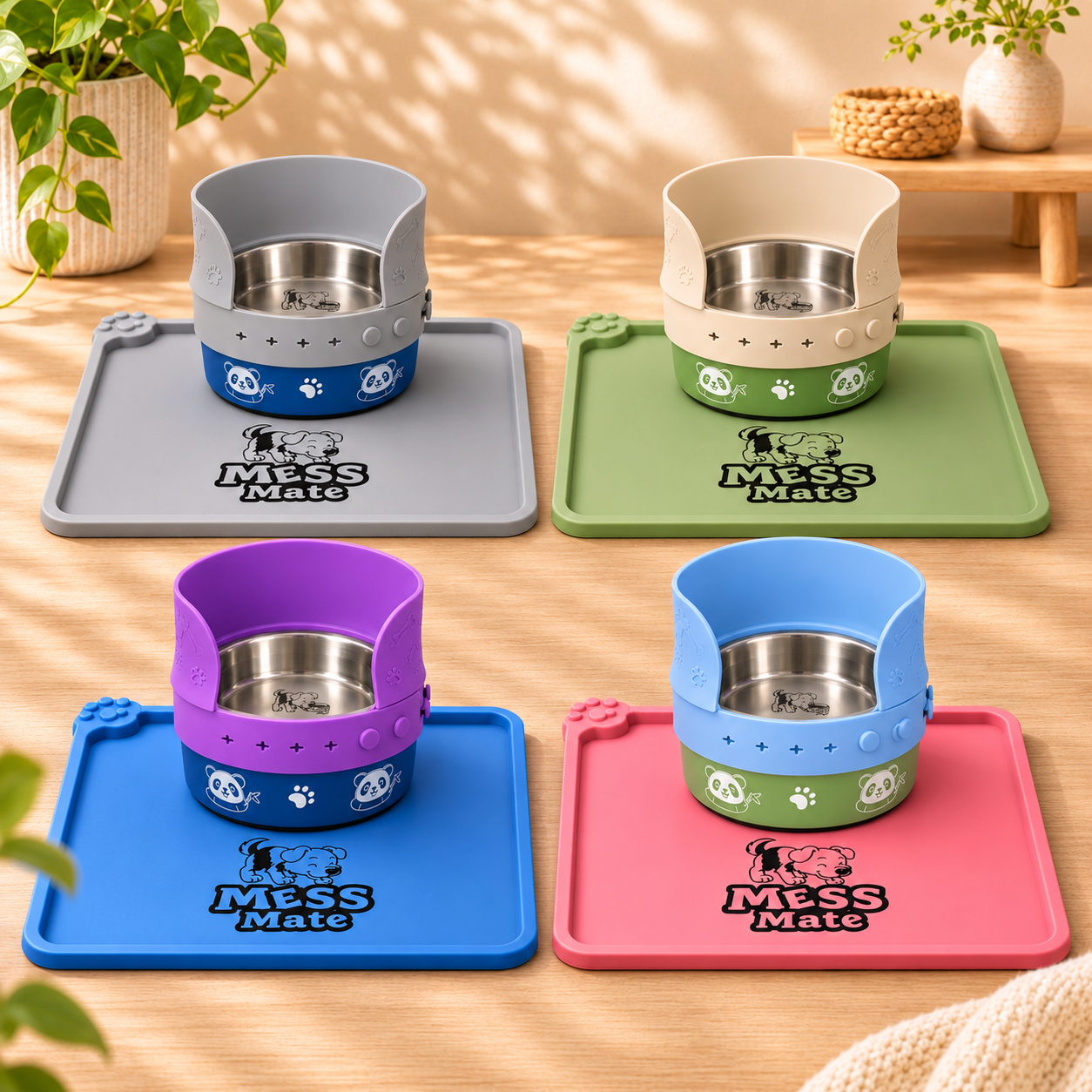
MessMate's silicone and stainless steel pieces are food-grade and dishwasher safe on the top rack. If you have questions about a specific product, our FAQ page is the place to start.
What silicone feeding gear is designed for, and what it is not
This is where a lot of misunderstanding happens. A silicone mat or splash guard is designed to sit under or around a bowl. It is not designed to be chewed, eaten or used as a toy.
Watch your pet at first
Some dogs and puppies chew anything soft. If your pet tries to chew, tug or swallow pieces of a mat or guard, remove it and supervise future meals. Swallowing non-food items can be dangerous, and any time you are worried your pet has eaten something they should not have, call your veterinarian or an emergency animal hospital right away.
Use the right size
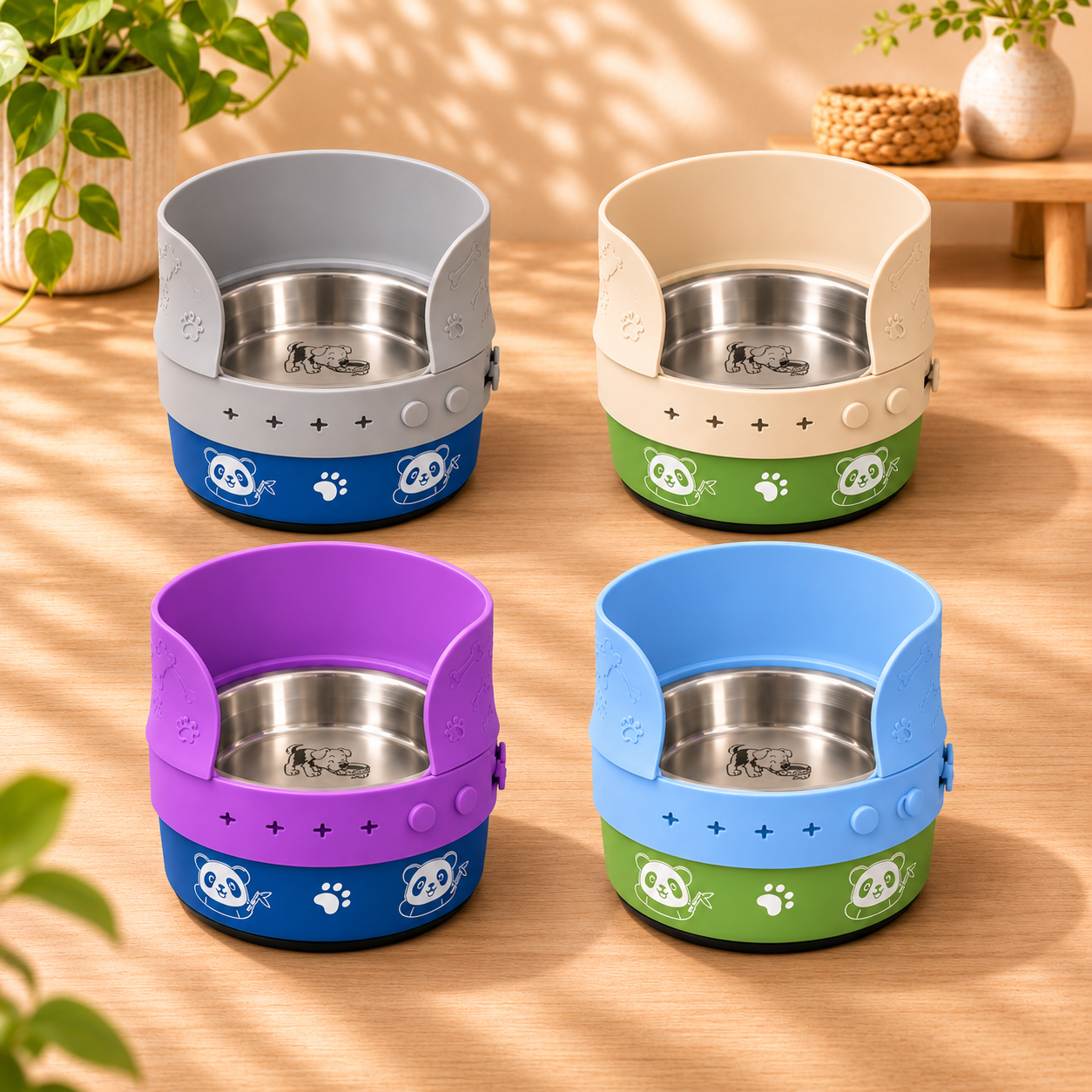
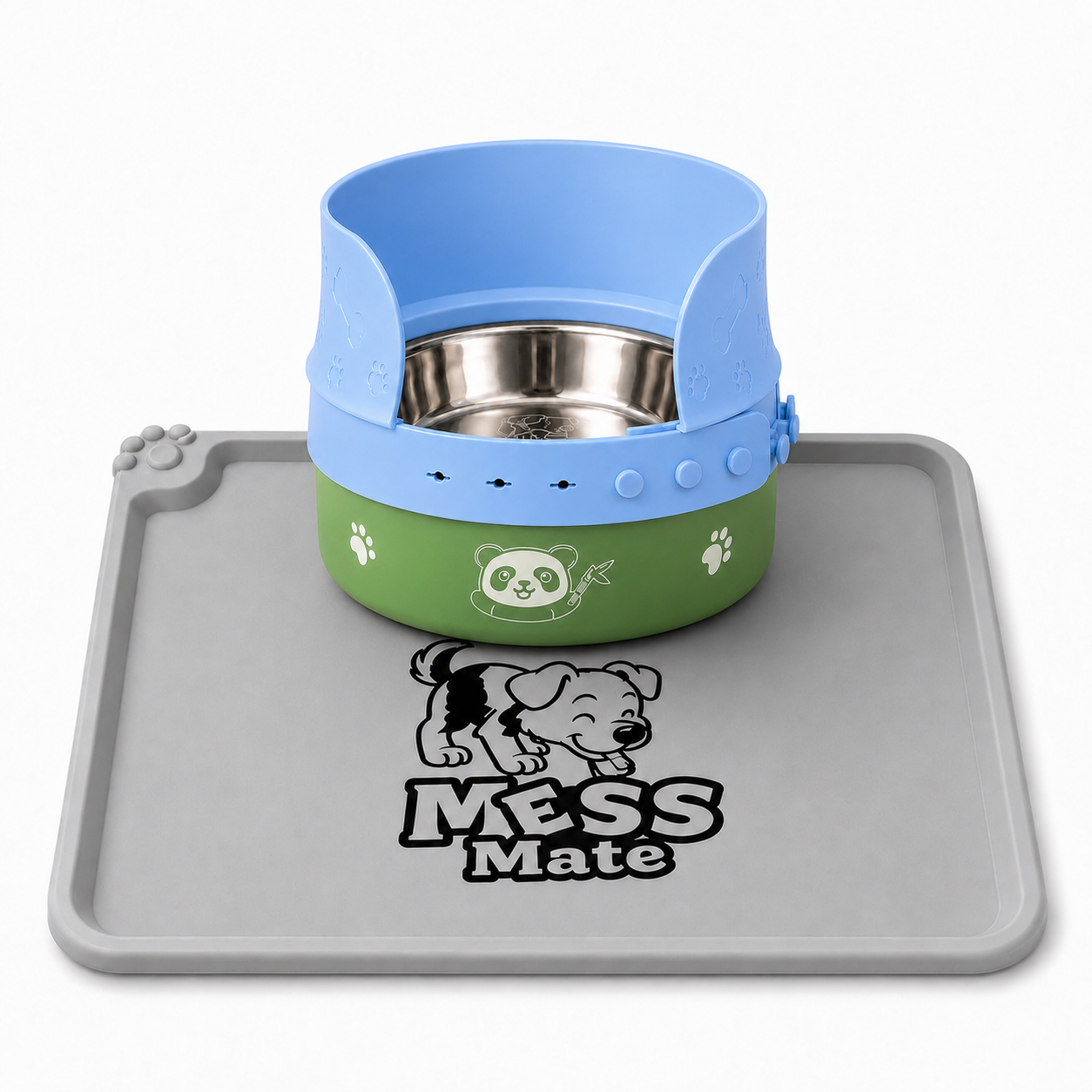
MessMate's splash guard is made for medium to extra-large dogs and large cats, and it fits round bowls 7 to 9 inches across the top opening. It clips around the outside of the bowl with its strap and has a 3-inch silicone wall. It is not suited to bowls under 7 or over 9 inches, and the guard sold alone does not include a bowl. A poor fit is not just inconvenient; it can leave the guard loose, which makes it easier for a curious pet to pull at it. Use the fit guide to check before you buy, or choose the dog bowl and splash guard set to avoid measuring.
Silicone versus other bowl materials
Many owners use a combination: a stainless steel bowl for the food or water, with silicone doing the containment job around it. That is the thinking behind most MessMate sets. Stainless steel is rigid, easy to sanitize and does not hold onto odors the way some soft materials can. You can read more about the pros and cons of each in our comparison of stainless steel, plastic and ceramic dog bowls, and see the full lineup of stainless steel bowls.
How to keep silicone clean
Silicone can hold onto grease and odors if it is not washed regularly. A simple routine helps:
- Rinse the piece after meals to remove loose food.
- Wash with warm water and dish soap, or put it on the top rack of the dishwasher if the maker says it is dishwasher safe.
- Rinse well and let it dry completely before reuse.
- Check for cracks, tears or deep scratches during cleaning. If a piece is damaged, replace it.
For stubborn odors or a greasy film, our guide on how to clean silicone pet bowls, guards and mats goes through step-by-step options. If you are curious about machine washing, read can dog bowls go in the dishwasher?
Questions to ask before you buy any pet product
- What exactly is it made from, and is that stated clearly?
- Is it intended for contact with food or water?
- What are the cleaning and care instructions?
- What sizes and pets is it designed for?
- What is the return policy? MessMate offers 30-day returns, and orders to U.S. addresses ship free.
When to ask your veterinarian
If your pet has allergies, skin sensitivity, a history of eating non-food items or any medical condition, ask your veterinarian whether any particular material or product is appropriate. We cannot assess an individual pet's health, and what is suitable for one animal may not be for another.
A note on why we make this
MessMate started with a simple goal: help owners deal with everyday mealtime mess. We also donate to animal-rescue groups in memory of Spud, and that connection to real animals is part of why we try to be straightforward about materials, sizes and limits.
Bottom line
Silicone is a widely used material that works well for mats and guards because it is flexible and easy to wash. Look for clear material information, follow the care instructions, choose the right size, supervise pets who chew and talk to your veterinarian if you have specific health concerns. If you want a coordinated setup, browse the complete feeding sets.