Most mealtime mess is blamed on the bowl, but a lot of it starts earlier: at the food bin, the scoop and the trip across the kitchen. Kibble bounces off the rim of the bowl, dust collects at the bottom of the bag, and a quick pour turns into a scatter of crumbs. This guide covers simple storage and scooping habits that keep the feeding area cleaner before the food even reaches your pet's bowl.
Start with the storage container
How you store food affects both mess and day-to-day convenience. A few practical points:
- Pick a size that matches your supply. A container that is much bigger than the bag makes scooping awkward, because the food sits low and your hand or scoop has to reach deep.
- Choose an opening you can use one-handed. If you are holding a bowl in the other hand, a lid that is hard to remove leads to spills.
- Keep it on a stable, wipeable surface. A shelf, a low cabinet or a mat under the container keeps crumbs from getting lost on the floor.
For food safety and freshness, follow the storage directions printed on your pet food's packaging, and check with your veterinarian if you have questions about how long a particular food should be kept. We are not going to make claims about shelf life here, because it varies by brand and formula.
Deal with the dust
The crumbs and powder that settle at the bottom of a bag or bin can end up in the bowl and on the floor. A few habits help:
Do not pour the last bit straight into the bowl
The very bottom of a bag often has the most fine pieces. Some owners set that portion aside and mix it into meals gradually, or tip it into a separate small container. Whatever you choose, it keeps the dust from landing in a puff around the bowl.
Wipe the bin between refills
When the container is nearly empty, wipe it out with a dry or barely damp cloth, let it dry fully, then refill. Moisture in a food container is something you want to avoid, so make sure it is completely dry first.
Choose a better scoop
A scoop is a small thing that makes a big difference. Look for one that:
- Has a lip or curved edge so kibble does not slide off the sides.
- Holds a size you can level easily, so you pour fewer extra pieces.
- Is comfortable to hold, because a scoop that wobbles in your hand spills more.
If you measure portions with a cup, level it over the container rather than over the bowl, so the extra pieces fall back into the bin.
Pour low and slow
Dropping kibble from a height makes it bounce. Instead:
- Hold the bowl on the floor or on the counter, not in the air.
- Tip the scoop so the food slides in at a shallow angle.
- Stop when the bowl is about two-thirds full, if your pet's portion allows, so there is room before food reaches the rim.
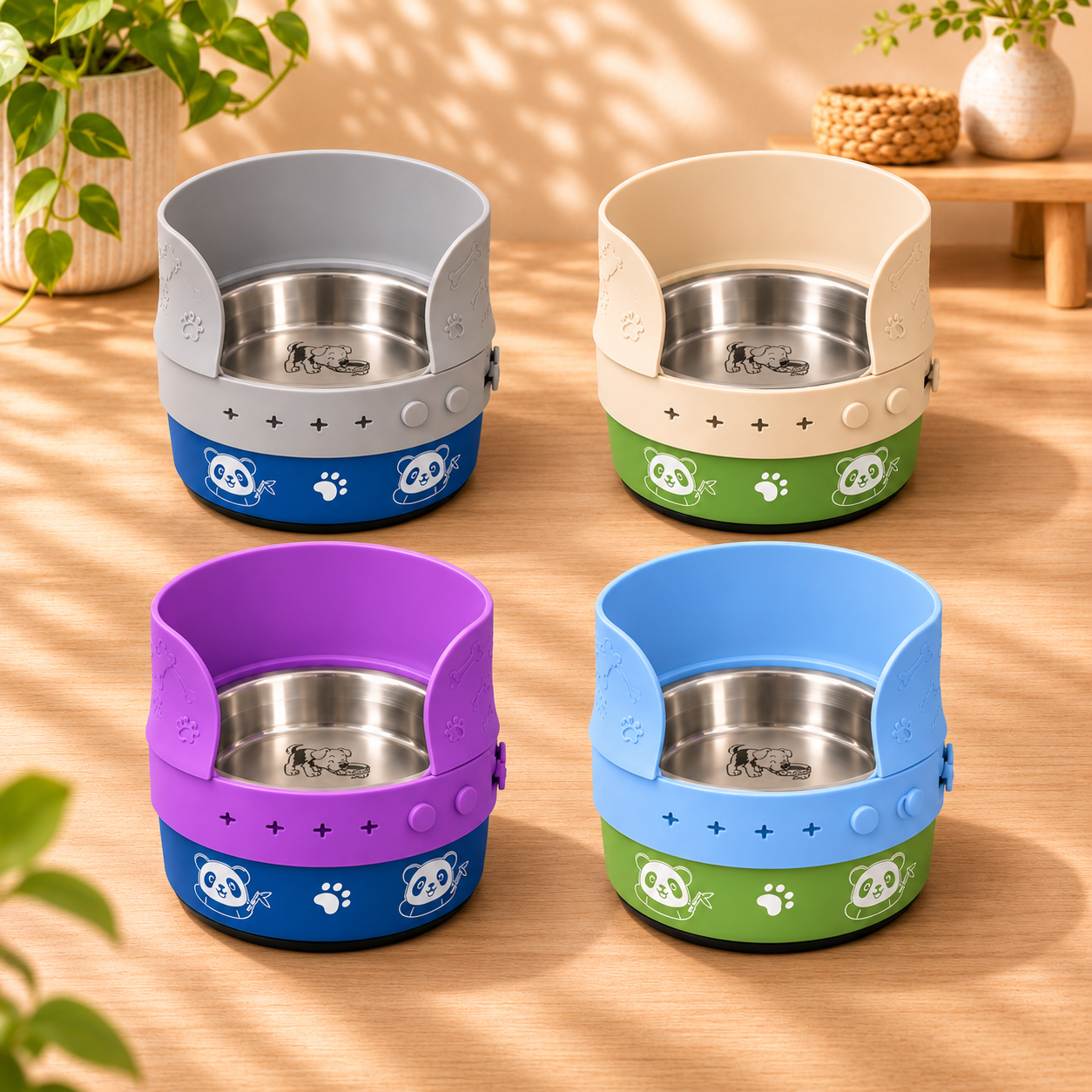
This is especially useful with larger kibble that rolls. If you are using a bowl with a raised rim or a splash guard, pouring slowly also keeps food from hopping over the edge as it goes in.
Give the bowl a landing zone
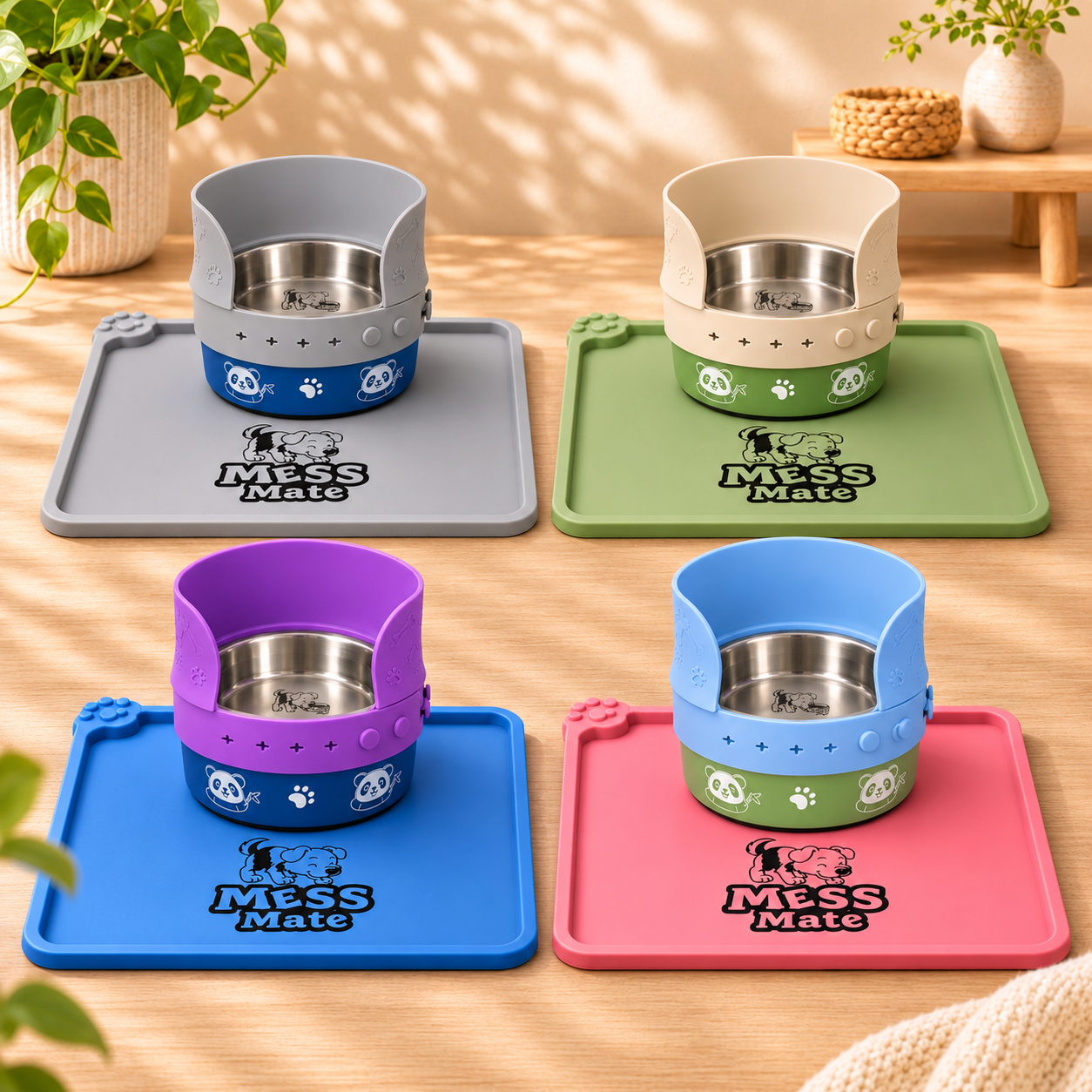
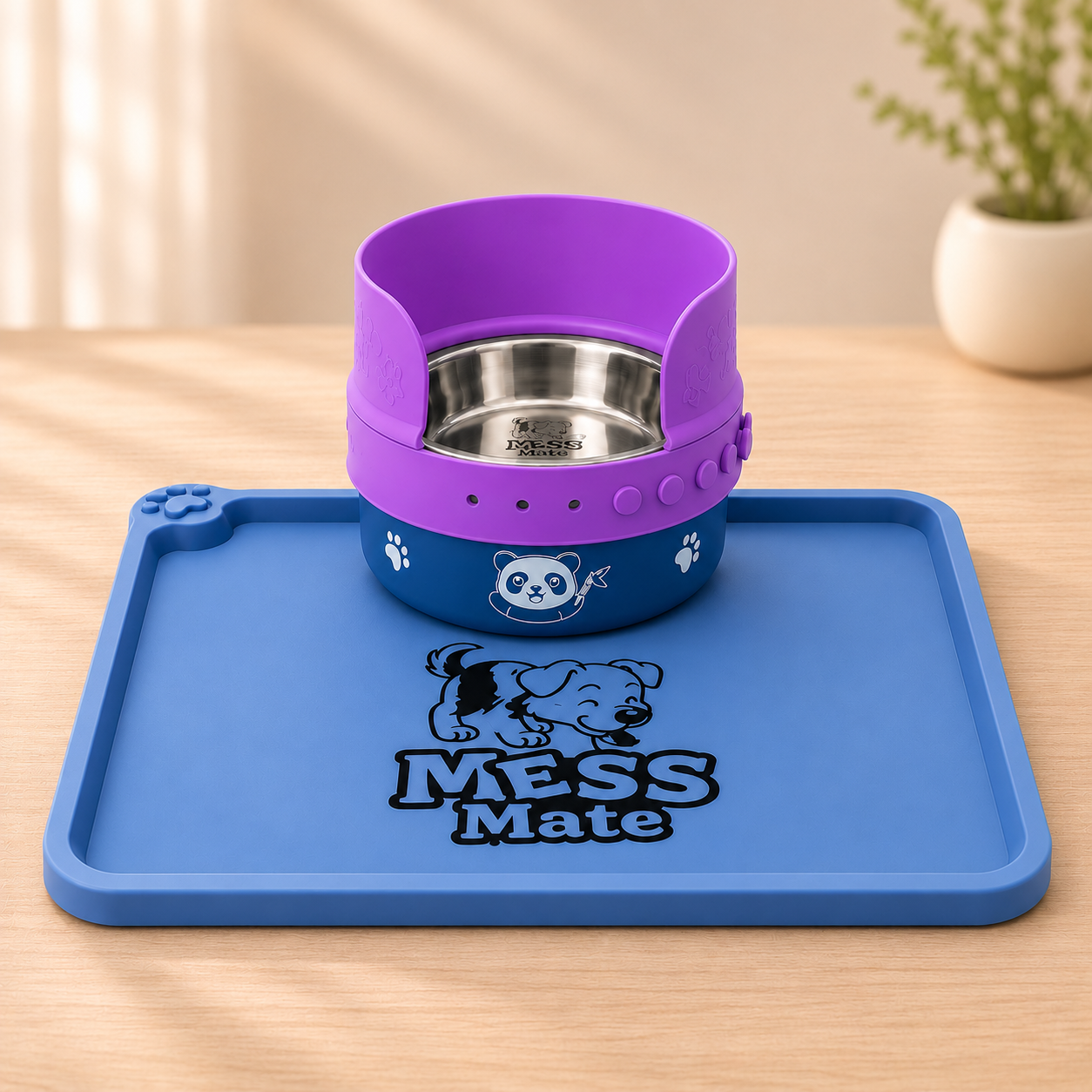
Even careful pouring leaves the occasional stray piece. A defined landing zone means those pieces end up on something easy to wipe or shake out instead of in the cracks of a floor. A silicone mat under the bowl does this well. The MessMate silicone pet feeding mat has a raised edge that helps keep food and water in one area, and it is dishwasher safe on the top rack. You can browse more options under anti-mess feeding mats.
If you would rather have a coordinated bowl, guard and mat from the start, the complete mealtime set includes all three. For medium to extra-large dogs and large cats, MessMate's splash guard clips to round bowls 7 to 9 inches across the top opening and has a 3-inch silicone wall, which can help keep water and kibble inside the bowl while you pour and while your pet eats. It does not suit bowls under 7 or over 9 inches, and it does not change how fast your pet eats.
Build a quick routine
A tidy feeding setup is easier to keep tidy if the steps are the same every time. A simple version:
- Wash and dry the bowl from the previous meal.
- Scoop over the container, level the portion and pour low into the bowl.
- Close the container right away.
- Shake or wipe the mat and floor zone for stray pieces.
If your mornings are rushed, our quick morning feeding routine and five-minute cleanup after mealtime give you a ready-made structure.
Keep pets out of the storage area
Dogs and cats who can reach the food container may knock it over or help themselves. Keep the bin in a closed cabinet, a pantry or on a shelf your pet cannot reach, and use a lid that clips or latches if your pet is persistent. If your pet seems unusually fixated on food or is eating very quickly, mention it to your veterinarian.
Checklist
- Match container size to the bag and make sure the lid is easy to open one-handed.
- Follow the storage guidance on your pet food packaging.
- Set aside bottom-of-the-bag dust instead of pouring it into the bowl.
- Level the scoop over the bin, then pour low and slow.
- Use a mat as a landing zone and wipe it regularly.
None of these habits is dramatic on its own, but together they cut down the stray kibble that ends up under the refrigerator.