More dog owners are moving away from dry kibble alone toward fresh-cooked meals, homemade recipes, food toppers and moist mix-ins. Whatever the reasons, the practical side is the same: softer, wetter food behaves differently in a bowl than kibble. It smears, sticks, drips and dries into a crust. This guide focuses on the mess side of the equation, covering bowls, mats and cleanup routines. For anything about the diet itself, including what to feed and how much, your veterinarian is the right person to ask.
Why Fresh and Moist Food Makes a Different Kind of Mess
Kibble scatters; moist food smears. A dog that pushes kibble around leaves a spray of pieces, but a dog eating chunks in sauce leaves smudges on the floor, the wall, the bowl rim and its own face. Moisture also means residue dries onto surfaces and becomes harder to remove the longer it sits.
That changes what you need. Containment still matters, but easy cleaning matters more.
Choosing the Right Bowl
Smooth, Non-Porous Surfaces
Stainless steel is a practical choice for moist food because it has a smooth surface that rinses and washes easily. Check the bowl for scratches or crevices where food can collect, and wash it after every meal. Our guide to stainless steel, plastic and ceramic bowls compares materials, and our stainless steel bowls are food-grade and dishwasher safe on the top rack.
Size and Shape
Fresh food is often bulkier than kibble, so a bowl that was fine for dry food may feel cramped. A bowl that is too small makes dogs push food over the edge. If you are not sure what size to use, read how big a dog food bowl should be.
Containing Splatter
Moist food flicks off muzzles, and enthusiastic eaters can fling sauce a surprising distance. A few approaches help:
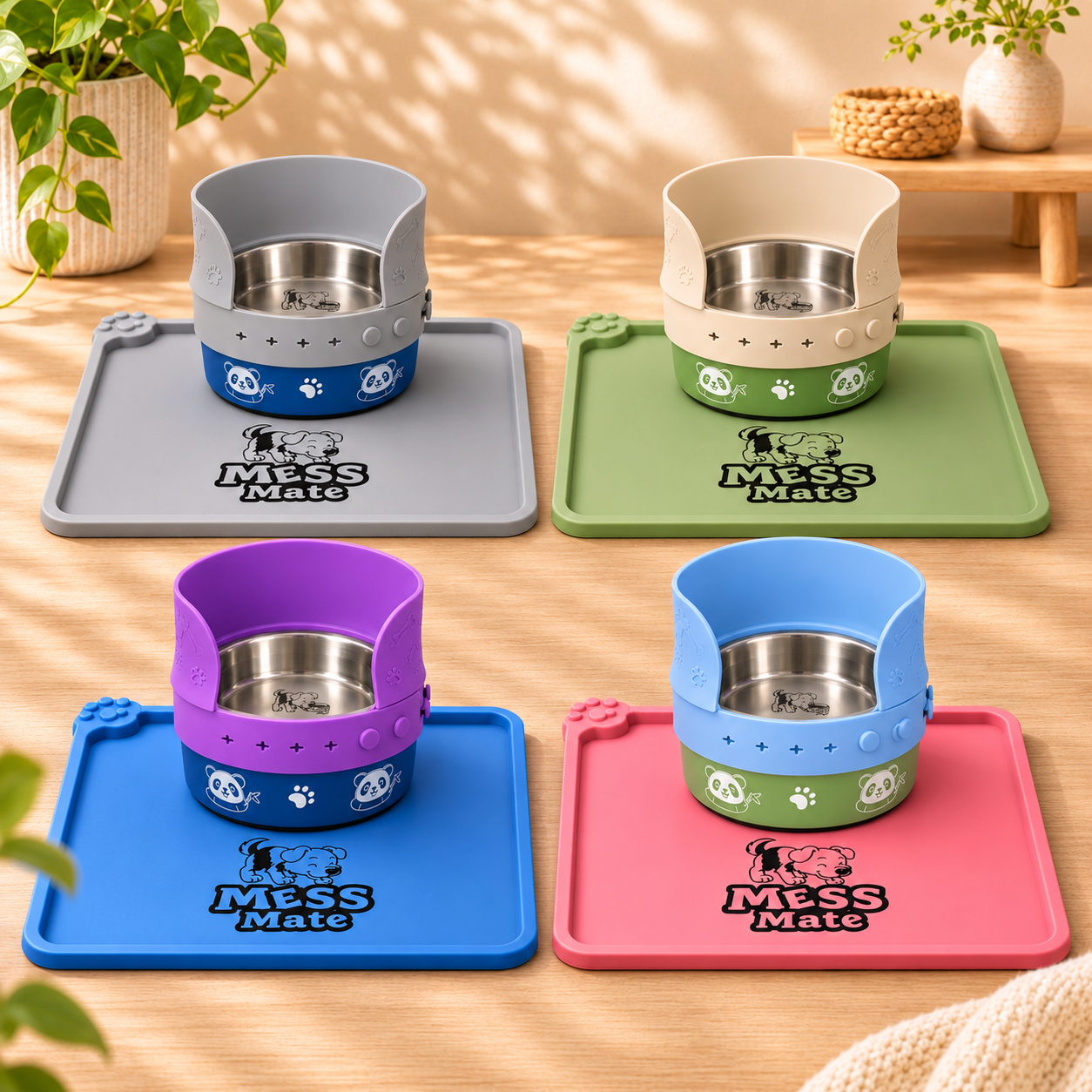
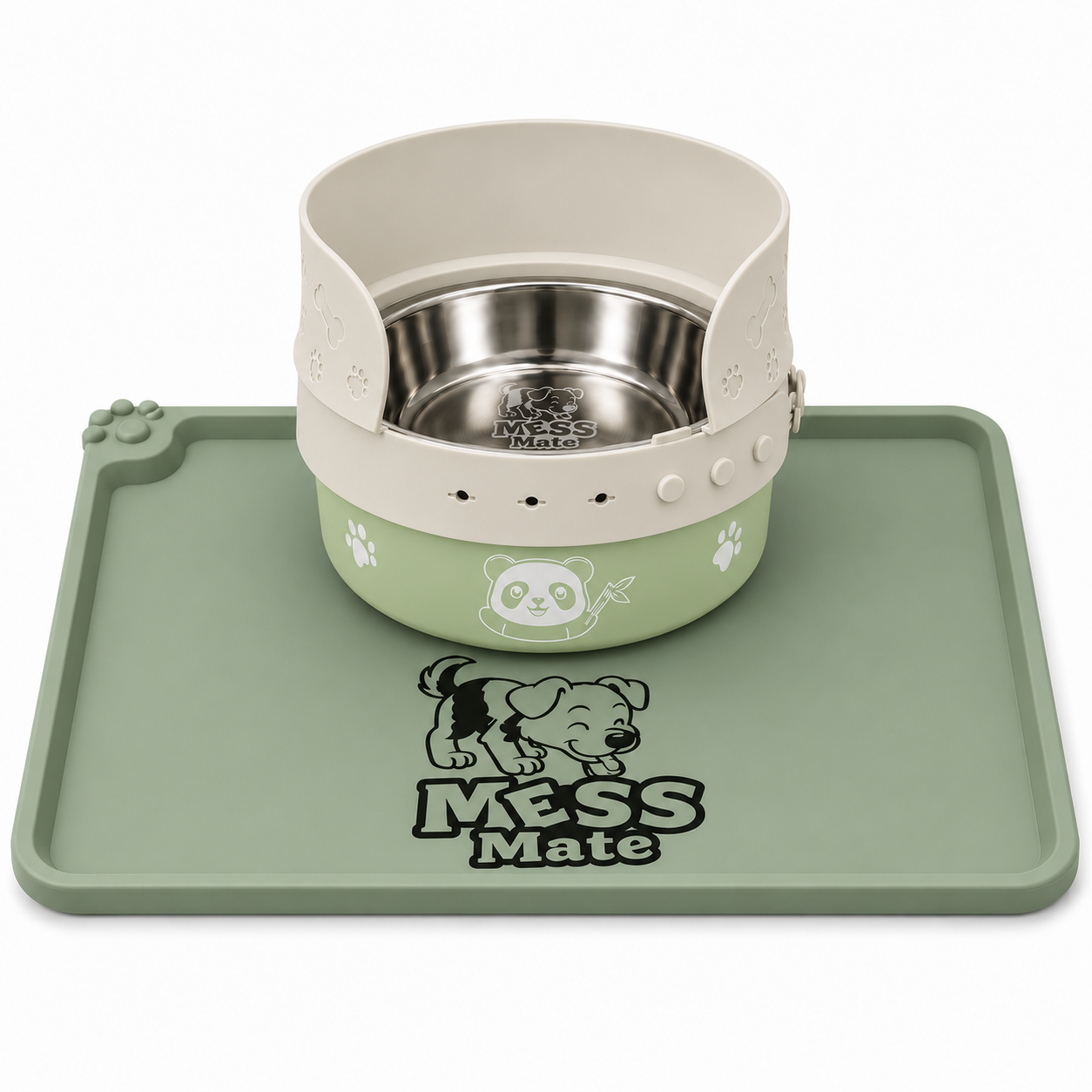
- Mat underneath: catches drops and gives you one thing to wipe instead of the whole floor. A silicone feeding mat wipes clean and can go on the top rack of the dishwasher.
- Corner or wall placement: be careful here. A wall will catch splatter, but then you have a wall to clean. Our post on protecting the wall has ideas.
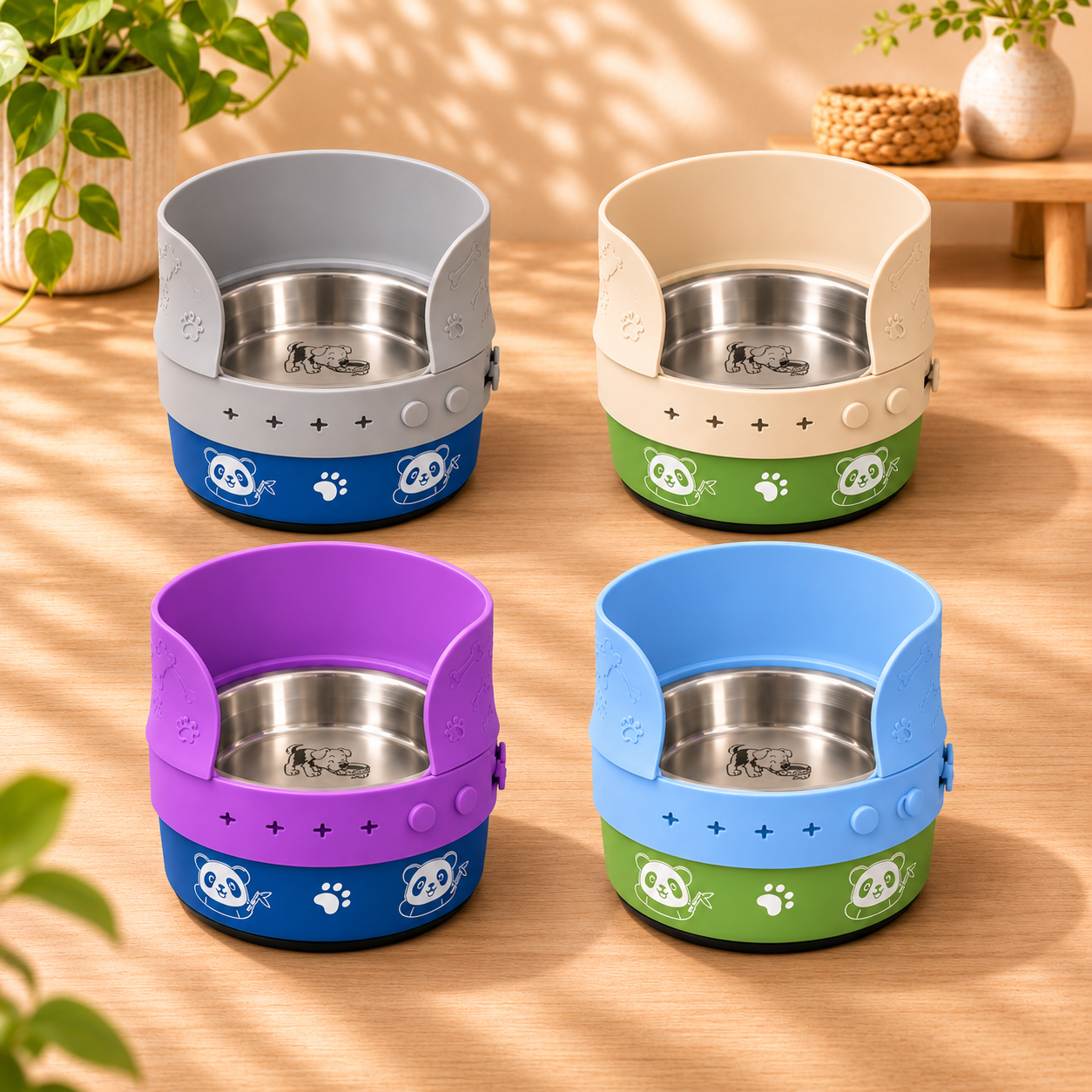
- A splash guard: for medium-to-XL dogs that fling food or water, a guard gives you a raised wall around the bowl.
The MessMate splash guard has a 3-inch silicone wall and clips around the outside of the bowl with its strap. It fits round bowls 7 to 9 inches across the top opening, so measure first, and it isn't suited to bowls under 7 or over 9 inches. Sold alone, it does not include a bowl. If you want everything matched, the complete mealtime set includes the bowl, guard and mat.
One honest caveat: a guard won't stop a dog from smearing food on its face or the floor beyond the wall, and it doesn't change how quickly a dog eats. It reduces the distance food and water travel, which is useful, not a cure-all.
Cleanup That Keeps Up
Rinse Early
Moist residue is far easier to remove right after the meal. Rinse the bowl as soon as your dog finishes, even if the full wash comes later.
Wash Daily
Wash bowls, guards and mats with hot, soapy water or on the top rack of the dishwasher. Fresh and homemade foods may need extra attention, and for questions about food safety and storage, check with your veterinarian or the food's manufacturer. For a no-fuss routine, see how often to clean your dog's bowl and our five-minute cleanup routine.
Dry Fully
Leaving damp gear stacked together can lead to musty smells. Let bowls and mats dry completely before reassembling. If you notice buildup, this guide to grime under bowls and mats explains what to look for.
Greasy Residue on Silicone
Fatty foods can leave a film on silicone. A little degreasing dish soap and a thorough rinse usually take care of it. Our post on cleaning silicone pet gear covers odors and greasy residue in more detail.
Wet Food and Toppers for Cats Too
The same ideas apply to cats eating wet food: smooth bowls, a mat beneath and prompt cleanup. For a deeper look, see feeding wet food without the splatter.
A Simple Routine
- Serve on a mat in a spot that is easy to clean.
- Use a bowl large enough that food stays in it.
- Rinse right after the meal.
- Wash and fully dry bowls, guards and mats daily.
- Wipe your dog's face if needed, then wipe down the floor area.
Switching foods should always be done thoughtfully, and your vet can guide you on what suits your dog. Once the diet is sorted, the right gear keeps the cleanup manageable. Need help picking pieces? Visit our complete feeding sets or the fit guide. Orders ship free to U.S. addresses, with 30-day returns.