Large cats such as Maine Coons, Ragdolls, Norwegian Forest Cats and big mixed-breed cats often outgrow the small dishes sold for average cats. A bigger head, a bigger body and bigger paws can mean more food pushed over the edge, more water splashed on the floor and a bowl that feels cramped. This guide covers how to think about bowl size, where to put the bowls and how to keep the area tidy without overpromising what any accessory can do.
Why large cats can make a bigger mess
Every cat is different, but a few things come up often with bigger cats:
- Cramped bowls. A small, deep dish can force a large cat to angle their head awkwardly, which may lead to food getting nudged out.
- Bigger paws. Many cats like to dip a paw into water or scoop food out of a bowl. A larger paw moves more water and more kibble.
- More food per meal. Larger cats usually eat more, so a bowl that is too small may overflow or force you to refill more often.
If your cat is pawing at the water or scooping food, our posts on why cats paw at the water bowl and why cats scoop food out of the bowl explain common reasons and tidier setups.
Choosing a bowl size
Go wide enough for comfort
A wider, relatively shallow bowl often suits large cats better than a narrow, deep one. There is plenty of discussion online about whisker comfort, but the science is not settled, so we would not promise any particular benefit. We cover what is and is not known in Do cats need wide, shallow bowls?. The practical takeaway is simple: if your cat seems to avoid the bowl, eats around the edge or pulls food out to eat it from the floor, trying a wider bowl is a low-risk experiment.
Match the bowl to the meal
Think about how much your cat eats at a sitting. Wet food portions spread out better in a wider bowl, while dry food can pile up in a deeper one. If you feed wet food, see our guide to feeding wet food without the splatter.
Consider the material
Stainless steel is easy to clean and does not hold odors the way some plastics can. Browse MessMate's stainless steel bowls if you want a durable option. MessMate bowls are food-grade and dishwasher safe on the top rack, which makes daily washing simple.
Where to put the bowls
Large cats often prefer to eat somewhere they feel secure, with room to move. Some practical ideas:
- Choose a quiet spot away from loud appliances and busy walkways.
- Give each cat their own space if you have more than one. Big cats can feel crowded when sharing a small area.
- Put the water bowl a little away from the food bowl if your cat seems to prefer that. Our post on keeping a cat's water bowl away from food goes into it.
- Keep the area on a surface that wipes clean, or use a mat to define the space.
Containing the mess
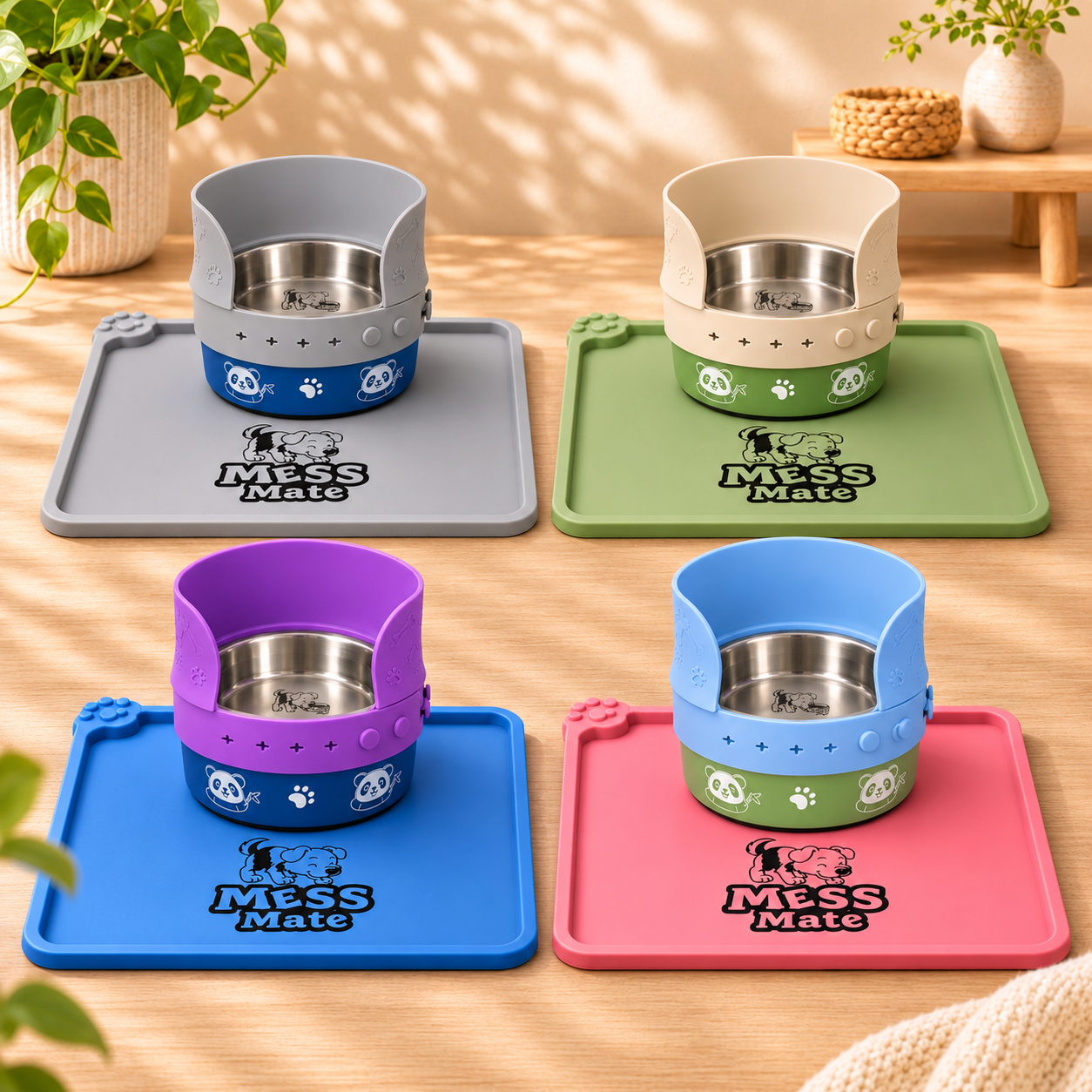
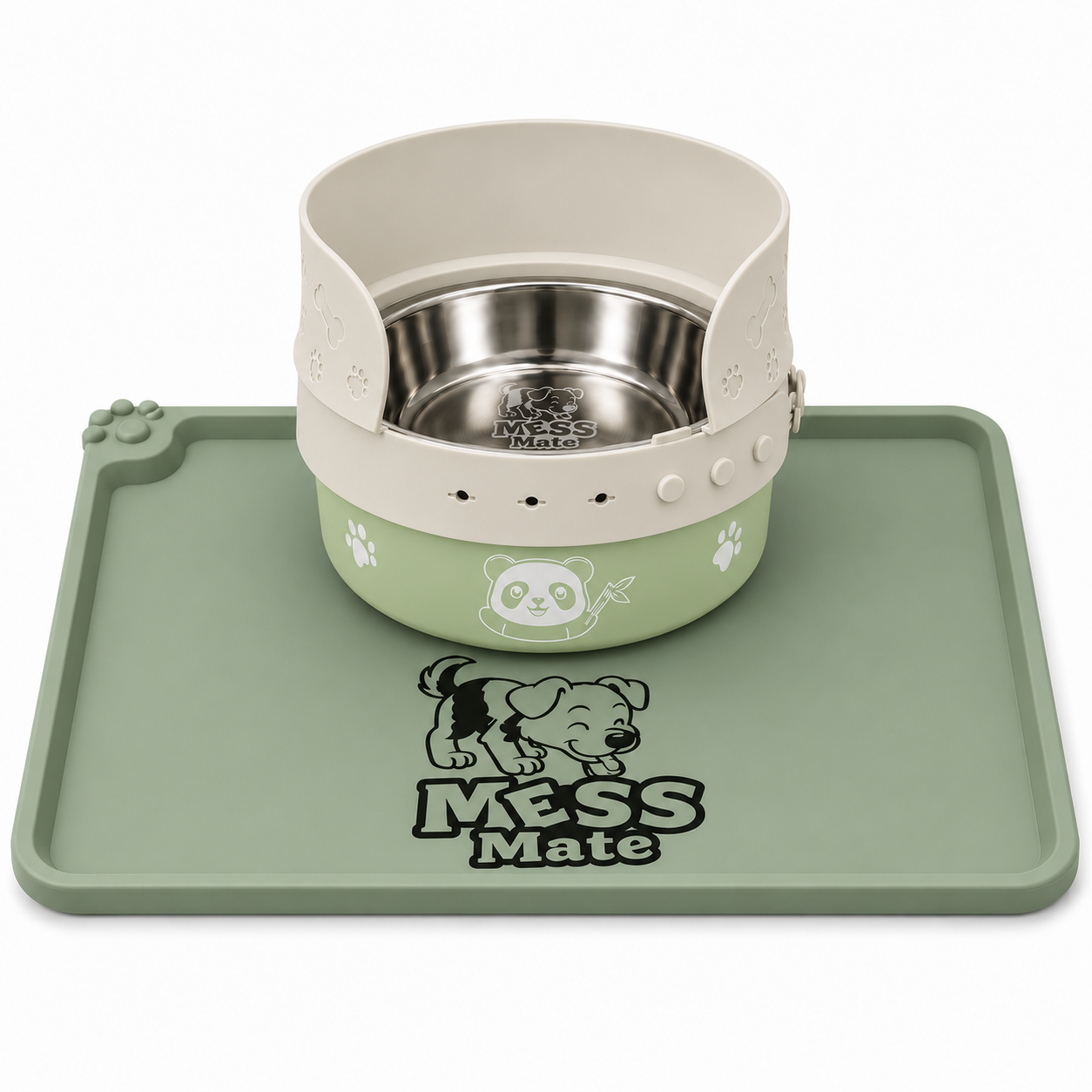
A silicone feeding mat is the easiest first step. The raised edge helps catch spilled water and loose food so it does not spread across the floor, and you can wipe it or put it in the dishwasher. The MessMate silicone pet feeding mat is designed for exactly this kind of everyday spill. If you are not sure how big a mat you need for a large cat who likes to roam around the bowl, our guide on choosing a feeding mat size helps.
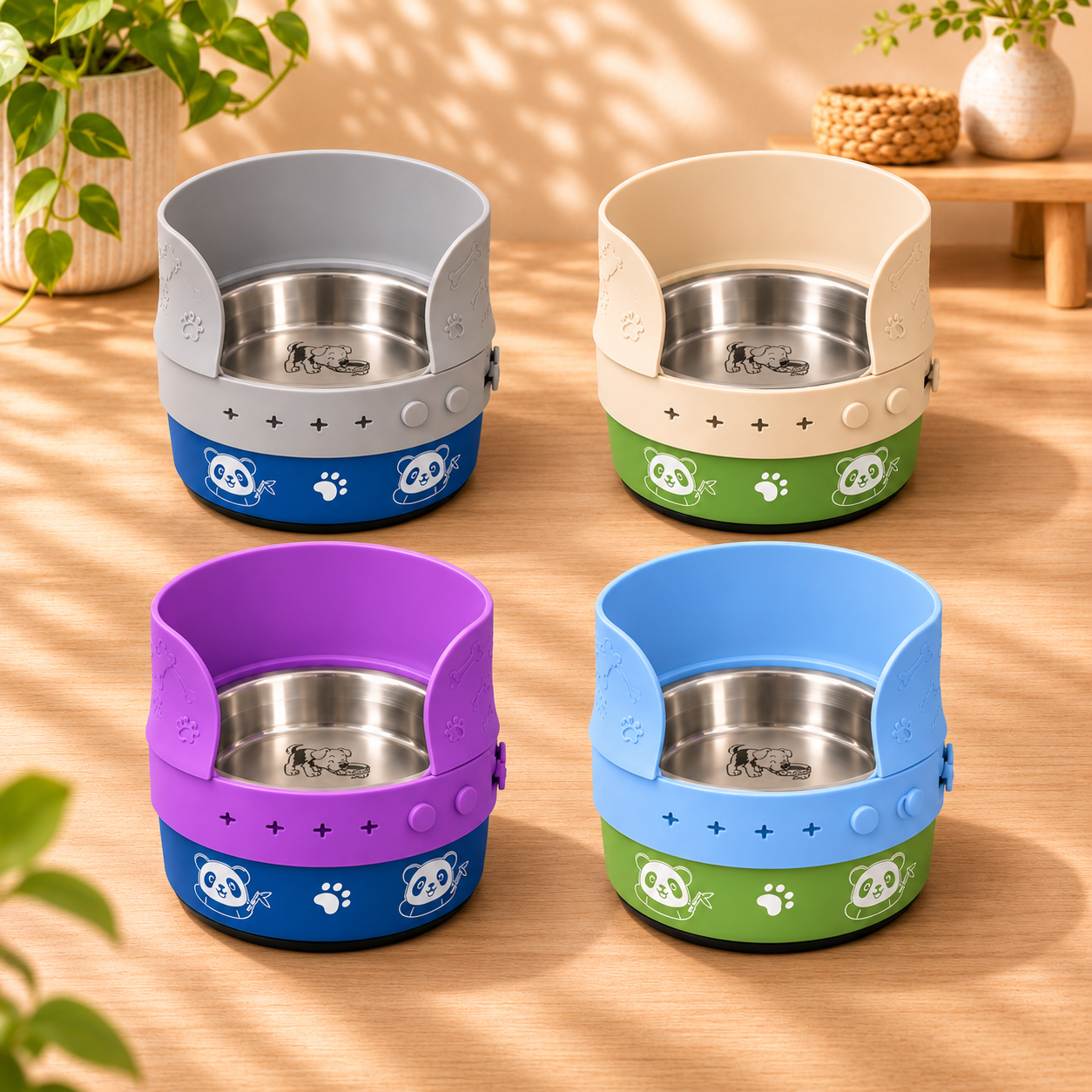
A splash guard is a second layer, mostly useful for water. MessMate's splash guard clips around the outside of a round bowl 7 to 9 inches across the top opening and has a 3-inch silicone wall. It is made for medium to extra-large dogs and large cats, so it can suit a big cat whose bowl falls in that size range. It will not fit bowls under 7 or over 9 inches, and the guard on its own does not include a bowl. Use the fit guide to measure before you order, or look at the bowl and splash guard option if you would like a matched pair.
It is worth being honest about what this will and will not do. A guard can help keep water and kibble inside the bowl area, but it does not stop a cat from pawing, and it will not change how fast or how much your cat eats. Some cats will ignore it, and some may need time to get used to a new item next to their bowl. Introduce it gradually and watch how your cat reacts.
Helping your cat accept a new setup
- Place the new mat or bowl near the old one for a day or two before swapping.
- Keep the food the same so there is only one change at a time.
- Do not force your cat to use it. If they avoid it, go back to the old setup and try again later.
- Reward calm eating with your usual routine rather than extra treats that could change their diet.
When to call the veterinarian
If your cat suddenly eats much less, drinks much more, vomits often or seems to struggle at the bowl, that is not a bowl problem to solve at home. Contact your veterinarian. They can also advise on portion sizes and weight for large breeds, which varies a lot between individual cats.
Quick recap
- Large cats often do better with wider bowls than small deep dishes, though the evidence on whiskers is limited.
- Pick a quiet, stable feeding spot and keep water slightly separate if your cat prefers it.
- Use a mat to catch spills, and consider a splash guard if the bowl is round and 7 to 9 inches across.
- Introduce new gear slowly and ask your vet about any changes in appetite or thirst.