Moving day is chaotic for everyone, and your dog or cat notices. Familiar routines tend to help pets settle into a new place, and mealtime is one of the easiest routines to keep steady. If you can make the feeding area one of the first things that feels normal, the rest of the transition often goes a little smoother. This guide covers how to plan the spot, keep the setup consistent and keep the new floors clean from day one.
Pack the feeding gear last and unpack it first
It is tempting to throw bowls into a random box. A better plan is to set aside one clearly labeled bag or tote with everything your pet needs for the first day or two: bowls, a feeding mat, a scoop, the food you are currently using, a measuring cup and a few cleaning cloths. Keep it with you instead of on the truck.
When you arrive, set up the feeding area before you unpack the kitchen. Even if everything else is in boxes, a dog or cat who sees their bowls in a tidy, predictable spot at the usual mealtime has one thing that matches their old routine.
Pick the spot before the boxes are open
Walk through the new space and decide where the bowls will live. A little thought now avoids moving them three times during the first week.
Look for a stable, low-traffic corner
Most pets are more comfortable eating somewhere they are not constantly stepped around. A corner of the kitchen, a quiet stretch of wall or a spot near a back door can work. Avoid the direct path between the refrigerator and the sink, doorways people rush through and spots right next to the dishwasher or washing machine, which can be noisy in a home your pet does not know yet. For more ideas on placement, see our guide on where to put your dog's food bowl.
Think about the floor
New homes come with new surfaces. Hardwood, tile, vinyl and carpet each react differently to spilled water and scattered kibble. If you are not sure what you are dealing with yet, assume the floor needs protection until you know. A silicone mat under the bowls gives you a defined, wipeable zone no matter what is underneath. Our post on feeding a dog on carpet, tile or vinyl goes through what each surface needs.
Keep the setup as close to the old one as you can
Pets notice small changes. If your dog has always eaten from a gray bowl on a blue mat, using the same bowl and mat in the new house gives them a familiar visual cue. Try to keep these the same during the first few weeks:
- The bowls. Use the same ones you already own rather than buying a new style mid-move.
- The food. Do not change brands or formulas during the move. If you plan to switch food, ask your veterinarian how to do it and wait until things have calmed down.
- The schedule. Feed at roughly the same times, even if the rest of the day is unpredictable.
- The order of events. If you always put the bowl down after a short wait or a command, keep doing that.
Keep new floors clean from the start
The first spill on a new floor is the one you notice most. A few simple habits help:
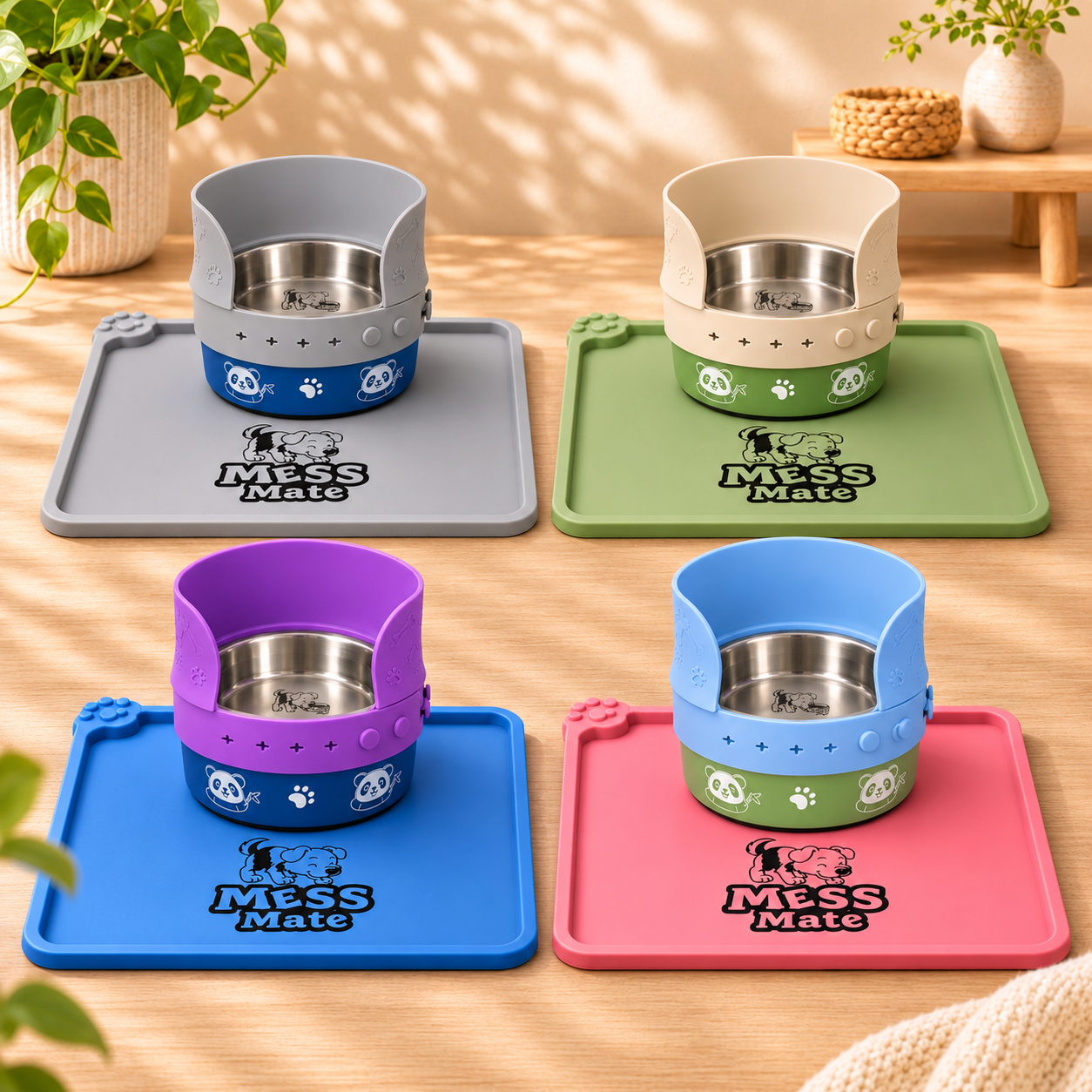
Put a feeding mat under the food and water bowls before the first meal, not after the first puddle. The MessMate silicone pet feeding mat has a raised edge that helps contain spilled water and loose kibble, and it wipes clean or goes on the top rack of the dishwasher.
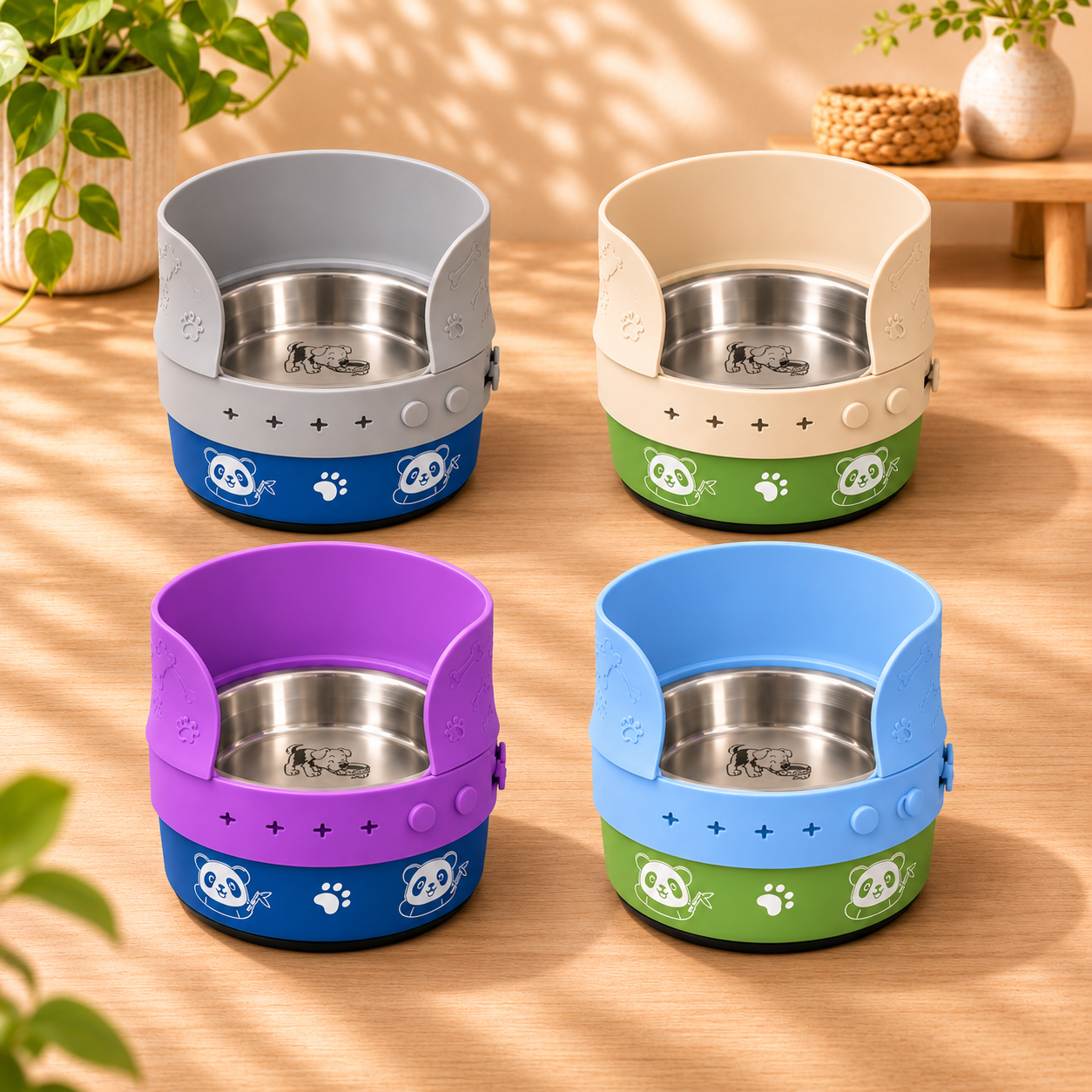
If you have a medium to extra-large dog who splashes water while drinking, a splash guard can help keep the water in the bowl and off the wall and floor. MessMate's guard fits round bowls 7 to 9 inches across the top opening, has a 3-inch silicone wall, and clips around the outside of the bowl with its strap. It does not suit bowls under 7 or over 9 inches, and the guard sold alone does not include a bowl, so check the fit guide before you order. If you would rather not measure, the complete mealtime set pairs a bowl, guard and mat that are designed to work together. You can also browse all of the complete feeding sets.
To be clear about limits: a splash guard helps with water and kibble that gets flicked or pushed out of the bowl. It does not change how fast a dog eats or fix behavior, and it is made for medium to extra-large dogs and large cats rather than small or toy breeds.
A simple first-week routine
- Day one: Set up bowls and mat in the chosen spot. Offer meals at the usual times and keep the area calm.
- Days two to three: Watch where your pet naturally lingers. If they seem uneasy at the spot, try shifting it a few feet rather than across the house.
- Days four to seven: Start your normal cleaning rhythm. Wash bowls daily, wipe the mat and check the floor around it. Our five-minute cleanup routine is a good template.
Small homes and temporary stays
If you are moving into a smaller place or staying somewhere short term, use the same idea on a smaller scale: one mat, one bowl set, one consistent corner. Our post on a small-space pet feeding setup has layout ideas that work when floor space is limited.
When your pet seems off
Some pets eat less or drink differently for a day or two after a move, and that can be part of adjusting to a new environment. If your dog or cat refuses food for more than a short stretch, seems unwell or shows any sudden change in appetite or thirst, contact your veterinarian rather than assuming it is stress.
Quick checklist
- Label one tote for first-day feeding gear and keep it with you.
- Choose a quiet, stable spot before unpacking.
- Use the same bowls, food and schedule as before.
- Put a mat down before the first meal.
- Keep your usual cleaning routine going.
Mealtime will not solve every moving-day problem, but a familiar, tidy feeding corner gives your pet one predictable thing while everything else changes.