You come back from a walk or a round of fetch, and your dog heads straight for the water bowl. A few seconds later there is a puddle on the floor, a wet chin, and a trail of drips across the kitchen. If that sounds familiar, you are not alone. Dogs that have just been active often drink enthusiastically, and enthusiastic drinking is messy drinking.
This post looks at why it happens and what you can change at home to keep the area tidier, without pretending any gear can change how your dog drinks.
Why Post-Exercise Drinking Gets So Messy
After activity, many dogs are thirsty and excited at the same time. They tend to drink quickly, push their muzzle deep into the bowl, and sometimes paw at the water. Larger dogs with big muzzles displace more water with each lap, so more of it ends up over the rim.
A few things can make it worse:
- A bowl that is too small for the dog's face
- A very full bowl that sloshes with every movement
- A bowl that slides when the dog pushes against it
- A spot with nothing underneath to catch drips
Each of these is fixable, and none needs a complicated solution.
A Note on Drinking Habits and Health
Dogs drink more after exercise and in warm weather, and that is normal. But if your dog seems to be drinking noticeably more than usual with no change in activity or weather, or gulps water and then seems unwell, it is worth mentioning to your veterinarian. This article is about tidying up a mess, not diagnosing anything.
Fix 1: Match the Bowl to the Dog
A bowl that is too small forces a big dog to wedge in awkwardly, which pushes water out. For larger dogs, a wider bowl gives more room for the muzzle. We go through sizing in how big a dog bowl should be, and the same principles apply to water.
If you plan to add a splash guard, remember its range: the MessMate guard fits round bowls 7 to 9 inches across the top opening. Bowls smaller than 7 or larger than 9 inches are outside what it is designed for.
Fix 2: Do Not Fill It to the Brim
An overfull bowl is an easy way to lose water. Every step, nudge, and lap sends some over the edge. Filling to a comfortable level rather than to the top leaves room for the water to move. Our post on how full to fill a dog water bowl goes into this in more detail.
After a hard run or a hot day, you may need to refill during the session. That is fine. Refilling a moderate amount twice is usually tidier than one overflowing bowl.
Fix 3: Add a Splash Guard for Medium to XL Dogs
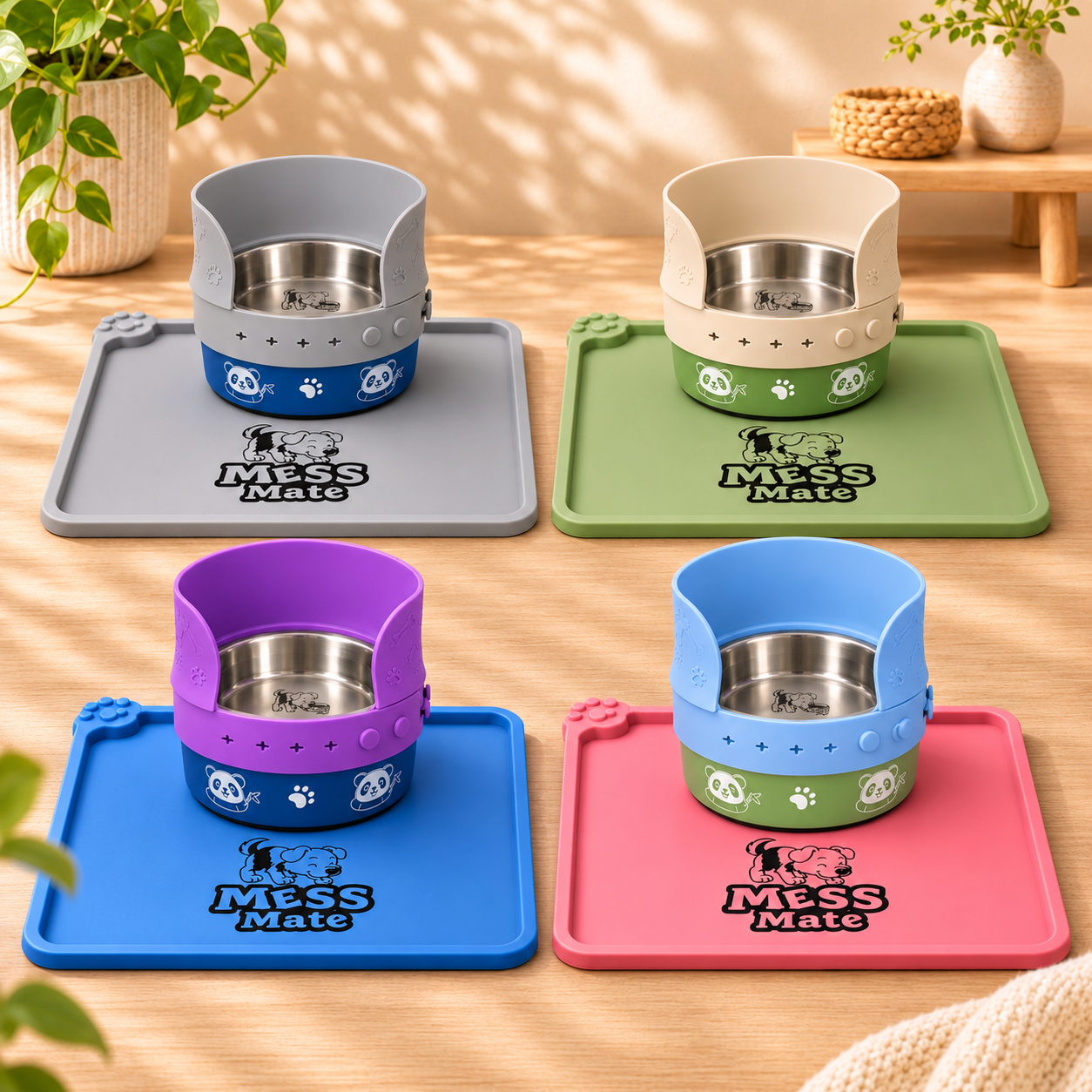
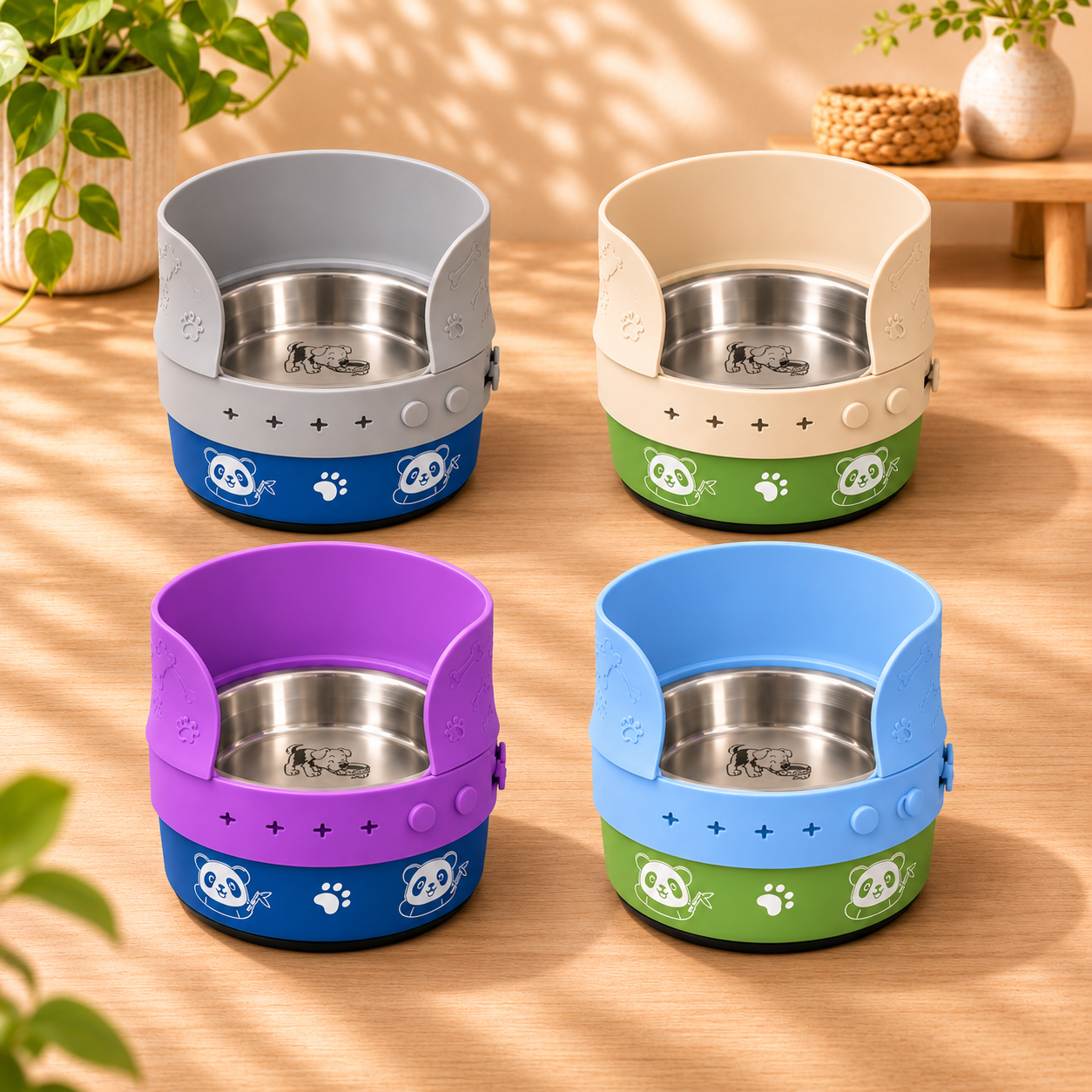
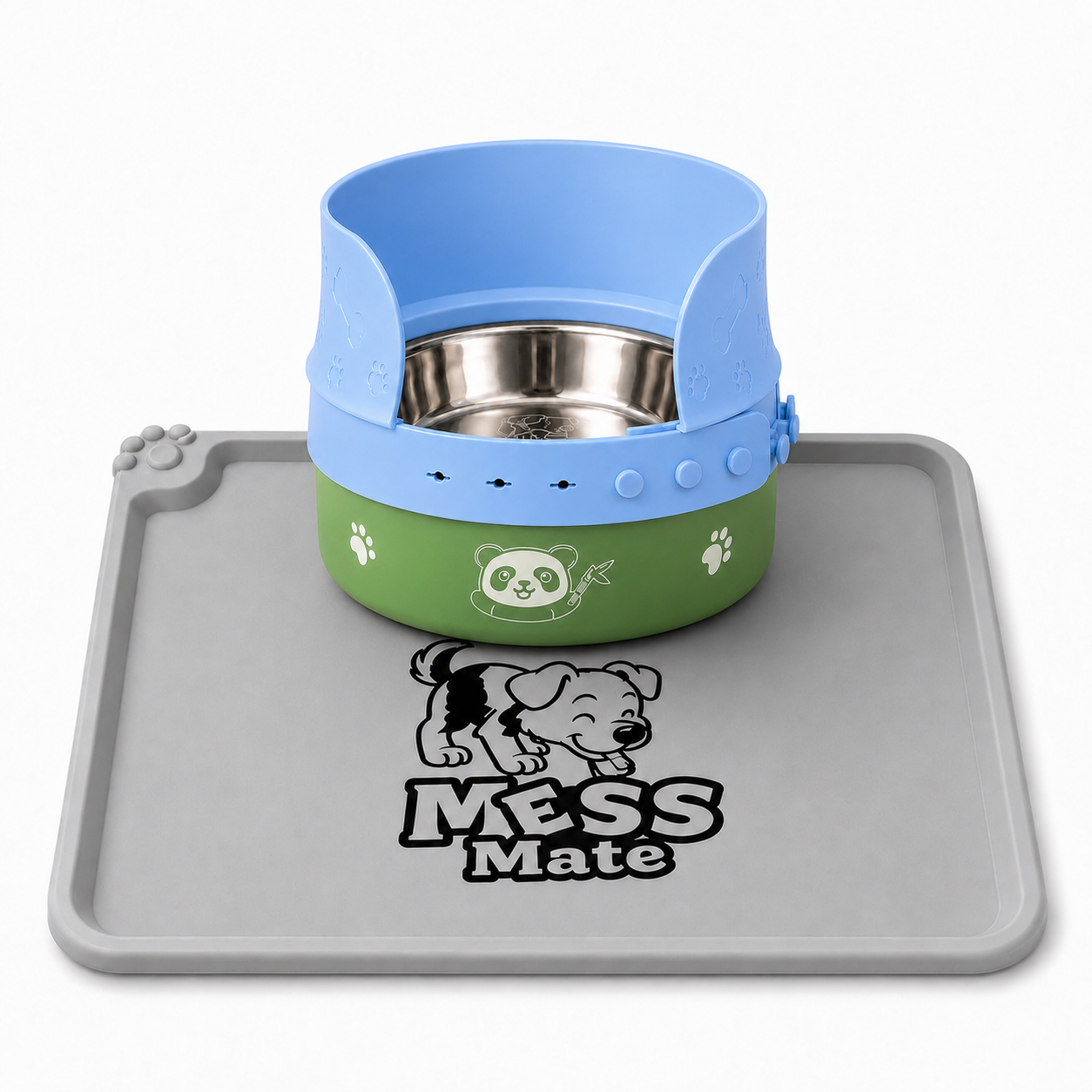
For medium to extra-large dogs, a splash guard is the piece designed specifically for this problem. The MessMate guard has a 3-inch silicone wall that clips around the outside of the bowl with its strap. Water that is flicked up or flung sideways meets the wall instead of the floor.
To be clear about what it does and does not do: it contains splashes and spilled kibble. It does not slow your dog down or change how they drink. It is also not suited to small or toy breeds, and the guard sold alone does not include a bowl.
If you want the guard and bowl matched, look at the splash guard and bowl set. If you already have a suitable round bowl, the standalone guard is on the bowls and splash guards page. Browse everything in the splash guard collection.
Fix 4: Give Drips Somewhere to Land
Even with a guard, dogs come away from the bowl with a wet chin. The drips land right next to the bowl, which is why a mat makes sense. A silicone mat catches the drips and gives you a surface you can pick up and rinse, rather than mopping the floor. It also adds grip so the bowl is less likely to skate. If you have wood floors, see how to protect hardwood floors from water bowl spills.
Fix 5: Choose a Smarter Spot
If the bowl is where your dog walks in from outside, consider placing it where wet paws and drips are easier to deal with, such as a tiled entry or a utility area. Our post on where to put your dog's bowl covers placement. Keep it away from carpet if you can.
Fix 6: Build a Cool-Down Routine
A little structure helps. Many owners find it easier to pause at the door after a walk, let the dog settle for a moment, wipe paws, and then offer water. A calmer dog tends to drink with less commotion. That is not a guarantee, and every dog is different, but it is a low-effort habit to try. If you are working on calm habits generally, teaching your dog to wait at mealtime uses the same principle.
What About Dogs That Paw or Stand in the Bowl?
Some dogs do more than drink. They dig, paw, or step in the water. That behavior has its own causes and fixes, which we cover in why dogs dig or stand in the water bowl. A guard may help contain the splash, but understanding the behavior helps more.
Keeping the Water Bowl Clean
A bowl that gets heavy use after exercise needs regular washing. Stainless steel and silicone pieces from MessMate are food-grade and dishwasher safe on the top rack, so cleaning can be part of your normal dish routine. Remove the guard first so nothing is trapped between the silicone and the bowl.
A Quick Checklist for Post-Walk Water
- Use a bowl wide enough for your dog's muzzle.
- Fill it to a moderate level, not the top.
- Add a splash guard if you have a medium to XL dog and a 7 to 9 inch round bowl.
- Put a mat underneath for drips and grip.
- Place the bowl on an easy-to-clean surface.
- Ask your veterinarian if drinking habits seem unusual.
Orders ship free to U.S. addresses, with 30-day returns if the setup is not right for your home. Questions about fit? Visit the fit guide before ordering.