Whether you are heading out for a long holiday weekend or a week away, handing your pet to a sitter means handing over your routine. Feeding is the part most likely to go sideways: the wrong amount, a missed meal, a bowl that travels across the floor, or a counter covered in spilled food. A little preparation makes things easier for the sitter and calmer for your dog or cat. Here is a practical setup guide.
Make the feeding station obvious
A sitter walking into your home for the first time should be able to find everything in seconds. Set up one clear spot for food and water, ideally on a mat so spills and drips have a defined landing zone. Put the bowls where your pet normally eats, because changing the location adds stress to an already unusual week. If you are not sure where the best spot is, our guide to where to put your dog's food bowl and the walkthrough on setting up a clean pet feeding station can help.
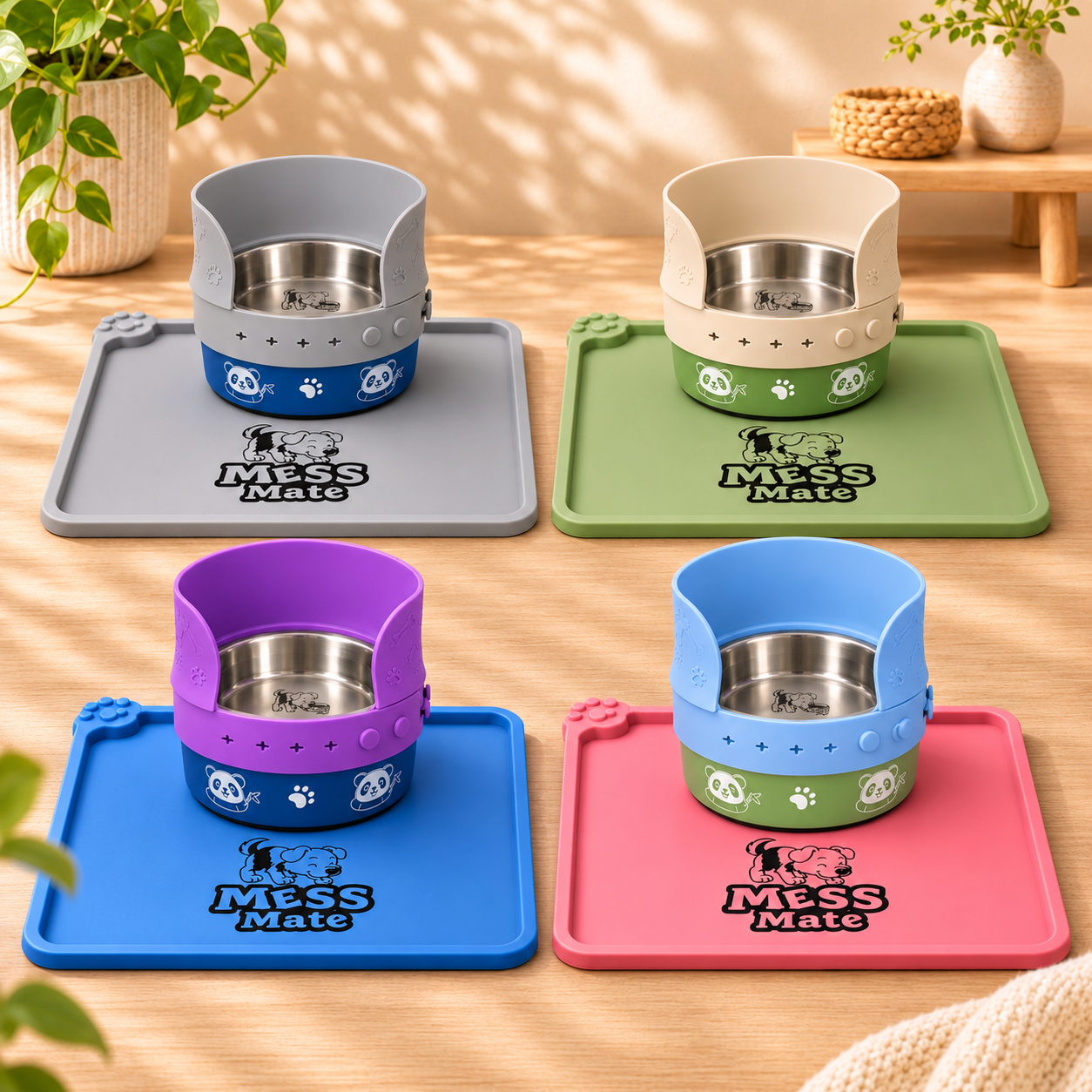
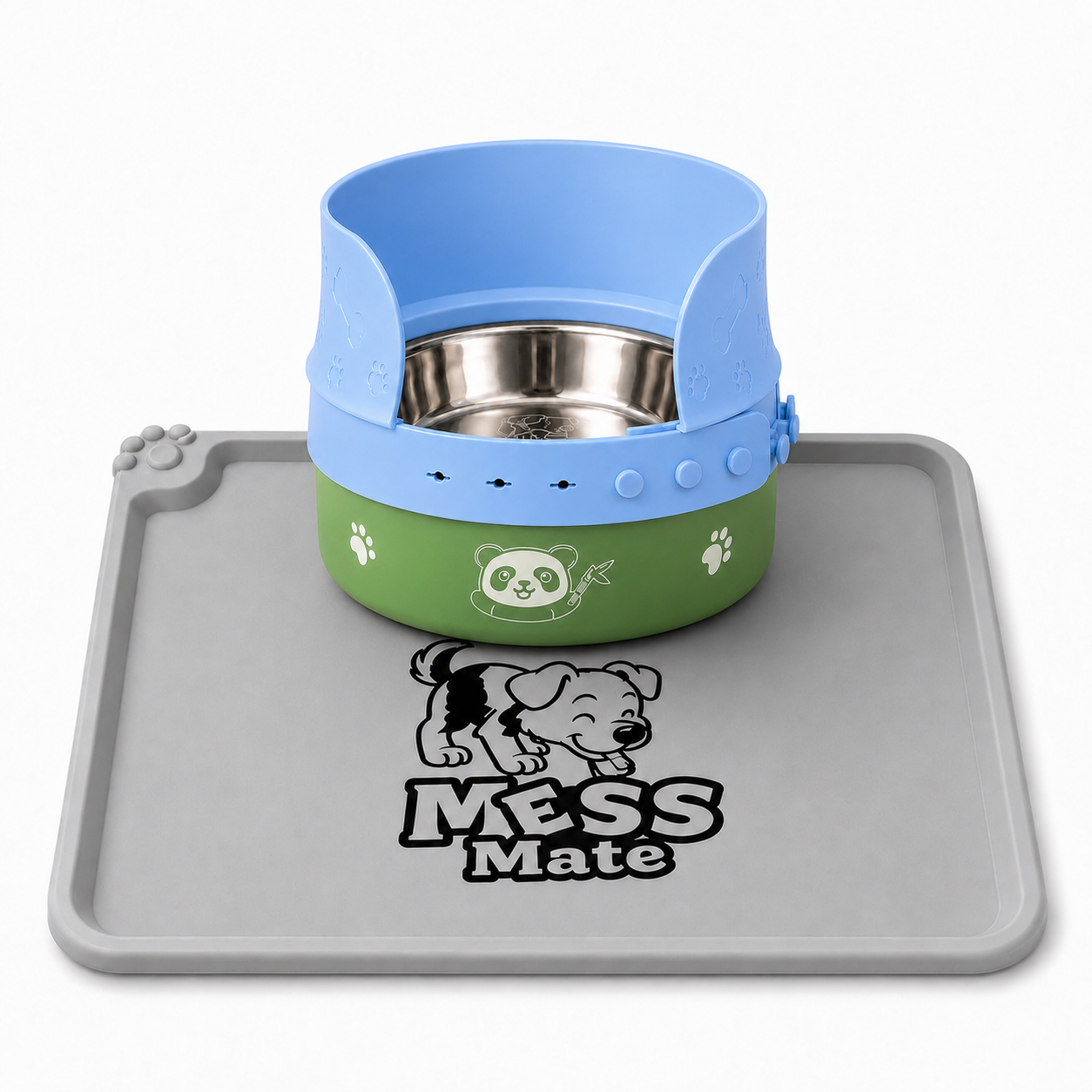
A waterproof mat is particularly handy when someone else is doing the cleaning, since a wipe or a rinse resets the area. The MessMate silicone feeding mat is one option, and the anti-mess feeding mat collection has others.
Pre-portion the meals
The simplest way to avoid over- or under-feeding is to portion meals in advance. Use labeled containers or zip bags, one per meal, and group them by day. If your pet gets wet food, supplements or medication, add a small note on each container or a checklist taped to the fridge. Ask your veterinarian if you are unsure about portion sizes or if your pet has dietary needs, and share any restrictions in writing.
Pre-portioning also keeps the sitter from guessing at scoop sizes, which can vary a lot from one kitchen to another. It makes the routine repeatable even if the person doing it changes.
Write down the routine
A one-page note beats a hurried verbal handoff. Include:
- Meal times and amounts.
- Where food, bowls, towels and cleaning supplies live.
- How your pet behaves at meals: does your dog gulp, wait politely, guard the bowl or push it across the floor?
- Foods and treats that are off-limits.
- Your veterinarian's name and number, plus an emergency clinic if you have one.
- How to reach you while you are away.
The more specific you are, the less the sitter has to improvise. If your pet is a notorious spiller, a note such as "she scatters kibble, so please wipe the mat after meals" saves time.
Choose gear that is easy for someone else to use
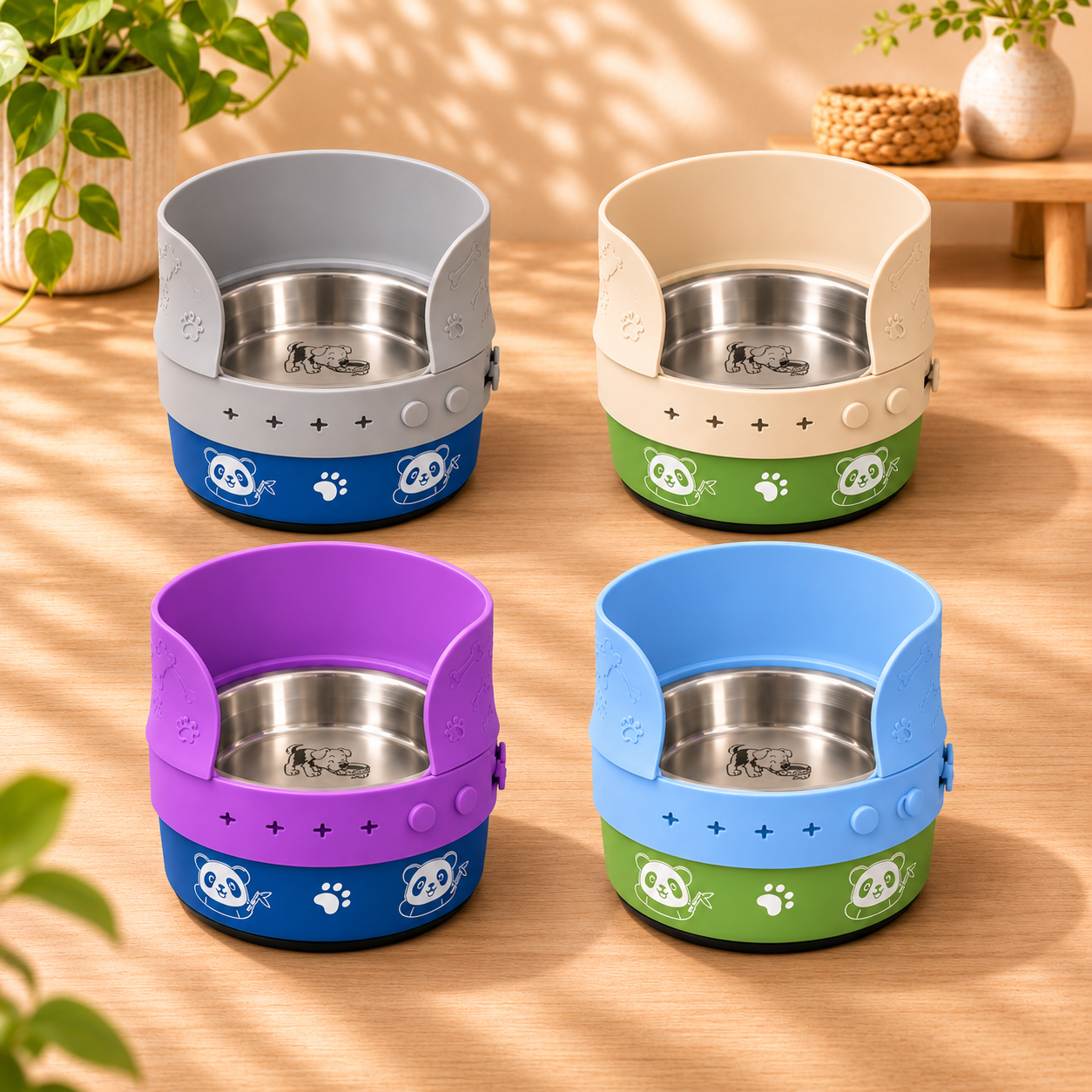
When you live with a messy eater, you know the tricks. A sitter does not. Gear that contains mess without needing instructions makes a difference. A splash guard around the bowl can reduce the area where water and food land, and MessMate's guard fits round bowls from 7 to 9 inches across the top opening with a 3-inch silicone wall. It does not slow eating or change behavior, and it is not suited to bowls under 7 inches or over 9 inches, so check your bowl first with the fit guide.
If you want matched pieces ready to go, the complete mealtime set pairs a bowl, guard and mat, and the splash guard set pairs a bowl and a guard. Both save you from having to explain what fits what.
Keep cleaning simple
If the sitter has to deal with a sticky bowl and a greasy mat, they may skip it. Pick items that are quick to clean. MessMate's silicone and stainless steel pieces are food-grade and dishwasher safe on the top rack, so a sitter can rinse them or run them with their own dishes if you are comfortable with that. For a refresher on keeping gear fresh, see how to clean silicone pet bowls, guards and mats, and how often to clean your dog's bowl for a basic schedule you can pass along.
Think about water too
Leave plenty of fresh water and show the sitter how to refill it. If your pet likes to splash or knock the bowl, put it on the mat and in a spot where a spill will not damage the floor. Our post on why dogs splash water out of the bowl covers common causes, and you can mention yours in the notes. Some owners set up a second water bowl in another room as a backup.
Do a trial run
If possible, meet the sitter before you leave and walk through a full meal together. Let them see where things are, how your pet behaves, and how you handle cleanup. It is also a good chance to see how your pet reacts to the person. A short visit in advance often reveals small details, like which cabinet sticks or where the towels belong, that you would not think to write down.
If you have more than one pet
Multi-pet homes need clearer instructions. Label each pet's bowl or use different colors, specify who eats where, and say whether bowls should be picked up after meals. If one pet is on a special diet, make that unmistakable. Our guide to feeding multiple pets without the mess has setup ideas you can share with your sitter.
Travel the other way
If your pet is going with you instead, see feeding your dog or cat on the road for a packing list.
A short pre-departure checklist
- Meals portioned and labeled.
- Written routine and emergency contacts on the fridge.
- Feeding station set up on a mat in the usual spot.
- Towels and cleaning supplies where the sitter can see them.
- Any medication or supplement instructions clearly marked.
With these pieces in place, your sitter can focus on your pet instead of hunting for a scoop. If you decide to upgrade your setup before you go, MessMate ships free in the U.S. and accepts returns within 30 days. Use LOYAL15 for 15% off your order. MessMate donates to animal-rescue groups in memory of Spud. The FAQ answers common questions about sizing, materials and care.