A cone (also called an e-collar or "cone of shame") is a short-term nuisance with a long-term payoff: it keeps your dog from licking or chewing a healing spot. But it also changes how your dog reaches the bowl. The wide plastic rim bumps the floor, pushes the bowl away, and sends kibble and water in directions you did not plan for.
If you are searching for how to feed a dog with a cone on, the good news is that a few small setup changes usually make a big difference. This guide covers what tends to work, what to avoid, and where a mat or splash guard may or may not help. For anything specific to your dog's recovery, including whether the cone should come off at mealtimes, your veterinarian is the right person to ask.
Why a cone makes eating messy
Most dogs eat with their nose pointed down and slightly forward. A cone adds a stiff collar around the head, so the dog cannot get close to a flat bowl without the rim hitting the floor or the bowl itself. Common results include:
- The bowl slides across the floor every time the cone nudges it.
- Kibble gets pushed out sideways instead of scooped in.
- Water sloshes over the edge when the cone tips the bowl.
- The dog gets frustrated and gives up halfway through a meal.
None of this means your dog is doing anything wrong. They are just working around new equipment.
Check with your vet first
Some vets are fine with the cone coming off for supervised meals, as long as you keep a close eye on your dog and put it straight back on afterwards. Others want it on at all times. This depends on the type of procedure or injury, so ask rather than guess. If your dog is eating much less than usual during recovery, mention that as well.
Bowl setup that tends to work
Choose a bowl wider than the cone opening, or a shallow one
A bowl that is narrow and deep forces the dog to push the cone into the rim. A wide, relatively shallow bowl gives the nose room to reach food without the cone's edge landing on the bowl. Some owners find a plate or a low, wide dish easiest while the cone is on. A heavier stainless steel bowl can also help it stay put.
Keep the bowl from sliding
A bowl that skates away is the number one complaint during cone season. A silicone feeding mat gives the bowl a grippier surface than bare tile or hardwood, and its raised edge helps catch kibble and drips that escape. If you want to understand why bowls slide in the first place and what else helps, see why your dog's bowl slides across the floor.
Raise the meal height only if your vet agrees
Some owners prop the bowl up a little so the cone clears the floor. This can help, but a raised bowl is not right for every dog or every injury. Read what to know about elevated bowls and check with your vet if your dog has a neck, back or mobility issue.
Water is its own challenge
Drinking with a cone is harder than eating, and splashing is common. A few ideas:
- Offer water in a wide, stable bowl rather than a tall narrow one.
- Fill it only part way so there is less to slosh.
- Put the water bowl on a mat so spills land somewhere easy to wipe.
- Check the bowl a few times a day, since your dog may drink less if it is awkward.
If your dog seems to avoid drinking altogether, call your vet rather than waiting it out.
Where a splash guard fits (and where it may not)
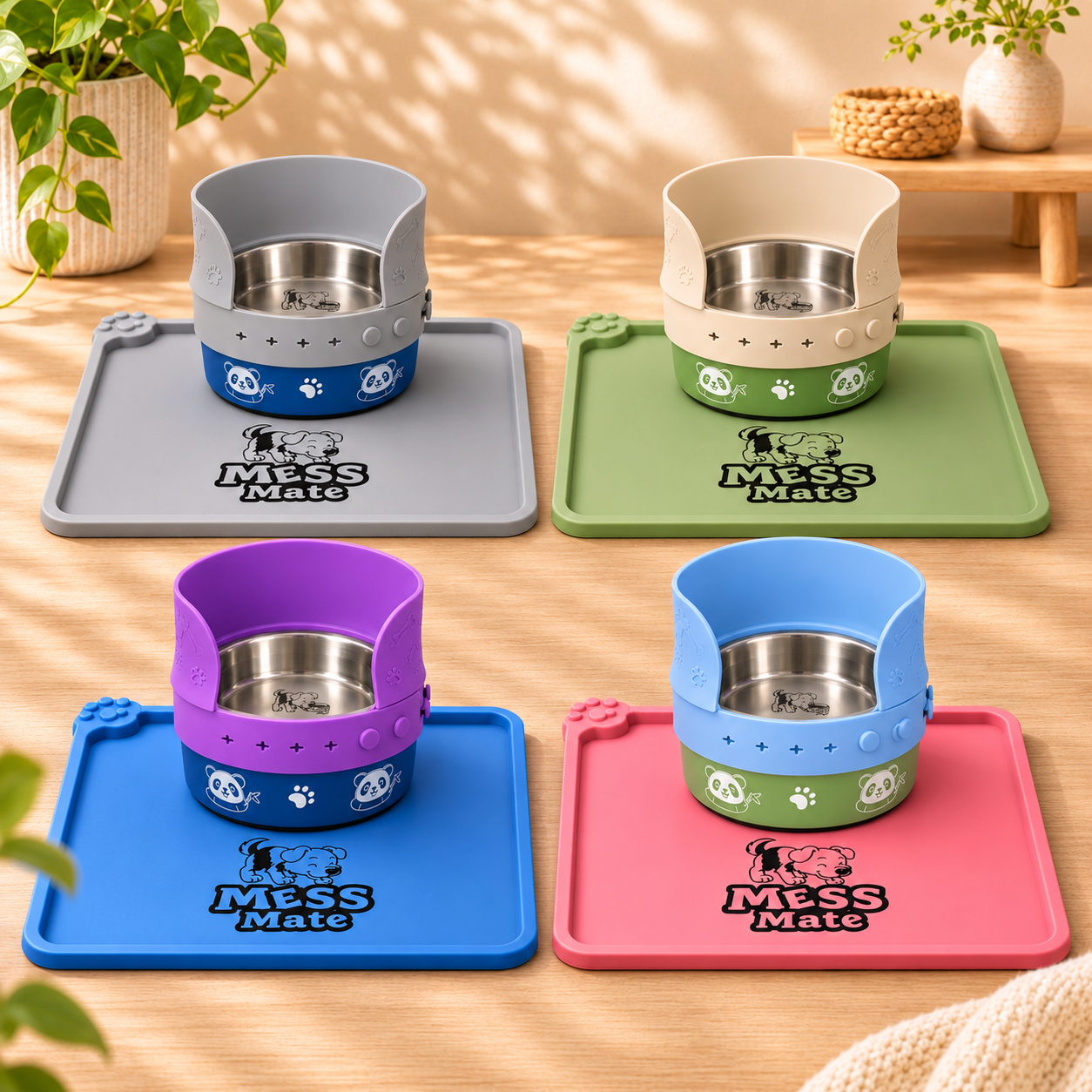
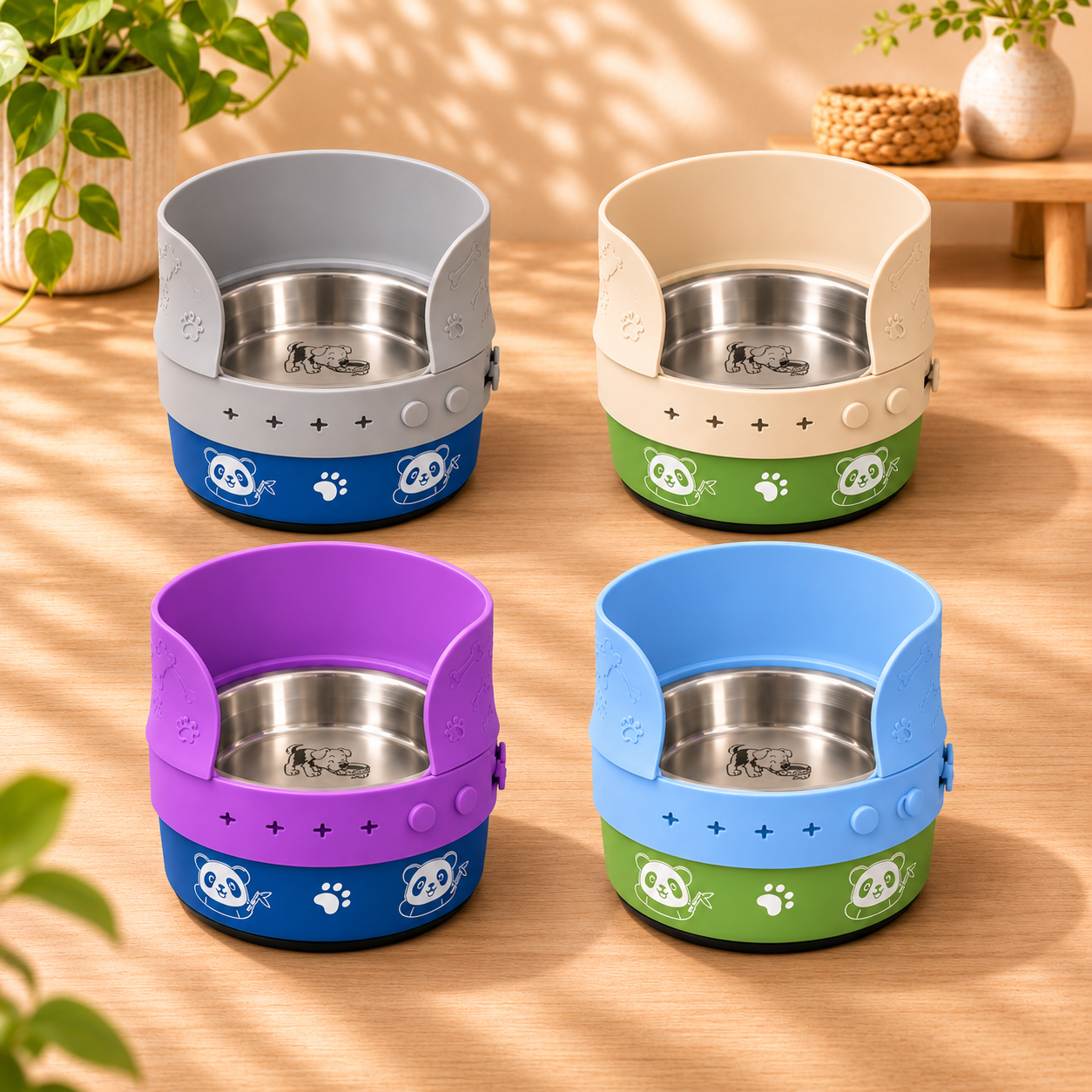
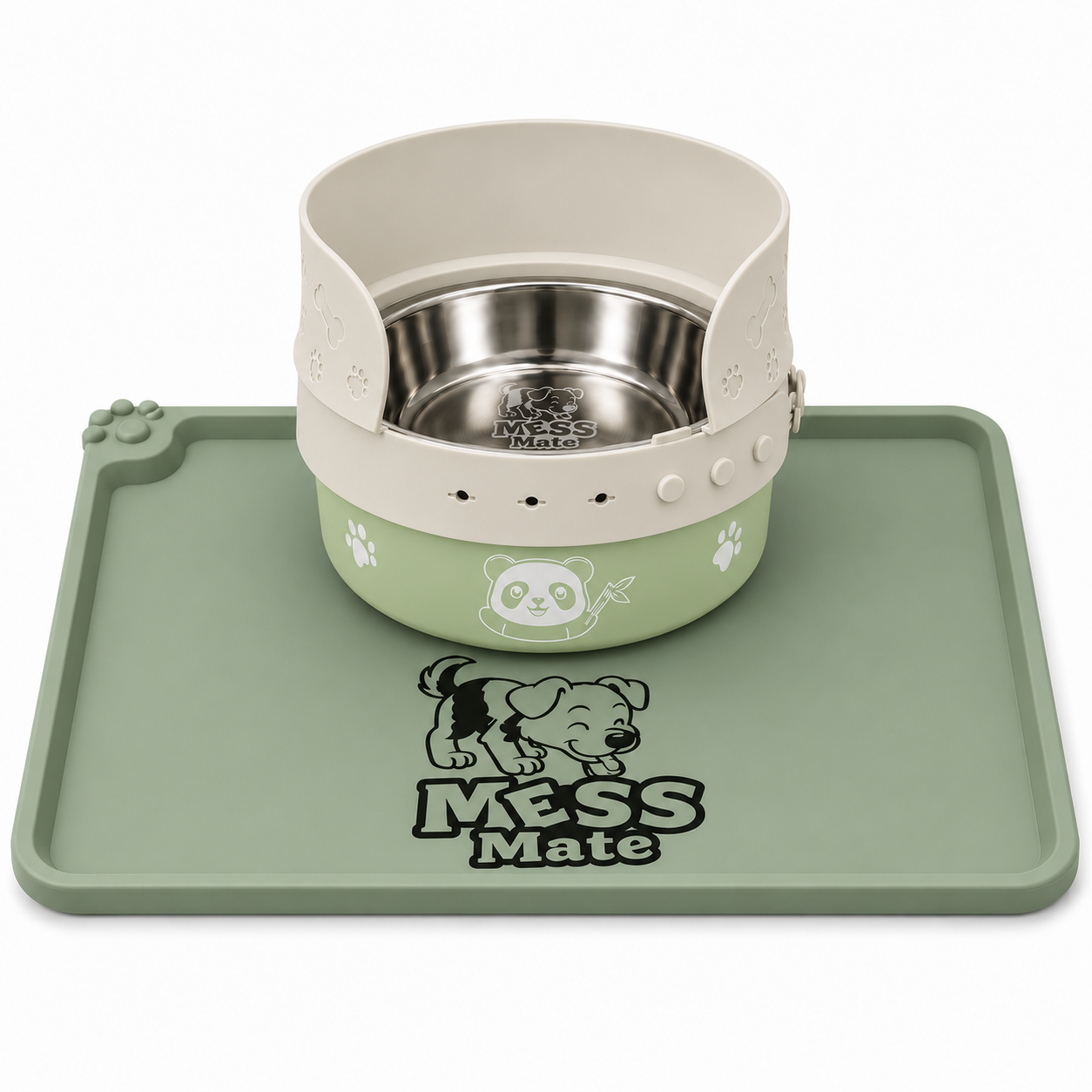
The MessMate splash guard clips around the outside of a round bowl with its strap and adds a 3-inch silicone wall. It fits round bowls 7 to 9 inches across the top opening, and it is made for medium to extra-large dogs. For a dog with a cone, there are two honest points to keep in mind:
- A taller wall can help keep kibble and water inside the bowl, but a stiff cone edge can also bump against it. Every cone shape and every dog is different, so it may work well for one dog and feel awkward for another.
- The splash guard sold alone does not include a bowl. If you do not already have a 7 to 9 inch round bowl, the bowl and splash guard set removes the measuring. You can check your own bowl against the fit guide before you decide.
It will not change how your dog eats, and it will not solve every cone problem. It is a tool for containing the spill, not a fix for the cone itself. If it does not suit your dog, MessMate offers 30-day returns.
Make meals calmer
- Feed in a quiet spot. A frustrated dog in a busy kitchen is more likely to flip or push the bowl.
- Use smaller, more frequent portions if your vet is fine with it, so your dog does not have to work as long at one sitting.
- Stay nearby. A calm voice and a steady hand on the bowl can be enough for some dogs.
- Wipe the cone after meals. Food and water collect inside the rim and can get smelly.
Cleaning up after cone meals
Expect more drips, so keep the routine simple. Wipe the mat after every meal, and wash the bowl at least once a day. Silicone and stainless steel pieces from MessMate are food-grade and dishwasher safe on the top rack.
Quick checklist
- Ask your vet whether the cone can come off for meals.
- Use a wide, stable bowl instead of a narrow, deep one.
- Put the bowl on a grippy mat to stop sliding.
- Fill water bowls part way to reduce sloshing.
- Watch intake and call your vet if your dog is eating or drinking much less.
The cone is temporary, and mealtime does not have to be a daily struggle in the meantime. A wide bowl, a mat that stays put, and a little patience go a long way.